


News Desk
The News Desk provides timely and factual coverage of national and international events, with an emphasis on accuracy and clarity.
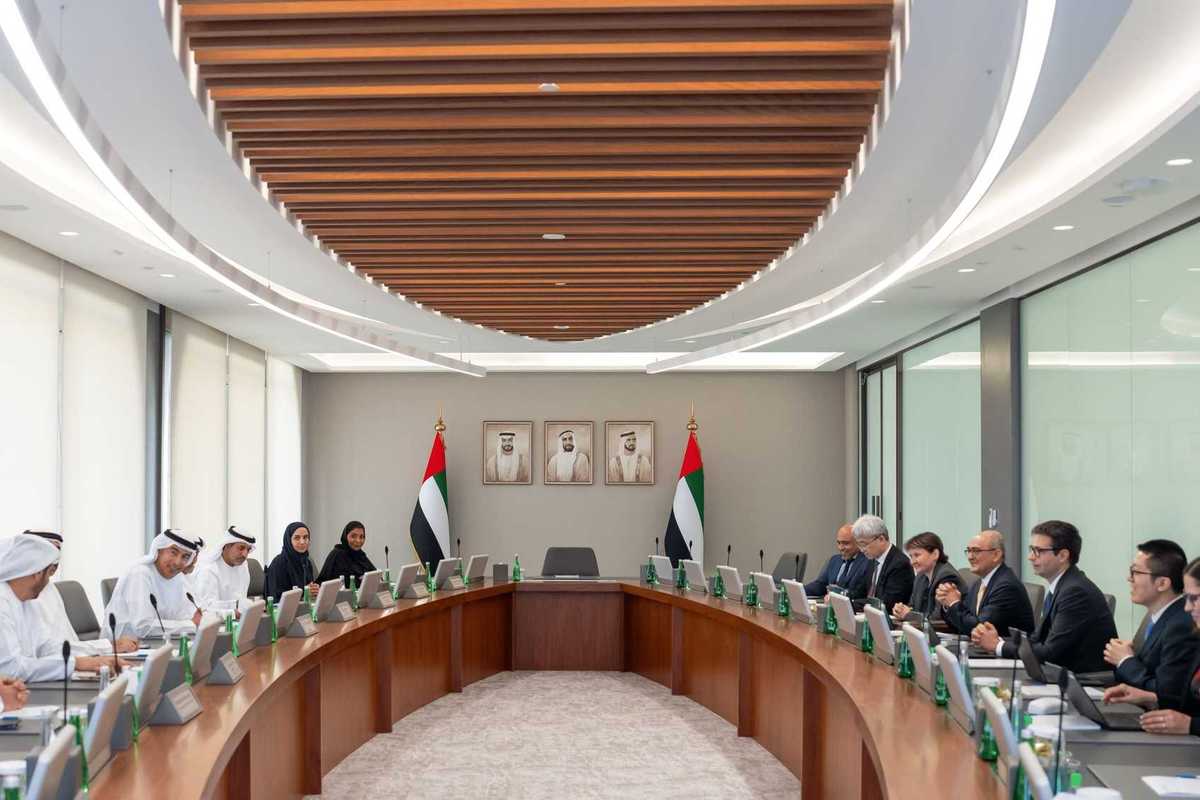
WAM
The International Monetary Fund (IMF) concluded its 2026 Article IV mission to the UAE on Nov. 17. It found the UAE economy resilient and its financial and banking system solid, WAM reported.
What did the IMF say about the UAE economy?
The IMF said the UAE economy has withstood regional disruptions and is regaining momentum. It projects real GDP growth of 7.3 percent in 2027, led by 5.4 percent growth in the non-oil sector. The financial system remains sound, with substantial capital and liquidity buffers.
What was the 2026 Article IV mission to the UAE?
The mission ran from Nov. 3 to 17. The Central Bank of the UAE (CBUAE) headed it, working with federal and local authorities and the private sector.
Officials reviewed recent economic and financial trends and the growth outlook amid regional and global shifts. They also looked at monetary and prudential policies meant to protect financial stability and make banks more resilient. Other topics were the Dirham Monetary Framework and financial infrastructure.
CBUAE Governor Khaled Mohamed Balama, who is also the UAE’s Governor at the IMF, chaired the final meeting at the bank’s Abu Dhabi headquarters.
What did the CBUAE governor say about the banking system?
Balama said the economy’s ability to adjust to global changes and keep growing reflects the leadership’s vision and effective proactive policies. Those policies, he said, have strengthened monetary and financial stability and made the UAE a leading global economic and financial hub.
He said the central bank will keep taking a proactive approach to monetary and supervisory policy. The financial sector is performing strongly, he said, with credit and deposits rising and asset quality steadily improving.
Banking assets passed AED5.815 trillion at the end of Q3 2026. Balama said the figure shows a strong, sound and resilient banking system that supports sustainable economic development.
He said close work with the IMF shows the UAE’s commitment to global best practices and standards. This includes upgrading monetary and supervisory frameworks, making the financial system more efficient and helping it handle global developments. The UAE will keep building its financial infrastructure to boost the economy’s competitiveness and secure its place on the global financial stage.
What is the IMF’s outlook for UAE GDP growth and inflation?
IMF Mission Chief for the UAE Said Bakhache praised the economy’s strength in a statement released by the Fund. He said it withstood regional disruptions thanks to agile, targeted policy responses, fiscal buffers, solid infrastructure and a well-capitalized banking sector.
Activity is picking up again, he said, notably in oil, trade, aviation and tourism. The IMF expects real GDP growth to speed up to 7.3 percent in 2027, with the non-oil sector set to grow 5.4 percent.
Inflation should ease and hold at 2 percent over the medium term. Bakhache said public finances and external positions will stay strong and reserves will remain ample. The financial system is sound, he said, with large capital and liquidity buffers and better asset quality.
How is the UAE supporting supply chain resilience?
Bakhache stressed the value of the CBUAE’s proactive steps to strengthen financial institutions, keep the sector stable and support national growth.
He called the broad support package launched in 2026, along with other government measures, a fitting answer to developments hitting supply chains. He said the country’s large fiscal buffers back it.
He also commended the UAE for widening its Comprehensive Economic Partnership Agreements (CEPAs) and building alternative trade corridors to make supply chains more resilient.
How did the CBUAE and IMF work together during the mission?
Bakhache noted marked progress in the quality of economic and financial data and close cooperation between UAE authorities and the Fund. The IMF team welcomed major efforts to improve balance of payments and GDP data, and ongoing gains in Government Finance Statistics.
The CBUAE led the national task force for the mission and coordinated strategically with federal and local bodies and the private sector. It also organized a series of intensive technical meetings between the IMF team and those entities.
They examined the UAE’s economic developments, how well macroeconomic policies work, and the regulatory, legislative and supervisory steps taken to improve competitiveness.




Comments
See what people are discussing