

Indian analysts question Operation Sindoor one year after Pakistan conflict
Kamran Khan highlights growing criticism in India over Operation Sindoor and regional tensions

News Desk
The News Desk provides timely and factual coverage of national and international events, with an emphasis on accuracy and clarity.
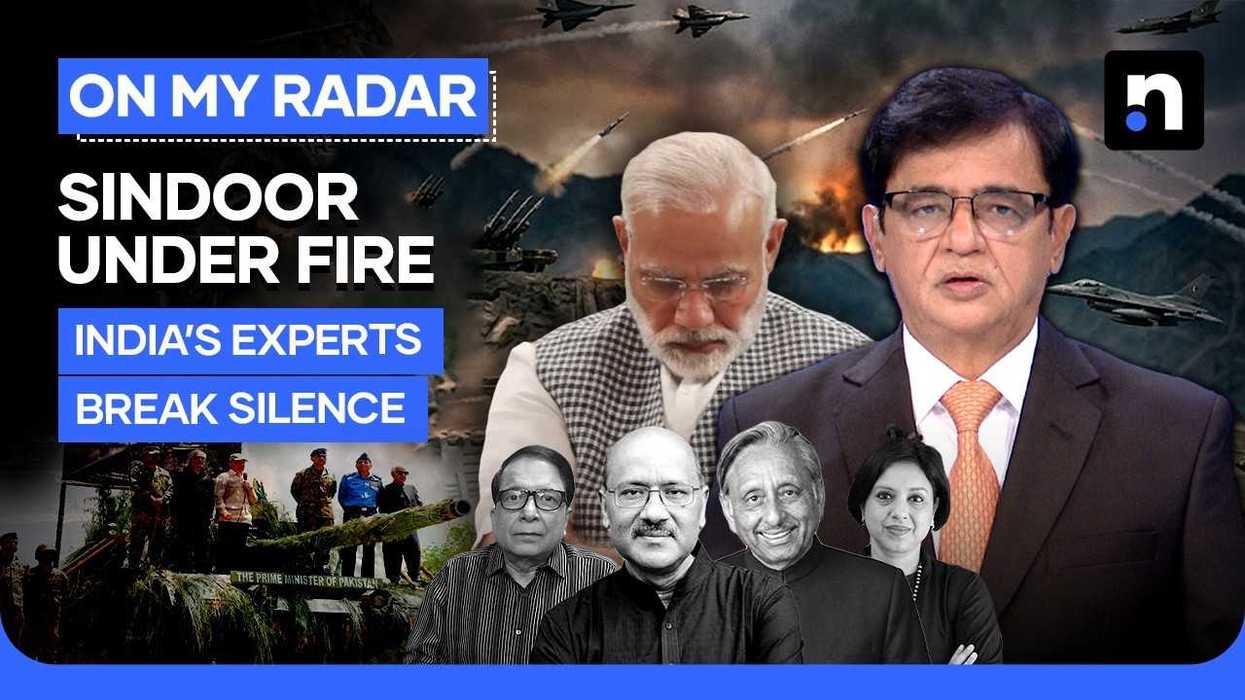
Kamran Khan says India continues to face criticism and scrutiny one year after Operation Sindoor, with Indian analysts, diplomats and commentators questioning the military, diplomatic and media handling of the brief conflict with Pakistan.
Speaking during an episode of “On My Radar,” Khan said Pakistan marked the first anniversary of “Marka-e-Haq” on Wednesday, while India commemorated the anniversary of Operation Sindoor.
He said both countries’ military leaderships held lengthy press briefings marking the anniversary, but said India’s military establishment was still unwilling to acknowledge setbacks suffered during the three-day conflict that began on May 7 last year.
Khan said questions about the outcomes of Operation Sindoor were still being raised inside India, including by prominent journalists and defense analysts.
According to Khan, Indian journalist Shekhar Gupta said India should learn lessons from Operation Sindoor and acknowledged that Pakistan’s claims of success gained traction after reports emerged that Indian fighter aircraft had been downed during the opening phase of the conflict.
Khan also cited Indian defense analyst Pravin Sawhney as saying the Indian military needed to seriously examine the key lessons from the war. He said Sawhney argued that Pakistan’s air force demonstrated superiority during the first hour of fighting through multi-domain operations.
He further referenced analyst Sushant Singh, who, according to Khan, said India had failed to establish meaningful deterrence against Pakistan or intimidate either the Pakistani military or political leadership.
Khan said some Indian military officials who are now making “grand claims” had earlier acknowledged operational losses after the conflict.
He referred to remarks attributed to Air Vice Marshal Udesh Kumar Bharti, who reportedly said losses were expected during wartime after reports surfaced that Indian aircraft, including Rafale fighter jets, had been downed.
Khan also mentioned comments made by India’s Chief of Defense Staff Anil Chauhan during the Shangri-La Dialogue, where he reportedly acknowledged that India had made strategic and technical mistakes during the conflict with Pakistan, leading to the grounding of Indian Air Force operations for two days.
He said Indian Air Chief Marshal Amar Preet Singh had also publicly complained about delays in India’s defense procurement and equipment delivery systems, which Khan said added to criticism faced by Prime Minister Narendra Modi’s government.
Khan said India also faced diplomatic criticism following the conflict, particularly over accusations linking Pakistan to the Pahalgam attack that preceded the fighting.
He said India had failed to present evidence acceptable to the international community proving Pakistan’s involvement in the attack.
Khan cited Pakistan military spokesperson Ahmed Sharif Chaudhry as again questioning India’s claims and asking why no conclusive evidence had been produced a year later.
He said Pakistan repeatedly offered transparent investigations into the attack, including a proposal by Prime Minister Shehbaz Sharif last year for an independent military commission inquiry.
According to Khan, a report issued last December by five special representatives of the United Nations cleared Pakistan of involvement in the Pahalgam incident and criticized India’s military response as a violation of international law.
Khan also criticized sections of the Indian media for spreading false information during the conflict.
He referred to reporting by The New York Times under the headline “How the Indian Media Amplified Falsehoods in the Drumbeat of War,” which examined misinformation aired during the crisis.
Khan said fabricated claims ranged from the destruction of Pakistan’s nuclear facilities and Karachi port to reports of additional Pakistani fighter jet losses.
He said senior Indian journalist Rajdeep Sardesai later apologized for sharing incorrect information.
Khan also referenced criticism by veteran Indian journalist Karan Thapar and former Indian minister Arun Shourie regarding the conduct and language used by some Indian television anchors during wartime broadcasts.
He said international journalists had also questioned India’s media strategy during the conflict. Khan cited comments by Yalda Hakim, who reportedly said Pakistani officials were more willing to face tough international media questions than their Indian counterparts.
Khan said a growing number of Indian commentators and former officials were now calling for renewed engagement between the two nuclear-armed neighbors.
He referred to comments by senior Indian diplomat Mani Shankar Aiyar, who said India should seek a practical and workable relationship with Pakistan rather than remain trapped in permanent hostility.
Khan also cited Indian journalist Suhasini Haidar as saying India itself suffered from the breakdown in ties with Pakistan.
He added that former Indian diplomat Vivek Katju and retired Lt. Gen. D. S. Hooda had also urged the revival of dialogue between the two countries.
Khan concluded by saying India should reflect on whether two nuclear powers should remain locked in perpetual confrontation or move toward peace and dialogue.

Comments
See what people are discussing