


Sibte Hassan
Correspondent, Karachi Pakistan
Syed Sibte Hassan Rizvi is a seasoned multimedia journalist with over 12 years of experience. He has worked as a news correspondent, covering various beats for Pakistan's leading news channels.
The Mother at NAPA
Nukta Pakistan
A non linear psychological drama exploring a mother’s emotional breakdown
Nimra Bucha delivers a powerful and emotionally demanding central performance
Universal theme of motherhood feels strong despite limited local relatability
There is theater that distracts, and then there is theater that dissects. The Mother, currently staging a quiet revolution at the National Academy of Performing Arts (NAPA), belongs firmly to the latter. It is the kind of production that lingers in the silence of your car ride home, demanding an uncomfortable introspection.
Unlike the theatre we are largely accustomed to, where stories build steadily and conclude in neat emotional resolutions, happy or tragic, The Mother resists linear comfort. It is a psychological drama that feels fragmented and disorienting, mirroring the inner world of a woman whose reality is slowly collapsing.
Written and directed by Usama Khan, The Mother has received mixed responses, perhaps because it does not offer easy answers. The play is originally a French work titled La Mère by Florian Zeller. It was translated into English by Academy Award winning writer Christopher Hampton and has now been adapted for Pakistani audiences. That cultural transition is ambitious and not without its challenges.
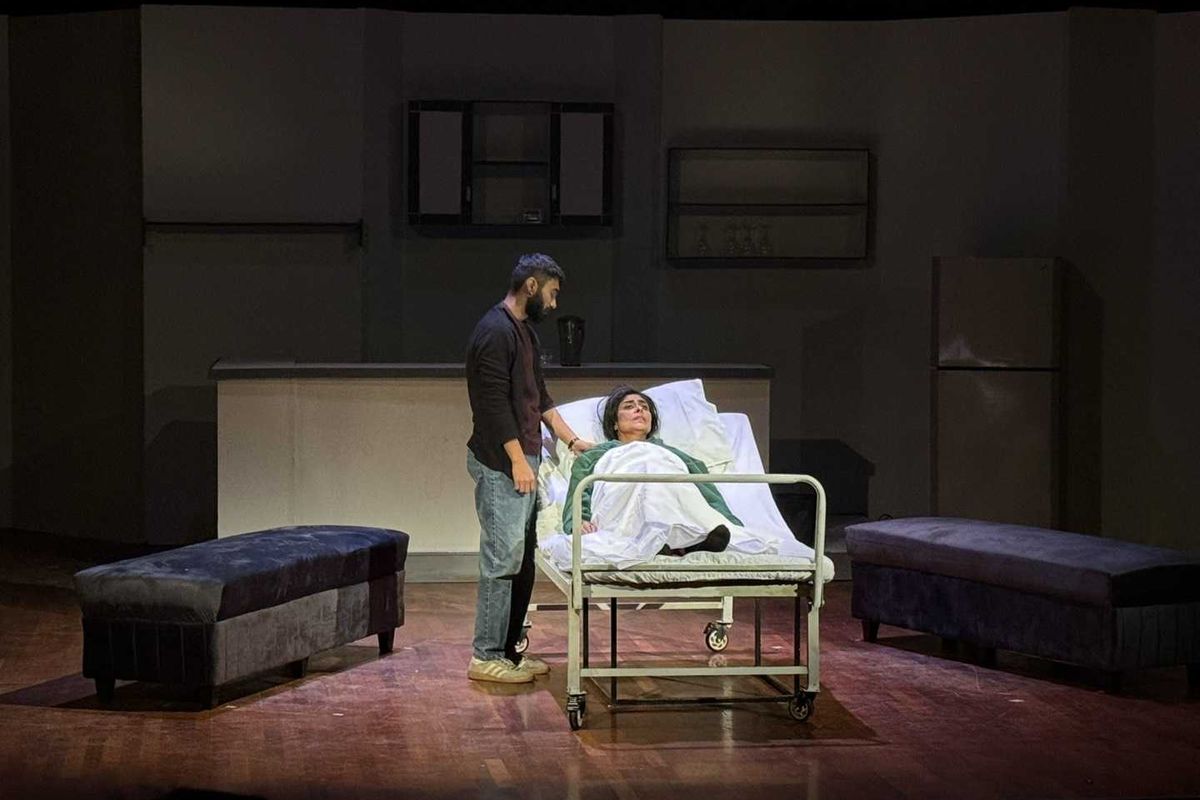
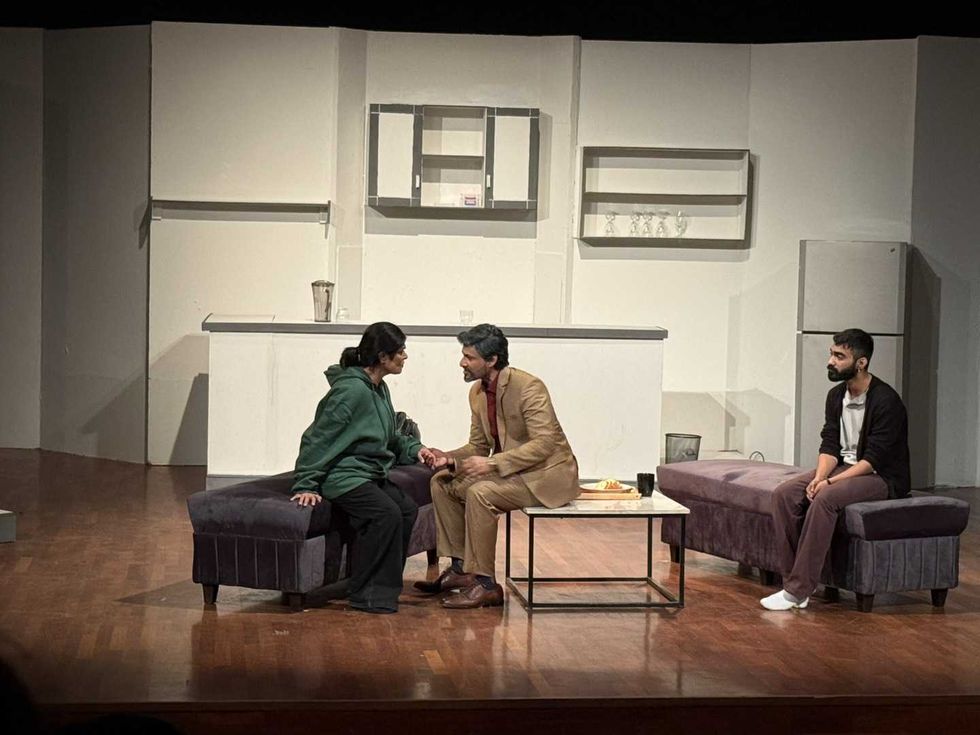
At the heart of the play is Haleema, portrayed with haunting intensity by Nimra Bucha, who remains on stage throughout. Haleema is a sleepless mother grappling with loneliness, a fading marriage, and the paralyzing fear of emotional abandonment. Her son Arsalan, played by Ashmal Lalwany, has moved out to live with his girlfriend, while her husband Saad, played by Sunil Shanker, is emotionally absent and perpetually leaving for seminars.
When Arsalan stops responding to Haleema’s messages, something inside her fractures. Pills, alcohol, memory, fear, and imagination begin to blur into one another. Conversations unfold, but not always in reality. What the audience witnesses on stage is often Haleema’s inner dialogue, exposing desires, regrets, and unspoken pain, while the real world remains far colder.
The writer attempts to capture what every mother feels at a certain stage of life. Not necessarily in such an extreme form, but in essence. The quiet grief of becoming secondary in your child’s world.
Eshah Shakeel deserves special mention for portraying four distinct characters, switching rapidly between roles with intensity and control. Speaking to Nukta, she described the play as very different and said she thoroughly enjoyed the challenge of inhabiting multiple emotional spaces within a single narrative.
Sunil Shanker’s performance is measured and grounded. He balances calm restraint with sudden aggression, particularly during scenes where Haleema spirals due to alcohol or pills. Reflecting on the play, Sunil shared that the story operates on multiple levels. One exists in the playwright’s mind, another in the characters’ minds, and a third is formed by the director.
In conversation with Nukta, Nimra Bucha shared that adapting Haleema’s character was emotionally demanding. She emphasized that the role required relentless rehearsals and deep psychological immersion, calling it one of her more challenging performances.
 The Mother at NAPASibte Hassan
Yet, despite its emotional power, one cannot ignore what feels missing. The story could have been more deeply rooted in Pakistani social realities. Certain emotional conflicts resonate, but some social dynamics remain distinctly European. Given the play’s French origins, this gap is understandable.
The ending is particularly heart wrenching. When Haleema dies in one scene, it feels as though all mothers die a little through our neglect, our impatience, and our silence. When she returns to life in another moment, it quietly suggests hope. Perhaps we still have time to love our mothers better.
The Mother is not an easy watch. It asks for patience, emotional maturity, and perhaps even a second viewing. But if theatre is meant to challenge rather than comfort, this play succeeds in doing exactly that.




Comments
See what people are discussing