


News Desk
The News Desk provides timely and factual coverage of national and international events, with an emphasis on accuracy and clarity.
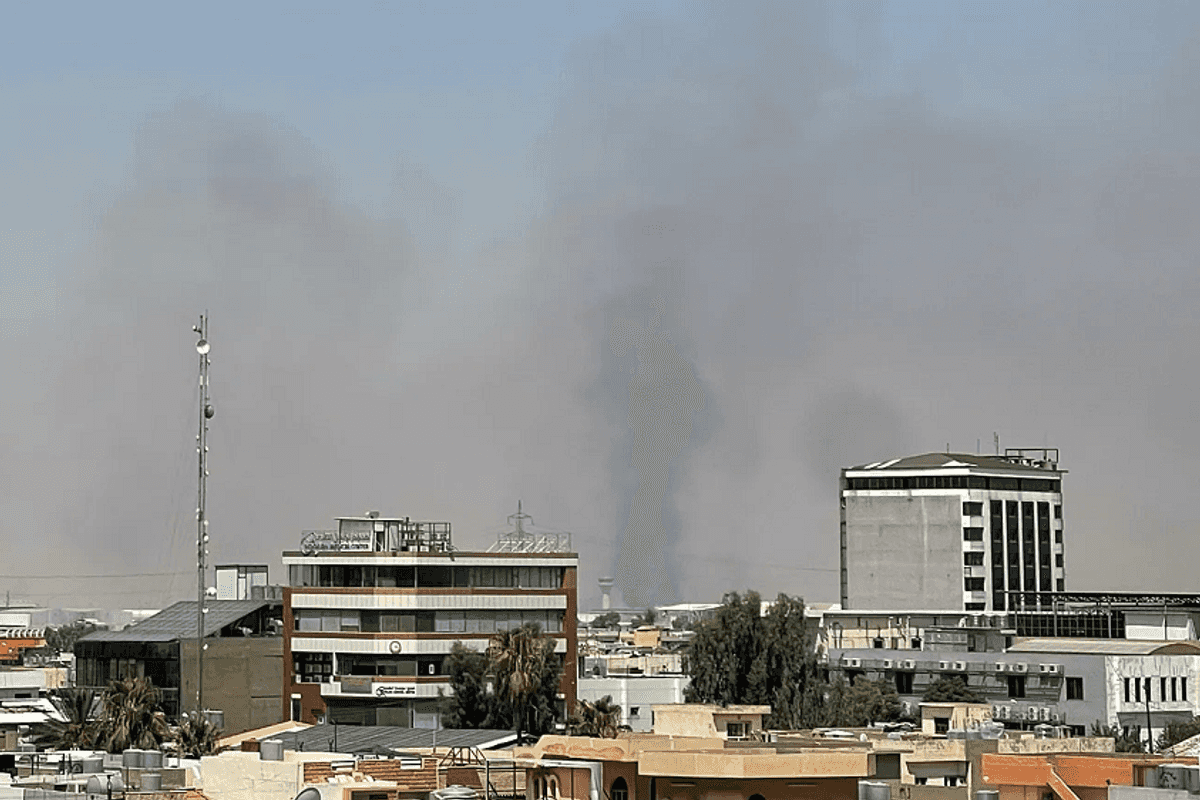
Iran's army also claimed strikes on Al Minhad Air Base in the UAE.
AFP/File
Iran's army said on Thursday it had attacked US military bases in Kuwait and the United Arab Emirates with missiles and drones.
The strikes came as President Donald Trump warned Tehran that Washington was prepared to hit back again. Iran's state television carried the army's claims.
Did Iran attack a US base in Kuwait?
Yes. Iran's army says it targeted Kuwait's Ahmad al-Jaber Air Base, hitting satellite communications systems, equipment depots and fighter-jet hangars.
Kuwait's military said separately that it was intercepting a missile and drone attack launched from Iran. Iranian state television said the strikes were retaliation for what it called Washington's "crimes against the Iranian people."
Is Iran attacking the UAE too?
Iran's army also claimed strikes on Al Minhad Air Base in the UAE, targeting military positions and radar systems there. The attacks followed US strikes on Iranian targets the previous Sunday. Washington said those strikes were meant to stop Tehran from laying sea mines in the Strait of Hormuz.
Iran said the US strikes caused casualties and it responded by targeting American forces in Jordan and the UAE. The confrontation has since spread further, with Iranian attacks reported or claimed against US military targets in Kuwait, Jordan, the UAE, Bahrain and Iraq's autonomous Kurdistan region. Trump has threatened further military action, saying the United States could attack Iran "any time we want."
What has Trump said about further strikes on Iran?
Trump's warning followed an earlier US bombardment of Iranian sites that killed at least 19 people, according to Iranian authorities. The escalation has deepened a standoff over the Strait of Hormuz, a vital energy shipping route that Iran has effectively blocked for months. Washington, meanwhile, is pursuing a counter-blockade of Iranian ports to increase pressure on Tehran.
Iranian security chief Mohsen Rezaei warned Washington that Tehran had adopted a "new strategy" in the conflict that he said "will shatter your foundations."
How is Washington increasing economic pressure on Iran?
Alongside military action, Washington has vowed to intensify economic pressure on Iran. It has threatened sanctions against countries and companies that continue trading with Tehran. US Energy Secretary Chris Wright said on Wednesday that an expanded sanctions campaign targeting Iran's economic partners would deliver "absolutely maximum pressure."
Trump also floated renaming the Strait of Hormuz, largely closed to commercial shipping during the conflict, as the "Trump Strait." He later appeared to suggest the idea was not serious. "Now that we have it under U.S.A. control, should we change the name Hormuz Strait to TRUMP STRAIT???" he wrote on Truth Social.
What happened at the wedding site Iran says was hit?
Iran's latest strikes came after a US attack in southern Iran that Tehran said hit a wedding gathering, fuelling anger among Iranian officials. Iran's Red Crescent said shrapnel from the strike in the coastal town of Kuhestak killed four people, including a child, and wounded more than 50. The US military did not directly address the reported strike.
US Central Command spokesman Tim Hawkins said the US military "never targets civilians," and accused Iran's Islamic Revolutionary Guard Corps of doing so. Iran's top negotiator, Mohammad Bagher Ghalibaf, condemned Washington over the reported strike, describing the United States as "Satan." "If a power acts like Satan, picks targets like Satan, and kills like Satan, it's Satan," he wrote on X.
Iranian civilians voiced concern over the renewed fighting. "I hope they all return to the negotiating table because the only people suffering from this are the Iranian people," said Hossein Moazami, 50, a self-employed Iranian. "The Americans are on the other side of the world and nothing happens to them."
A video posted by an Iranian government account showed debris and damage at what it identified as the wedding site in Kuhestak, with people heard screaming in the background. "It is a very saddening incident," Ali Mallahi, the bride's father and owner of the building that was hit, said in a video carried by Iranian state television. "Thank God the casualties were not higher."
How long has the Iran-US conflict been going on?
The war began on 28 February with US and Israeli attacks on Iran that killed Supreme Leader Ayatollah Ali Khamenei, according to Iranian authorities. A fragile ceasefire later collapsed following attacks on commercial shipping in the Strait of Hormuz, through which roughly one-fifth of the world's oil supplies had previously passed.
Israel has also warned it could enter the conflict directly if targeted by Iran. Defense Minister Israel Katz said on Thursday that Israel was prepared to respond "with great force" if Iran attacked it during the Jewish high holiday season, which begins in mid-September. "For now, they are striking throughout the region except us," Katz told a conference hosted by Israeli media outlets.



Comments
See what people are discussing