

Iran urges BRICS to condemn US and Israel, exposing bloc's divisions
Iran's foreign minister urged BRICS nations in New Delhi to condemn US and Israeli actions, laying bare sharp divisions within the expanded bloc over the conflict

News Desk
The News Desk provides timely and factual coverage of national and international events, with an emphasis on accuracy and clarity.
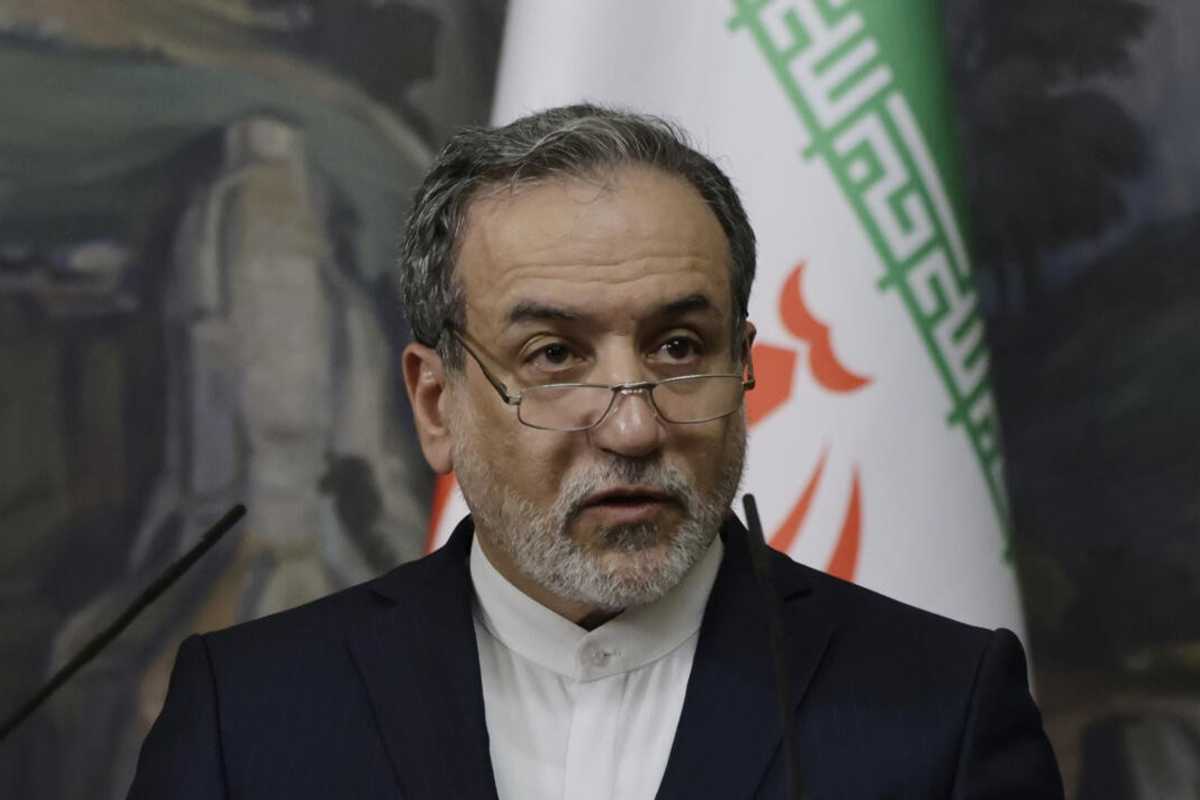
Iran's foreign minister urged BRICS nations on Thursday to condemn what he called violations of international law by the United States and Israel, including their "illegal aggression against Iran."
Abbas Araqchi made the remarks at a two-day foreign ministers meeting in New Delhi, as the US-Israeli war in Iran cast a shadow over the gathering. The bloc now includes both Iran and the United Arab Emirates, countries on opposing sides of the conflict.
How is the Iran war testing BRICS unity at the New Delhi meeting?
Iran's call for a joint condemnation puts BRICS in a difficult position, since the bloc operates by consensus and the UAE sits on the opposing side of the conflict. Iran has launched numerous attacks on the UAE and other neighboring countries since the war began on February 28. Reaching a unified position on the conflict may prove impossible given those internal divisions.
Araqchi described the war as "illegal expansionism and warmongering" and said Iran remained open to diplomacy while being ready to defend itself "with all available means." He called on BRICS member states and "all responsible members of the international community" to explicitly condemn what he characterized as violations of international law. Iran had previously urged India, as BRICS chair for 2026, to use the platform to build consensus condemning US and Israeli actions.
What did India's foreign minister say at the BRICS meeting?
Indian Foreign Minister Subrahmanyam Jaishankar struck a cautious tone in his opening remarks, avoiding direct criticism of any party while stressing the importance of stability. He said unimpeded maritime flows through international waterways, including the Strait of Hormuz and the Red Sea, were vital for global economic wellbeing. "The conflict in West Asia merits particular attention," he said, without naming specific countries.
Jaishankar also raised concerns over the growing use of unilateral sanctions, a longstanding point of contention among BRICS members. "There is an increasing resort to unilateral coercive measures and sanctions inconsistent with international law and the UN Charter," he said. He added that such measures "disproportionately affect developing countries" and cannot substitute dialogue or replace diplomacy.
He said emerging economies expect BRICS to play a "constructive and stabilizing role" at a time of rising geopolitical fragmentation and economic uncertainty.
How is the Iran war affecting global energy markets and shipping?
The effective closure of the Strait of Hormuz, which handles roughly a fifth of global oil shipments, has triggered one of the biggest supply disruptions in recent history.
Curbs on tanker traffic have pushed crude prices sharply higher, fueling fears of renewed inflation, tighter financial conditions and a potential global economic slowdown. Energy-importing economies such as India are among those most exposed to the disruption.
On Thursday, India's foreign ministry separately confirmed that an Indian-flagged ship had been attacked off the coast of Oman on Wednesday, with all crew on board safe. The ministry said the attack was "unacceptable" and deplored the continued targeting of commercial shipping and civilian mariners.
What is BRICS and why does its membership complicate the Iran conflict?
BRICS was originally formed by Brazil, Russia, India, China and South Africa, before expanding to include Egypt, Ethiopia, Indonesia, Iran and the UAE. The expansion has increased the bloc's global weight but also deepened internal divergences on geopolitical issues.
The presence of both Iran and the UAE within the same forum makes a unified response to the current conflict structurally difficult, and the New Delhi meeting has brought those tensions into sharp focus.




Comments
See what people are discussing