

Iran, Qatar foreign ministers hold talks in Tehran as Hormuz tensions persist
Iran and Qatar's foreign ministers met in Tehran to ease Strait of Hormuz tensions, as Doha continues mediating between Iran and the US

News Desk
The News Desk provides timely and factual coverage of national and international events, with an emphasis on accuracy and clarity.
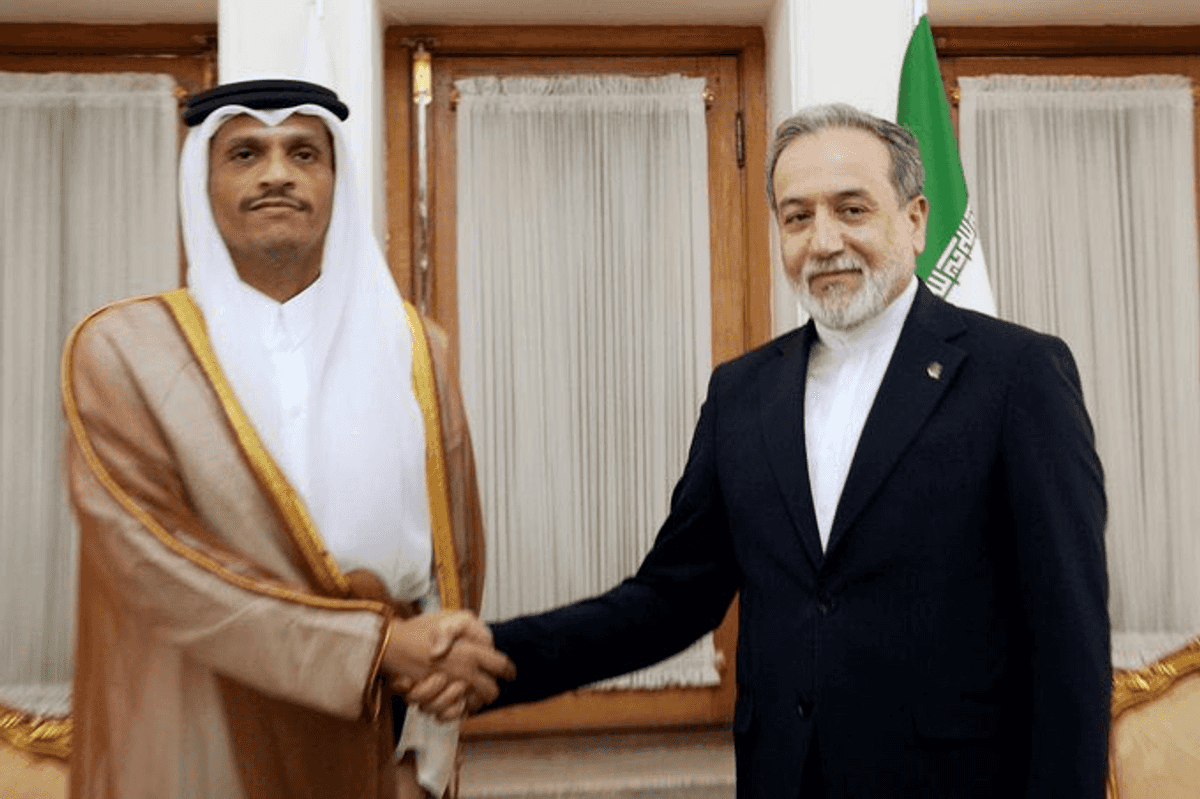
Iranian Foreign Minister Abbas Araghchi meets Qatar's Prime Minister and Foreign Minister Sheikh Mohammed bin Abdulrahman Al Thani in Tehran.
Photo via X
Iranian Foreign Minister Abbas Araghchi held talks with Qatar's Prime Minister and Foreign Minister Sheikh Mohammed bin Abdulrahman Al Thani in Tehran on Thursday.
The meeting comes as Doha seeks to revive diplomacy and ease tensions over the strategic Strait of Hormuz, six months into the conflict between Iran and the United States.
Why are Iran and Qatar's foreign ministers meeting in Tehran?
Qatar's foreign ministry said Al Thani's visit would focus on ways to de-escalate tensions and secure freedom of navigation through the Strait of Hormuz.
Qatar, a US ally and neighbor of Iran, has acted as a back-channel mediator between the two sides and helped broker a ceasefire in June that temporarily halted hostilities.
What happened in the Strait of Hormuz this week?
An unidentified projectile struck a tanker in the strait early on Thursday, sparking a fire that was later extinguished, the United Kingdom Maritime Trade Operations agency said. All crew members were safe and accounted for. The incident underscores the risks surrounding the narrow waterway between Iran and Oman, through which about one-fifth of global oil supplies passed before the war began on February 28.
Oil flows through the strait have since fallen sharply. About 5 million barrels per day crossed the waterway on Monday, the lowest level in three months, according to ship-tracking data, compared with roughly 20 million barrels per day before the conflict.
Has fighting between Iran and the US stopped?
Fighting has largely subsided, with the US military's Central Command reporting no attacks on Iran for nearly a month. Washington has instead stepped up economic pressure, including plans to impose sanctions on countries that continue trading with Tehran. Direct fighting has largely paused, but diplomatic efforts have yet to produce a breakthrough, and control of the Strait of Hormuz remains a major point of contention.
Have Iran and Oman agreed on managing the Strait of Hormuz?
Efforts to reach an agreement over the waterway have stalled. Iran's Revolutionary Guards said on Wednesday that Tehran and Oman had agreed on how to share the strait and its revenues, but an Iranian official later said the two sides were still working out the details. Iran and Oman have held intermittent talks for weeks over the management of maritime traffic through Hormuz, while Tehran and Washington have each sought to exert influence over the strategically important channel.
Despite an aerial campaign earlier in the war that severely weakened Iran's conventional forces, Tehran retains missile and drone capabilities that could threaten Gulf states hosting US military bases and disrupt shipping through the strait.
How many people have been affected by the Hormuz conflict?
The International Maritime Organization has recorded 70 incidents in the Strait of Hormuz since February 28, resulting in the deaths of 19 seafarers.
Thousands more people have been killed across the region, mainly in Iran and Lebanon, since the United States and Israel launched attacks on Iran, citing efforts to prevent Tehran from acquiring a nuclear weapon, undermine its government and destroy its missile program.



Comments
See what people are discussing