

Iran rocked by currency collapse as protests spread and pressure mounts on leadership
Kamran Khan highlights how a collapsing currency has driven Iran’s Gen Z onto the streets against economic ruin

News Desk
The News Desk provides timely and factual coverage of national and international events, with an emphasis on accuracy and clarity.
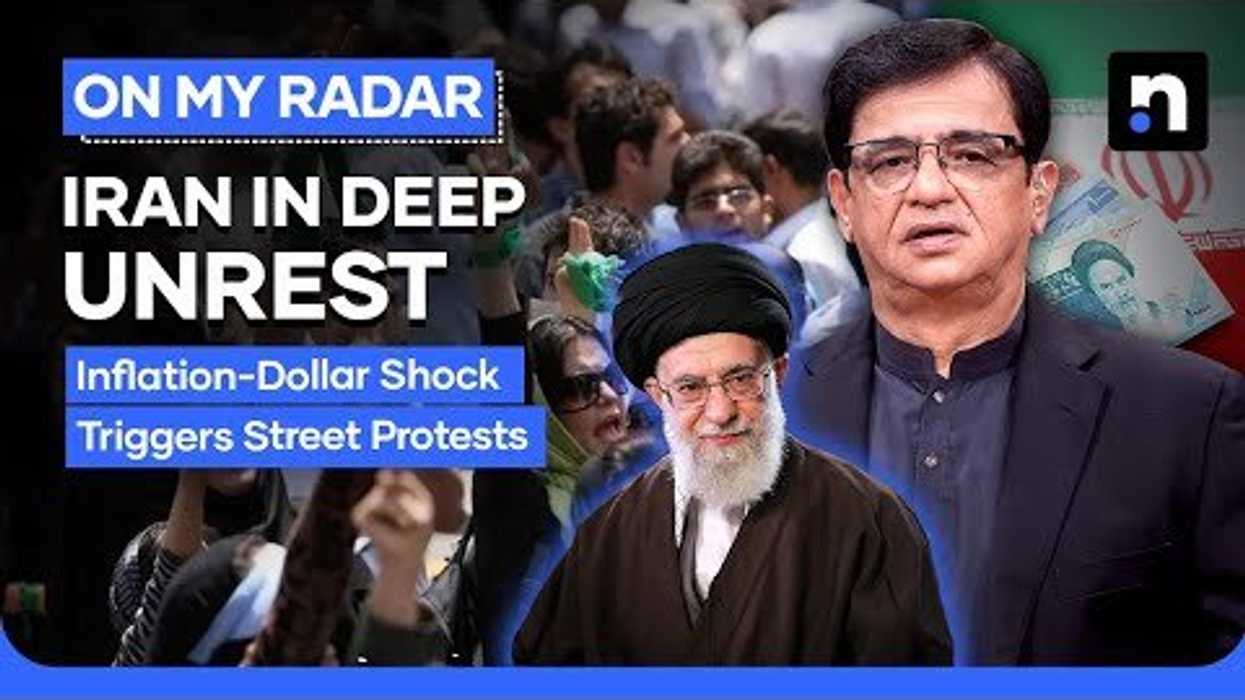
Iran is facing one of its gravest internal crises in years as a collapsing currency, soaring inflation and political anger fuel nationwide protests, according to an analysis aired by Kamran Khan on his program “On My Radar.”
Khan said the unrest erupted just as Iran was still reeling from the fallout of a devastating conflict with Israel and the United States, compounding economic pain with political shock. For five consecutive days, protesters have taken to the streets across the country, blaming the government for economic collapse and demanding its departure.
At the center of the crisis is the Iranian rial’s dramatic fall. Khan said the U.S. dollar has effectively “set Iran on fire,” achieving in months what years of U.S. sanctions and even direct military confrontation failed to do.
According to Khan, the open market exchange rate has surged to about 1.35 million rials per dollar, an extraordinary divergence from the official rate of 42,000 rials set by Iran’s central bank. Even at those levels, he said, dollars are often unavailable in open markets as the rate continues to rise by the hour.
The currency collapse has intensified inflation and deepened public anger. Khan said Iran is now witnessing Gen Z–led protests similar to recent unrest seen in Sri Lanka, Bangladesh and Nepal, driven by economic despair rather than party politics.
University students, traders and ordinary citizens have joined demonstrations that go beyond complaints about high prices. Khan described the movement as an expression of broad rejection of Iran’s political system, sparked by exchange rates and inflation but now openly questioning the legitimacy of governance.
Protesters are calling for the end of Supreme Leader Ayatollah Ali Khamenei’s rule, Khan said. Citing Iran’s semi-official Fars News Agency, he reported clashes between security forces and demonstrators, with multiple deaths feared, though no confirmed toll has been reported.
The unrest comes amid warnings from Washington. Khan said U.S. President Donald Trump posted a stark message on Truth Social, cautioning Iran against using force on peaceful protesters. Trump warned that if demonstrators were shot, the United States was “locked and loaded” and prepared to act in support of them.
Iran’s vulnerability has been magnified by its recent war with Israel, fought with U.S. backing in June 2025, Khan said. Though Iran retains centralized authority under Khamenei, he argued that the return of Trump to the White House and the aftermath of the war have revived speculation about regime change and the possible shutdown of Iran’s nuclear program.
Khan said 2026 could prove one of the most challenging years in Iran’s history, with civil disobedience rising while wounds from the 12-day war with Israel remain fresh. He said Iran suffered heavier human and financial losses despite intense exchanges between the two sides.
He cited the killings of senior military figures, including former Islamic Revolutionary Guard Corps commander Gen. Hossein Salami, former armed forces chief of staff Gen. Mohammad Bagheri, former IRGC deputy commander Gen. Gholam Ali Rashid, and prominent nuclear scientists including Fereydoun Abbasi and Mohammad Mehdi, along with several others.
Israel’s defense minister, Israel Katz, had warned that Khamenei could face a fate similar to that of Saddam Hussein if Iran continued attacks, Khan said.
The United States also directly targeted Iran’s nuclear and missile infrastructure, according to Khan. He said underground facilities at Fordow, Natanz and Isfahan were struck, including the use of 30,000-pound bombs dropped from B-2 stealth aircraft, an unprecedented move.
Before a ceasefire, Trump demanded Iran’s “complete surrender” in a social media post, warning Khamenei that U.S. forces knew his location but were not targeting him “for now,” Khan said.
Despite battlefield pressure, Iran’s ruling system survived the war. Khan said the current unrest appears different, with international media viewing the protests through the shadow of the conflict, which exposed the state’s civil-military leadership as weakened in the eyes of the public.
The BBC reported that protesters are demanding an end to Khamenei’s rule, with some calling for the return of monarchy under the heirs of Reza Shah Pahlavi. Reuters said the protests began Sunday with a strike by Tehran’s traders against inflation and currency collapse before spreading nationwide.
Demonstrations have since expanded to Tehran, Isfahan, Lordegan, Kohdasht and cities in South Fars province. Students from dozens of colleges and universities have joined what Khan described as the worst public resistance Iran has seen in at least three years.
Markets have shut down across Tehran, including the historic Grand Bazaar, long seen as a barometer of political pressure. Khan said shuttered shops, halted traffic and mourning-like silence now extend to cities without active clashes.
President Masoud Pezeshkian has acknowledged protesters’ demands as “legitimate” and urged his cabinet to pursue economic stabilization. Government spokeswoman Fatemeh Mohajerani has held talks with students and trade union representatives, but the unrest has not subsided.
Al Jazeera reported that economic breakdown, resource shortages and state failure are deepening the crisis. Iran’s Statistical Center put annual inflation at 42.2%, with December inflation at 52.6%. The Wall Street Journal reported food prices rose 64.2% in October 2025.
Khan concluded that Iran is facing a historic test of its economy, politics and society simultaneously, with Gen Z giving new momentum to a movement rooted in years of pressure and deprivation.


Comments
See what people are discussing