

US intelligence signals Iran unlikely to ease Strait of Hormuz control soon
Experts warn that Iran could continue constricting the waterway to keep global energy prices high

News Desk
The News Desk provides timely and factual coverage of national and international events, with an emphasis on accuracy and clarity.
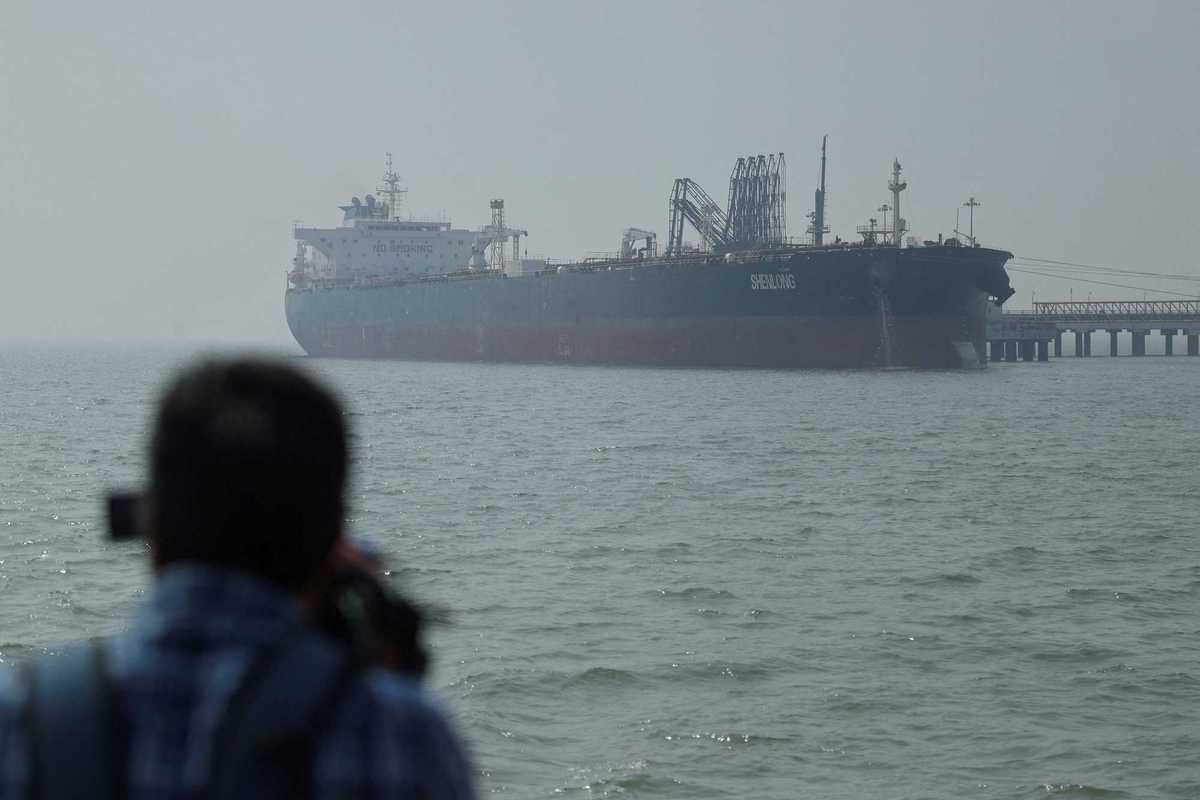
Recent US intelligence assessments indicate that Iran is unlikely to loosen its grip on the Strait of Hormuz, the world’s most critical oil chokepoint, sources familiar with the reports told a UK wire service. The strait provides Tehran with its most potent leverage over Washington amid the nearly five-week-long war.
Experts warn that Iran could continue constricting the waterway to keep global energy prices high, pressuring US President Donald Trump to seek a rapid resolution to a conflict that remains unpopular among American voters. Analysts say the war, originally aimed at curbing Iran’s military capacity, may instead enhance Tehran’s regional influence by demonstrating its ability to disrupt a key energy route.
Trump has downplayed the challenge of reopening the strait, which handles about a fifth of global oil trade, even suggesting on his Truth Social platform that US forces could take control. Yet analysts caution that attempting to forcibly reopen the waterway risks drawing the US into a protracted conflict.
“In trying to prevent Iran from obtaining a nuclear weapon, the US handed Tehran a far more effective tool: the ability to disrupt global energy markets,” said Ali Vaez, director of the Iran Project at the International Crisis Group. “Iran knows this leverage over the strait is more powerful than even a nuclear weapon.”
While Trump has framed reopening the strait as a precondition for a ceasefire, he has also urged Gulf states and NATO allies to lead efforts to keep the waterway open. A White House official said the president remains “confident the strait will be open soon,” but noted that other nations “have far more at stake in preventing this outcome” than the US.
Since the start of the conflict on February 28, Iran’s Islamic Revolutionary Guard Corps (IRGC) has deployed mines, attacked civilian vessels, and imposed fees to make commercial passage hazardous. These moves have driven oil prices to multi-year highs and contributed to fuel shortages in oil-dependent nations.
Experts warn that reopening the strait militarily would be extremely risky. The channel narrows to just 2 miles (3 km) in each direction at its tightest point, leaving ships and forces vulnerable to attacks from Iran’s drones and missiles. Even a successful seizure of coastal islands would not guarantee control.
Intelligence sources caution that Iran is unlikely to relinquish this strategic leverage anytime soon. Former CIA Director Bill Burns noted that Tehran could use its control to secure long-term concessions in peace negotiations, including passage fees to fund reconstruction, ensuring the strait remains a bargaining chip well beyond the conflict.





Comments
See what people are discussing