

Pakistan eyes new skyline near Margalla Hills as slum demolitions intensify
Court gives CDA four weeks to regularize slums amid evictions, terrorism charges against residents

Ali Hamza
Correspondent
Ali; a journalist with 3 years of experience, working in Newspaper. Worked in Field, covered Big Legal Constitutional and Political Events in Pakistan since 2022. Graduate of DePaul University, Chicago.
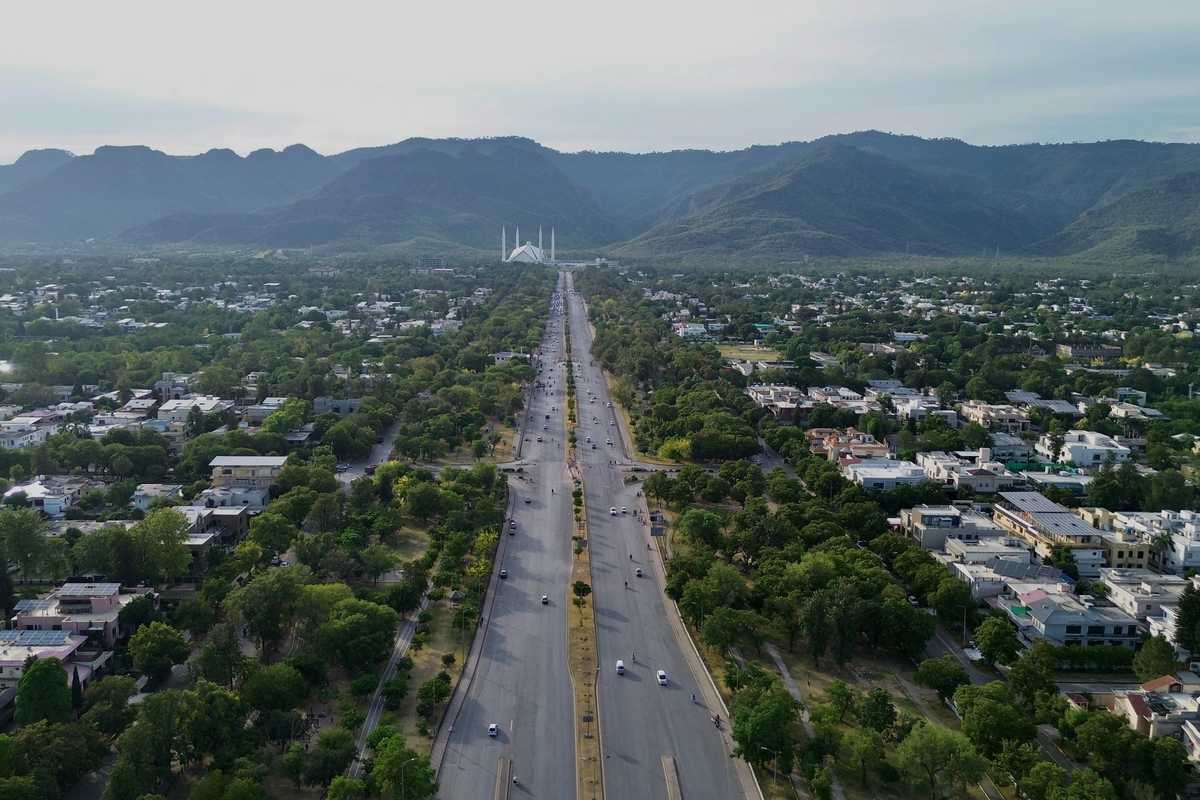
Pakistan’s interior minister, Mohsin Naqvi, has unveiled plans for a high-rise city near Islamabad’s Margalla Hills, even as thousands of residents in the same area have been displaced through demolitions and face criminal charges, drawing scrutiny from courts and rights groups.
Speaking to the Karachi Chamber of Commerce this week, Naqvi said the government would host an investment conference in Islamabad on April 21 to attract hotel developers ahead of a Shanghai Cooperation Organization (SCO) summit expected later this year.
He said investors would be offered tax exemptions for 16 months to build five to seven large hotels in the capital.
Naqvi then outlined a broader plan to construct a new high-rise city behind the Prime Minister’s House, describing it as “a mixture of Manhattan and Shanghai.” He said further details would be shared soon.
In the same address, Naqvi acknowledged governance challenges within the Capital Development Authority (CDA), saying: “CDA is the most difficult organization I have ever seen.” He added, “If I have a matter pending at CDA, I know I will also have to pay one million rupees as a bribe.”
Land being cleared
The land required for the proposed project appears to be undergoing clearance through large-scale anti-encroachment operations.
According to the CDA, Muslim Colony – located behind the Prime Minister’s House – was demolished in 2025, with 2,400 kanals of land reclaimed. Another 312 kanals were retrieved from Saidpur village. The 2024 census recorded Muslim Colony’s population at 14,000.
On April 13 and 14, authorities carried out fresh demolitions in Noorpur Shahan, near the shrine of Bari Imam. Between 200 and 250 homes were demolished in Mohalla Noori Baagh and Kamalpur.
Hundreds of residents were arrested, and terrorism charges were filed against them. The area’s population stands at around 17,000, according to the 2024 census. Ramsha Colony, with about 6,000 residents, is reportedly the next target.
Human rights groups and lawyers say the CDA Ordinance 1960 prohibits evictions without providing alternative housing – a requirement they argue has not been met.
Court sets deadline
On April 16, the Federal Constitutional Court, headed by Chief Justice Aminuddin Khan and Justice Arshad Hussain Shah, gave the CDA four weeks to formulate a policy for regularizing informal settlements.
During the hearing, lawyer Faisal Siddiqui told the court that housing policies since 1995 had recognized such settlements, but a 2016 court order directing a survey of katchi abadis had not been implemented.
He said draft regulations submitted by the CDA fail to meet obligations under the CDA Ordinance 1960 and the National Housing Policy 2025.
Human rights activist Alia Ameer Ali told Nukta: “This is not a mercy petition. It is a demand that the court ensure the CDA fulfils its legal obligations. Those obligations arise from the CDA Ordinance 1960 itself, as well as from the National Housing Policy 2025.”
She added that the CDA has continued to violate a 2015 Supreme Court stay order imposing a moratorium on summary evictions.
“It is ironic,” she said, “that the CDA is evicting katchi abadi residents in the name of illegality, while itself acting in violation of legal orders… and violating its legal obligation to provide alternative housing before any eviction takes place.”
Lawyer Umer Ejaz Gillani said the demolitions violate Article 9 of the Constitution, which guarantees the right to life, as homes were destroyed without adequate alternatives.
CDA’s counsel told the court that a regularization policy would be approved at the authority’s next board meeting, attributing delays to leadership changes.
In a written response, CDA Director of Enforcement Dr. Anam Fatima said compensation had been paid under a 2011 Supreme Court ruling and that private occupation of government land could not be regularized.
She said Muslim Colony had 2,200 households, with nearby areas adding another 1,500, bringing the total to 3,700 households affected. She also said the CDA uses satellite mapping in coordination with SUPARCO and maintains records of anti-encroachment actions.
CDA Chairman and Islamabad Commissioner Lt (retd) Sohail Ashraf did not respond to requests for comment.
Scale of the issue
The CDA recognizes 10 katchi abadis in Islamabad, of which four have been relocated to Farash Town. It does not acknowledge other informal settlements.
Lawyers argue that housing policies since 1995 recognize a much larger number of settlements, and that Islamabad’s master plan estimates around half of the city’s population lives in informal housing.
Court figures indicate more than 400,000 people live in katchi abadis across the capital.





Comments
See what people are discussing