

Iran security chief says US to face new war strategy after strikes
Iran says it will adopt a new war strategy against the US after fresh strikes, as tensions escalate sharply across the wider Middle East region

News Desk
The News Desk provides timely and factual coverage of national and international events, with an emphasis on accuracy and clarity.
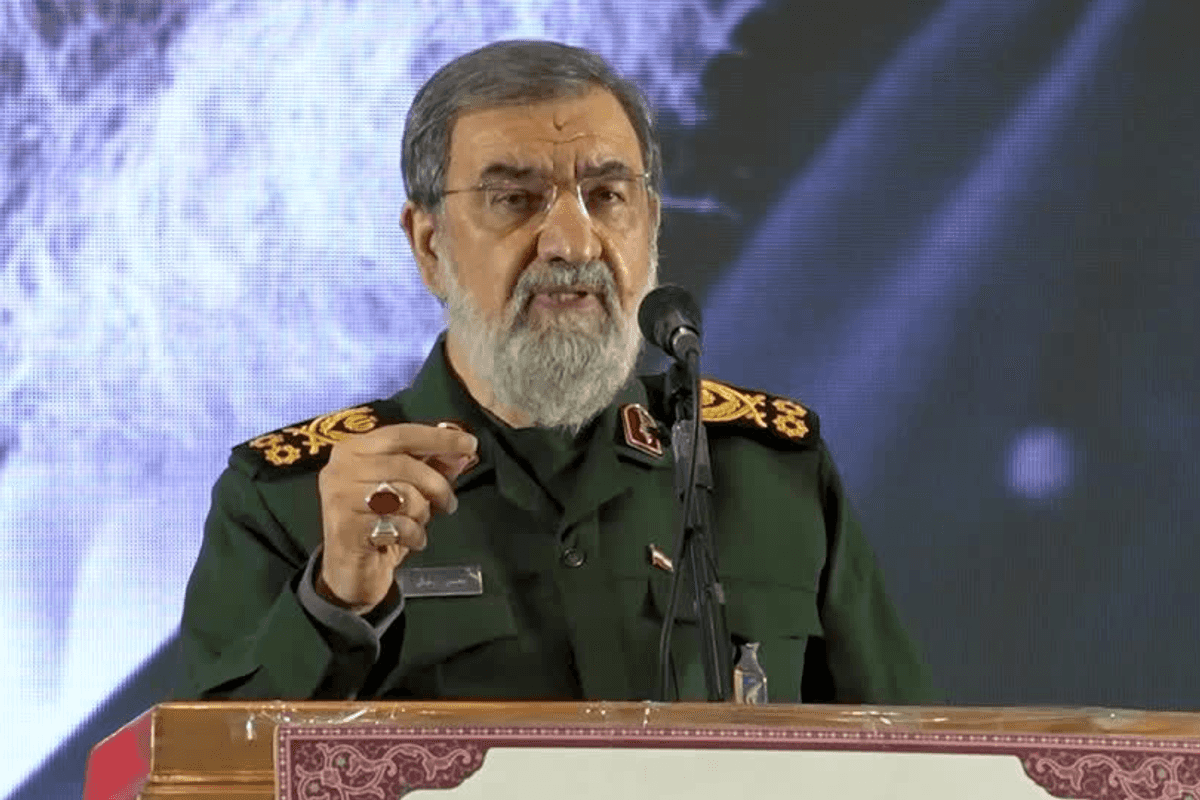
File photo of Iran security chief Mohsen Rezaei.
Reuters
Iran will adopt a "new strategy" on the battlefield, in diplomacy and against economic pressure, Mohsen Rezaei, secretary of Iran's Supreme National Security Council, said on Wednesday.
His warning came as Iran and the United States traded some of their heaviest attacks in weeks, with tensions spreading across the Middle East.
What is Iran's new strategy against the US?
Rezaei said Iran's new approach would combine military, diplomatic and economic measures, warning it would shatter the foundations of U.S. pressure on Tehran. The statement followed a fresh wave of Iranian strikes on U.S. positions across the Middle East, launched in retaliation for an extensive American bombardment that Tehran said killed 18 people.
"You will soon see that Iran's new strategy on the battlefield, in diplomacy and in confronting the economic blockade will shatter your foundations," Rezaei said in a post on X. Iran's Revolutionary Guards said it had targeted U.S. bases in Jordan, the United Arab Emirates, Kuwait, Bahrain and Iraq's autonomous Kurdistan region, in what appeared to be the most intense exchange between the two sides in several weeks.
Why is Iran accusing the US of a war crime?
Iran's warning came as it accused the United States of committing a war crime in a deadly strike on a wedding ceremony in southern Iran, adding another flashpoint to the escalating conflict. Foreign Ministry spokesman Esmaeil Baqaei called the attack in Sirik evidence of Washington's failure in the conflict, writing on X that "the true face of the war crime is in Sirik, where a wedding ceremony was brutally bombed."
The Iranian Red Crescent said four people, including a child, were killed and more than 50 wounded in the strike, according to Iranian officials. Ali Mallahi, the bride's father and owner of the building, told Iranian state television the strike hit the residential property during his daughter's wedding ceremony. Iran's top negotiator, Mohammad Bagher Ghalibaf, condemned the attack, describing the United States as "Satan" in a post on X.
The U.S. military did not directly address the wedding incident. Tim Hawkins, a spokesman for U.S. Central Command, said the U.S. military "never targets civilians," contrasting its actions with those of Iran's Revolutionary Guards.
How has the fighting spread across the Middle East?
The latest escalation began on Sunday, when Washington struck Iranian targets in the first known U.S. attacks in several weeks. Iran subsequently targeted U.S. troops in Jordan and the UAE, while projectiles also struck two oil tankers in separate incidents. Saudi Arabia's national shipping company said on Wednesday that two Filipino sailors were killed in one of the tanker attacks on Monday.
U.S. President Donald Trump said the American strikes were carried out in retaliation for what he described as an Iranian attempt to lay sea mines in the Strait of Hormuz and a missile attack on a U.S. base in Jordan. The exchanges intensified on Tuesday, with Iranian state television reporting explosions in southern areas near Hormuz and on an island in the Gulf, as well as a U.S. strike on an airport in Kerman province.
What casualties have been reported in the latest strikes?
Iran's state news agency IRNA reported that seven people were killed and eight wounded in a missile strike in southern Khuzestan province. The Revolutionary Guards separately said four of its personnel were killed in a U.S. strike in Kermanshah province, while three paramilitary personnel died in an attack on Lavan island in the Gulf. The Guards said its retaliatory operations included a coordinated missile and drone attack on U.S. bases in Erbil, according to IRNA.
Iran also announced a missile attack on a U.S. Marine training camp in Jordan near the Gulf of Aqaba, according to Iranian media. Air raid sirens sounded in Bahrain and Kuwait as the fighting widened, and Kuwaiti authorities said an Iranian drone struck a residential complex and caused a fire.
In Bahrain, Ghizlan Saad, a mother of two, said the overnight sirens had revived memories of earlier attacks and the fear associated with them. "I hope the situation resolves quickly," she said, adding that the new school year had only recently begun after a year marked by wartime conditions.
How did the six-month conflict begin?
The conflict began in late February with U.S.-Israeli strikes on Iran that killed Supreme Leader Ayatollah Ali Khamenei, according to Iranian authorities. A fragile ceasefire later collapsed following attacks on commercial shipping in the Strait of Hormuz, a critical global energy route that previously carried about one-fifth of the world's oil supplies. The waterway has remained a major source of tension, with Iran maintaining pressure on shipping while Washington pursues a counter-blockade of Iranian ports.
Iran's Revolutionary Guards said on Wednesday that two oil tankers caught fire after hitting mines, accusing the U.S. military of encouraging the vessels to use what it called an illegal route.
Is a new Iran-US ceasefire still possible?
Trump has repeatedly warned Tehran against retaliation. In a post on his Truth Social platform on Tuesday, he said Iran would face attacks at a "much harder and higher level" if it responded to U.S. strikes, writing: "There will be very little left of the Islamic Republic of Iran!"
Despite the escalating rhetoric and military exchanges, Iranian President Masoud Pezeshkian said on Tuesday that Tehran would match any U.S. move towards a renewed agreement aimed at ending the conflict. The conflicting signals, military escalation alongside renewed references to negotiations, underscore the deepening uncertainty over whether the two sides can break the latest cycle of attacks and return to diplomacy.



Comments
See what people are discussing