

Iran holds US responsible for 'deliberate' attacks on civilians
Iran holds the US responsible for deliberate attacks on civilians, accusing Washington of war crimes as Gulf tensions escalate

News Desk
The News Desk provides timely and factual coverage of national and international events, with an emphasis on accuracy and clarity.
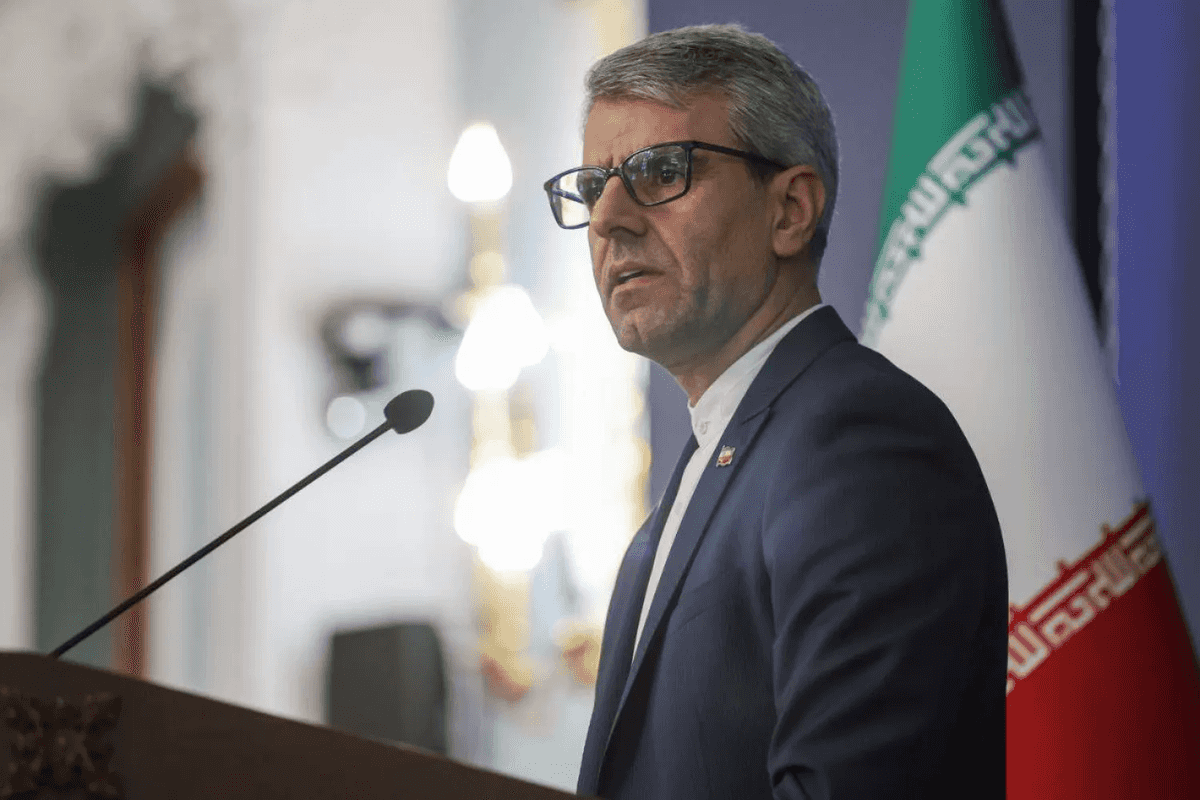
Iran accused the United States on Monday of deliberately targeting civilians and violating international humanitarian law, as Tehran warned Washington against further attacks and tensions continued to rise across the Gulf.
Why does Iran hold the US responsible for attacks on civilians?
Foreign Ministry spokesperson Esmaeil Baqaei said Tehran would hold Washington responsible for what he described as war crimes, rejecting US attacks as unintended civilian casualties rather than deliberate acts of aggression, state news agency IRNA reported. He pointed to recent US strikes on civilian sites, including a wedding ceremony on Iran's Sirik Island, as evidence of a systematic pattern.
Baqaei questioned how US forces could mistakenly strike civilian locations while claiming to use precision-guided weapons. Iran's accusations came as senior officials stepped up threats of retaliation against any further US attacks on Iranian assets, raising fears of a wider confrontation that could disrupt energy supplies through the Strait of Hormuz.
What has Iran threatened over US strikes on its assets?
"Strike our assets and you get struck," Iranian parliament speaker Mohammad Baqer Qalibaf said after US and Iranian forces exchanged attacks on shipping over the weekend. The confrontation has already pushed oil prices towards six-week highs and sharply reduced commercial shipping through the strait, a vital route for global oil and liquefied natural gas supplies.
Iran holds US accountable for ‘deliberate’ attacks on civilians: @IRIMFA_SPOX https://t.co/oyY9kewEFn pic.twitter.com/wBUGDwFPej
— IRNA News Agency ☫ (@IrnaEnglish) September 7, 2026
Iran has tightened restrictions on shipping since the conflict began with US and Israeli strikes on Feb. 28. Senior security official Mohsen Rezaei said on Sunday that Tehran would soon announce a new restricted zone in the Gulf and introduce a shipping corridor through the Strait of Hormuz. He said vessels entering the restricted area would be placed on an Iranian sanctions list and that the strait would remain open only if the United States halted what Tehran calls attacks, threats and sabotage.
Qalibaf, who is also Iran's top negotiator, separately warned that US oil and gas interests in the region could be vulnerable to retaliation.
How are strikes in Lebanon linked to the wider conflict?
Regional tensions were further heightened on Monday after Israeli strikes on a town in southern Lebanon killed at least 12 people, according to Lebanon's health ministry. The strikes raised fears of a renewed Israeli campaign despite a June ceasefire with Iran-backed Hezbollah and added another obstacle to diplomatic efforts aimed at ending the wider conflict. Iran has insisted that any lasting agreement with Washington must also address Israeli military action in Lebanon.
More than six months into the conflict, US President Donald Trump has yet to achieve his stated goals of dismantling Iran's nuclear program, limiting its ability to attack neighboring states and creating conditions for a change of leadership in Tehran. Iran's leadership remains in power and has continued to demand sanctions relief, while seeking to retain leverage over the Strait of Hormuz, through which about a fifth of global oil and LNG shipments passed before the war.
After a relative lull in August, fighting has intensified since the collapse of an interim ceasefire in June, while diplomatic efforts have made little progress.
How has shipping through the Strait of Hormuz been affected?
US forces struck three Iranian oil tankers on Saturday, including one near Kharg Island, Iran's main oil export hub, according to US Central Command. The strikes followed attacks by Iran's Revolutionary Guards on US warships operating in the region.
Shipping data showed an average of only 10 commodity vessels a day passed through the Strait of Hormuz over the 10 days to Sunday, the lowest level since May. The decline highlights the growing economic consequences of the conflict as Iran retains the ability to disrupt one of the world's most important energy corridors.
How are US sanctions affecting Iran's economy?
At home, Iran is also facing mounting economic pressure from US sanctions and disruptions to oil exports. Three senior Iranian sources told Reuters that Washington's efforts to restrict Iranian oil shipments and curb sanctions evasion were becoming increasingly difficult for Tehran to withstand.
Qalibaf acknowledged that the pressure extended beyond the battlefield, citing inflation, unemployment, currency volatility and market instability among the challenges facing the country.
How has the conflict affected the wider Gulf region?
The conflict has also affected Gulf Arab states. The United Arab Emirates has faced Iranian missile attacks and disruptions involving oil tankers operating in the Strait of Hormuz. UAE presidential adviser Anwar Gargash said on Monday that Abu Dhabi was developing alternative routes for energy exports and trade to ensure they were not held hostage by the conflict.
The disruption is also being felt in the United States, where higher fuel prices are adding to economic pressures ahead of November's congressional midterm elections.





Comments
See what people are discussing