

Is Neuro-Linguistic Programming actually effective?
We explore one of the most frequently asked questions around the practice: Is NLP genuinely useful, or is it just another trending buzzword?

Saneela Jawad
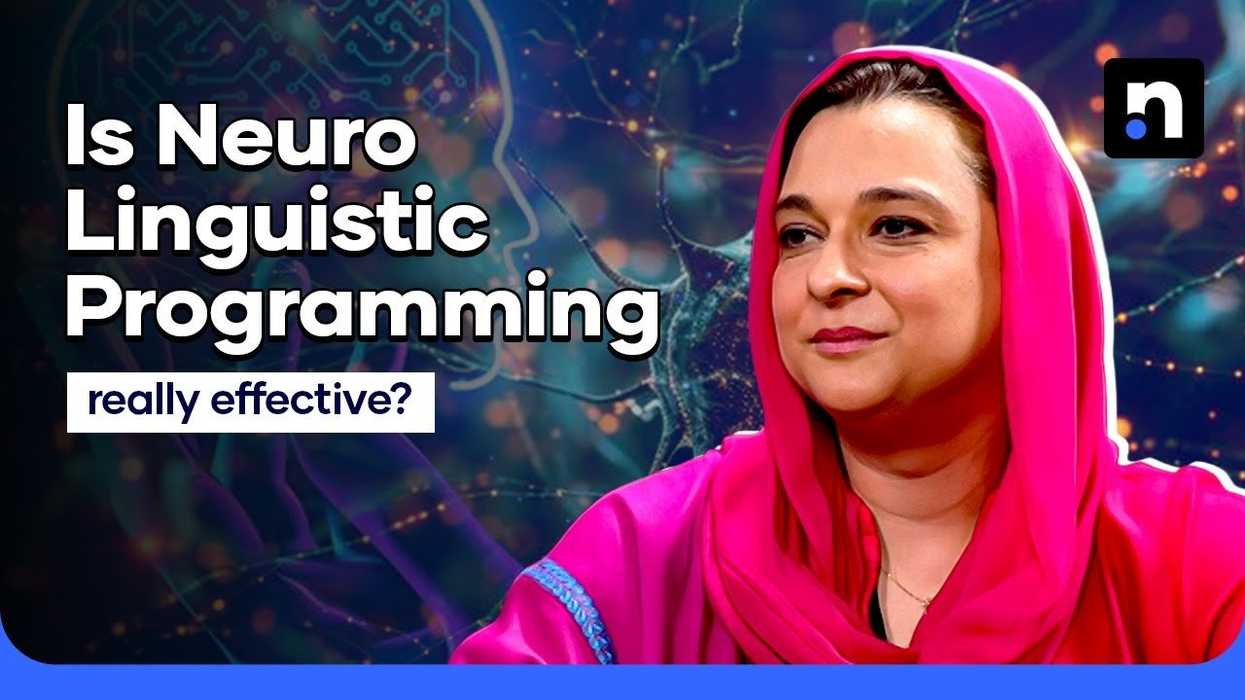
NLP is a practical, personal and professional development tool, not therapy.
Its effectiveness depends on the individual and their willingness to take responsibility.
NLP is gaining popularity in Pakistan due to rising pressure and performance-driven environments.
Common myths around manipulation and hypnosis are largely misunderstood.
Neuro-Linguistic Programming (NLP) is a new technique that is not only gaining popularity worldwide but in Pakistan as well. It is described as a practical way of understanding how people think, communicate, and form behavioural patterns, and basically rewire our brains for the best.
In a recent podcast with an NLP trainer, Mona Rana, we explored one of the most frequently asked questions around the practice: Is NLP genuinely useful, or is it just another trending buzzword? As NLP continues to appear in corporate trainings, coaching spaces, and even classrooms across Pakistan’s major cities, the discussion aimed to unpack what NLP really is—and what it is not.
NLP is often described as a way of learning how to communicate better with oneself, and as the trainer explained, its effectiveness can vary greatly depending on the individual and the situation. Rather than offering fixed solutions, NLP focuses on how people respond to circumstances and whether they are willing to stay conscious of their own thinking patterns.
The trainer broke the term down into three parts: “neuro,” referring to how we process experiences through the mind and senses; “linguistic,” meaning the language we use—both spoken and unspoken; and “programming,” which points to the habits and responses we repeat in daily life. Rather than changing who a person is, NLP focuses on changing how they respond to situations.
“If you change the language that you use with yourself, you will change the actions you take,” Mona explained to Nukta.
A central idea discussed in the conversation was the concept of being either “above the line” or “below the line.” This line represents a choice in how one reacts to life. Being below the line reflects a victim mindset, where people feel things are happening to them and believe they have little control over outcomes. In contrast, operating above the line means taking full responsibility for one’s responses. It doesn’t deny that difficult situations exist, but it emphasises the ability to choose how to think, act, and move forward despite them.
Linked closely to this idea is the distinction between the “circle of concern” and the “circle of influence.” NLP encourages shifting attention away from these concerns and toward the areas where we do have influence: our reactions, decisions, communication, and habits. By focusing on what is within one’s control, individuals can reduce emotional overwhelm and respond more constructively to challenges.
In addition to that, the conversation centered on misconceptions surrounding NLP. It is often confused with therapy, but NLP is not a medical or clinical treatment and cannot replace counselling, psychotherapy, or psychiatric care. Instead, it falls under personal and professional development, commonly used to improve communication skills, leadership, confidence, learning strategies, and habit formation. Its appeal lies in its practical and experiential nature—people often notice small shifts quickly because NLP focuses on doing, not diagnosing.
The trainer also addressed why NLP is trending in Pakistan right now. Increased workplace pressure, economic uncertainty, and a growing focus on self-improvement have pushed many young professionals, entrepreneurs, and educators to look for accessible tools to manage stress and performance. NLP is now most visible in corporate HR trainings, private coaching programs, leadership workshops, and select educational institutions.
“There are a lot of top CEOs and politicians who have, whether in this country or elsewhere, used NLP. The reason I think it’s growing is that if you choose to, it works,” she said.
Naturally, myths were a major part of the discussion. One common fear is that NLP is manipulative or that it relies heavily on hypnosis, where people lose control.
“The purpose of hypnosis is to reduce the barriers between the conscious and unconscious. In that moment, if I tell you to do something and that is not within your value system, you won’t be able to do it,” she clarified.
NLP works as a set of practical tools that help people become more aware of their inner dialogue, take ownership of their responses, and make intentional choices in everyday life.
Throughout the podcast, the trainer stated that NLP is not a miracle cure, but a set of tools. For Pakistanis considering it, understanding its scope, limits, and ethical use is essential before investing time or money.





Comments
See what people are discussing