

Judicial inquiry recommends JIT to probe Mir Raza Ali murder, cites police lapses
A judicial inquiry recommends a JIT to probe the Mir Raza Ali murder, citing serious police lapses and a collapse in public trust in the investigation.

News Desk
The News Desk provides timely and factual coverage of national and international events, with an emphasis on accuracy and clarity.
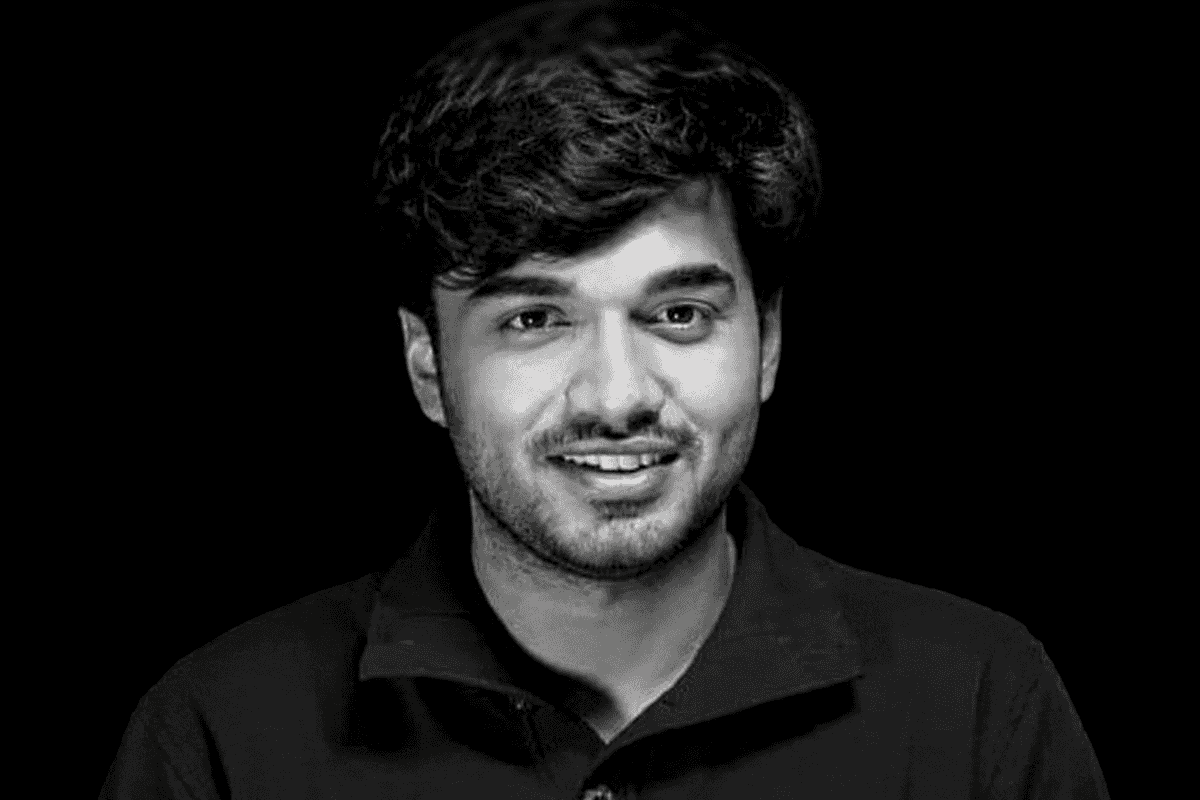
A judicial inquiry has recommended a joint investigation team (JIT) led by Deputy Inspector General (DIG) Irfan Baloch to probe the Karachi murder of businessman Mir Raza Ali, citing serious police lapses and lost public trust. The report by Sindh High Court Justice Omar Sial was made public on Tuesday.
What did the judicial inquiry recommend in the Mir Raza Ali murder case?
The inquiry recommended a JIT with representatives from intelligence agencies, Rangers and cybercrime investigators. It also proposed a separate high-level committee, preferably led by the Federal Investigation Agency (FIA), to examine whether police officers violated the Penal Code during the first 10 days of the investigation.
Justice Sial submitted the report to the Sindh Chief Minister on Oct. 15. He said accommodating the victim's family's request for a JIT was the most viable way to limit further damage to the provincial government's reputation and restore confidence in the investigation.
The report said the team should include senior representatives from the Inter-Services Intelligence, Intelligence Bureau, Pakistan Rangers in Sindh and the National Cyber Crime Investigation Agency. This would ensure an impartial, comprehensive and credible investigation.
"This extreme step is necessary to restore public trust and end speculation," the report said.
Justice Sial said the investigation had reached a critical point. Public confidence was so severely damaged that even an accurate conclusion or the arrest of the actual perpetrator might not be accepted.
"The police department bears responsibility for this profound trust deficit between itself and society," the report said. It added that the divide appeared nearly impossible to repair in the case.
Could police officers face criminal proceedings?
The inquiry recommended that the separate committee determine whether officers violated Sections 201, 166(2) and 218 of Pakistan's Penal Code. The sections cover three offenses. These are destroying evidence or giving false information to shield an offender, a public official disobeying a lawful order, and a public official preparing false or incorrect records.
The committee should initiate criminal proceedings, alongside departmental action, against officers found responsible, the report said.
The commission said it lacked investigative powers and could not conclusively establish whether an active cover-up had occurred. However, it said certain unexplained actions raised the possibility that one may have taken place.
The inquiry said an active cover-up in the early stages could not be ruled out. It added that senior officers had failed to acknowledge or address investigative lapses.
Why did the inquiry call the police investigation a serious failure?
The report described the investigation as a serious failure, citing inadequate leadership and supervision, unprofessional conduct, poor evidence handling and a lack of communication with the victim's family and the public. It said police responded promptly after being informed about a dead body but then failed to follow the procedures needed to withstand judicial scrutiny and support a successful prosecution.
Senior officers showed "tunnel vision," focusing on their initial theory rather than examining other possibilities, the report said. It added that officers, driven by ego and a desire to avoid admitting mistakes, kept defending their original conclusion instead of pursuing further investigation.
The inquiry also criticized the involvement of dozens of authorized and unauthorized police officers in collecting evidence and questioning key people without properly documenting their actions. As a result, officers were unwilling to accept responsibility for investigative failures and instead blamed subordinates or denied the problems, it said.
Police also failed to provide timely, transparent updates to the family and the public, despite the commission's recommendation to appoint a focal person for communication, according to the report. To restore credibility, it recommended that police openly acknowledge and apologize for operational failures and immediately launch formal inquiries against the officers responsible.
How did police first classify Mir Raza Ali's death?
Mir Raza Ali, a 25-year-old graduate of Karachi's Institute of Business Administration, later launched a waffle-making business called Wafilix. He left his home in the city's PECHS neighborhood in the early hours of July 28, 2026.
His family reported him missing that day, and police registered a kidnapping case at Ferozabad police station. His body was found the following morning within the jurisdiction of Gulistan-e-Johar police station.
An initial post-mortem was conducted at Jinnah Hospital on July 29, and the body was buried that day. Police initially treated the death as a suicide, but the family raised concerns, alleging that the body bore visible signs of torture.
After the police surgeon identified anomalies in the first post-mortem report, the body was exhumed on Aug. 8 for further examination. The final official report, issued around Aug. 31, identified the cause of death as a perforating firearm injury from the back, ruling out suicide, according to the inquiry. Police subsequently added murder and destruction-of-evidence charges to the original case.
Why did the inquiry conclude Mir Raza Ali was murdered?
The judicial inquiry said the suicide theory relied on unverified text messages, selected video footage obtained by then-SHO Adeel Afzaal and the first post-mortem report by Dr. Osama Shaikh. That report did not itself conclude that the death was a suicide.
The report said the bullet trajectory, wound location, absence of blood, condition of the body, acid burns and anesthesia detected in the blood contradicted the suicide theory. It concluded that Mir Raza had been murdered.
It also criticized police for releasing findings before conducting a thorough investigation. Officers should have examined all circumstances surrounding the death even if suicide had remained a possibility, it said.
What was the controversy over the medical board?
The inquiry questioned the handling of the medical board tasked with examining the body after exhumation. On Aug. 6, a court authorized the exhumation under Section 176(2) of the Code of Criminal Procedure. It directed the Karachi police surgeon and Sindh health secretary to form a specialized medico-legal board, and an eight-member board headed by Police Surgeon Dr. Summaiya Syed was notified that day.
However, the Sindh Health Directorate issued a revised notification in the early hours of Aug. 7. It replaced the original experts with a five-member board that included doctors from Hyderabad and Jamshoro. The family rejected the revised board, delaying the exhumation.
Following public pressure and a legal notice from the family, the government restored the original eight-member board. The exhumation was completed at 11 a.m. on Aug. 8.
Justice Sial described the change as an irregular and legally flawed intervention by senior officials in the Sindh Health Secretariat. The secretary and special secretary of health could not provide a convincing explanation for the abrupt decision, the report said.
The inquiry also examined an Aug. 9 meeting at the chief minister's house attended by Dr. Osama and senior police officers. The meeting prompted speculation that the doctor had been pressured over his initial report, but the commission found no evidence establishing that this was its purpose.
The report said the chief minister was entitled to seek a briefing on a high-profile case. Inviting the police surgeon, however, would have improved transparency.
How did the judicial commission carry out its inquiry?
The commission began its work on Aug. 27 and recorded statements from 50 witnesses during 20 sessions through Oct. 7. It visited the crime scene and surrounding areas on Oct. 5.
It held its sessions open to the public to promote transparency and reduce speculation.




Comments
See what people are discussing