

Judicial rebuke exposes deep gaps in Pakistan’s investigation system
Evidence was there but police let case slip through their fingers; a Peshawar court has now called it out

Kamran Ali
Correspondent Nukta
Kamran Ali, a seasoned journalist from Khyber Pakhtunkhwa, Pakistan, has a decade of experience covering terrorism, human rights, politics, economy, climate change, culture, and sports. With an MS in Media Studies, he has worked across print, radio, TV, and digital media, producing investigative reports and co-hosting shows that highlight critical issues.
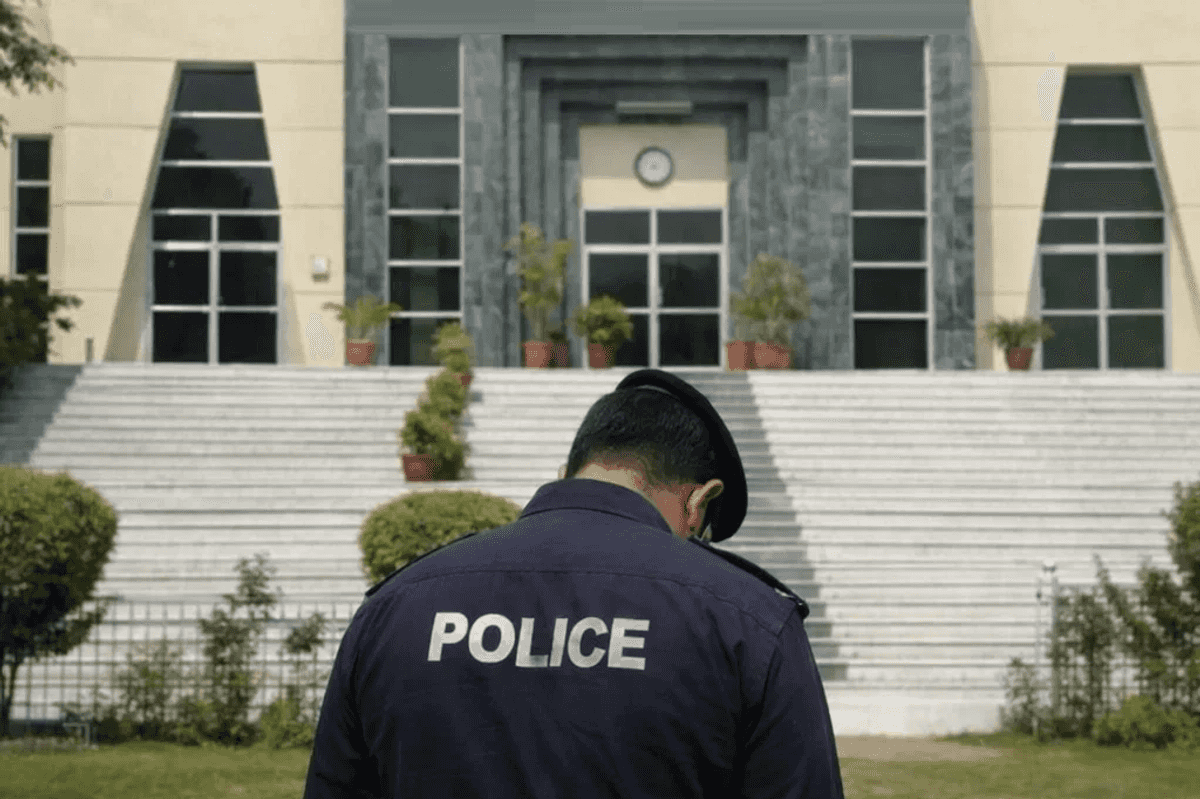
The trail went cold not because evidence was missing, but because it was ignored — and the court has finally put the blame where it belongs.
AI generated
When a murder trial collapses, the usual explanation is “lack of evidence.” But a rare judicial rebuke in Pakistan has laid bare a deeper problem: evidence was gathered, acknowledged by police, and then inexplicably ignored — raising questions about whether justice is being derailed by official inaction rather than weak proof.
A sessions court judge in Peshawar issued a show-cause notice to a senior police officer, accusing investigators of conduct that “stifled the prosecution” of a 2024 murder case. The case involves the killing of Mehfooz Bibi, and the judge said the police failed to follow through on key leads - including CCTV footage that reportedly captured the accused shooting the victim.
Evidence collected, but not pursued
During court proceedings, the investigating officer admitted he had obtained CCTV footage from the crime scene that allegedly shows the suspect firing at Bibi. Yet the recording was never sent for forensic verification. The officer said the omission was due to workload pressures, but the court dismissed this explanation as unacceptable — especially since the officer himself claimed the suspect was identifiable in the video.
The judge’s notice cited multiple investigative failures, including a lack of steps to protect eyewitness testimony. The ruling suggested that the case may have been weakened not because of missing evidence, but because the authorities failed to properly use what they had.
Fair trial breached
The Bibi case is not isolated. In October last year, Pakistan’s criminal justice system faced another major embarrassment when two defense lawyers — Shabir Hussain Gigyani and Ali Azim Afridi — were stopped and assaulted by members of the legal community to prevent them from appearing in court for a murder trial involving a lawyer.
Legal experts said the incident violated Article 10(A) of Pakistan’s Constitution, which guarantees the right to a fair trial, and highlighted a pattern of systemic dysfunction affecting justice delivery.
System overloaded
The Peshawar High Court (PHC) says the backlog is immense: 260,132 cases are pending across courts in Khyber Pakhtunkhwa province, and 10,216 prisoners remain undertrial.
A five-member bench led by Chief Justice Atique Shah issued a detailed 149-page ruling on the province’s criminal justice failures.
The court said the state’s primary duty is to protect citizens’ lives, liberty and property, but it has repeatedly failed to prevent crime, conduct thorough investigations, prosecute effectively, and deliver timely justice.
Structural weaknesses exposed
The PHC noted that amendments made to the Police Act in 2024 reduced police autonomy, reversing reforms introduced in 2017. Muhammad Alam Khan Shinwari, Additional Inspector General (IG) Investigation, said the province’s Forensic Science Laboratory needs urgent modernization to restore credibility to investigations.
Shinwari also criticized the misuse of First Information Reports (FIRs), which are meant only to start an inquiry but are often treated as definitive proof. He said resource constraints prevent a proper separation of operational and investigative police functions.
Retired police officer Naseeb Jan described current training standards as “unsatisfactory,” and said officers are frequently diverted to non-law enforcement tasks such as polio campaigns and Muharram security duties. He added that promotions now depend on seniority rather than merit, undermining accountability.
IG Police Zulfiqar Hameed warned that political interference remains a major problem. He said recent amendments allow the chief minister to control postings and transfers of senior officers, eroding institutional independence.
Hameed also cited chronic underfunding, lack of training, limited incentives and a shortage of skilled investigators. He said false complaints and public reluctance to testify further weaken the justice system.
District and sessions judges told the court that poor investigations, lack of cooperation from the legal community, and weak magistrate oversight are major reasons for delays and miscarriages of justice.
Judicial oversight and legal misconduct
The PHC said the system relies on public cooperation but is frequently hampered by false complaints, misleading statements, and witness reluctance. Investigators, the court said, often fail to follow mandatory procedures under the Criminal Procedure Code, allowing criminals to evade punishment while innocent people face wrongful cases.
The court also condemned disruptive actions by lawyers — including strikes, boycotts, courtroom lockouts, and pressure on judges — saying such tactics violate constitutional rights and undermine justice.
Court orders reforms
The court noted that while duty magistrates operate 24/7, prosecutors are often unavailable to assist investigators or appear in court when needed. It directed the Director General of Prosecution to ensure prosecutors remain available at all times.
The PHC also empowered trial courts to impose fines for unnecessary adjournments and to order compensation for delays that cause hardship or financial loss.




Comments
See what people are discussing