

Karachi power outages hurt businesses, exports, KCCI warns
KCCI says some areas face up to 14 hours of load-shedding, while K-Electric says temporary additional cuts linked to RLNG constraints have ended

Business Desk
The Business Desk tracks economic trends, market movements, and business developments, offering analysis of both local and global financial news.
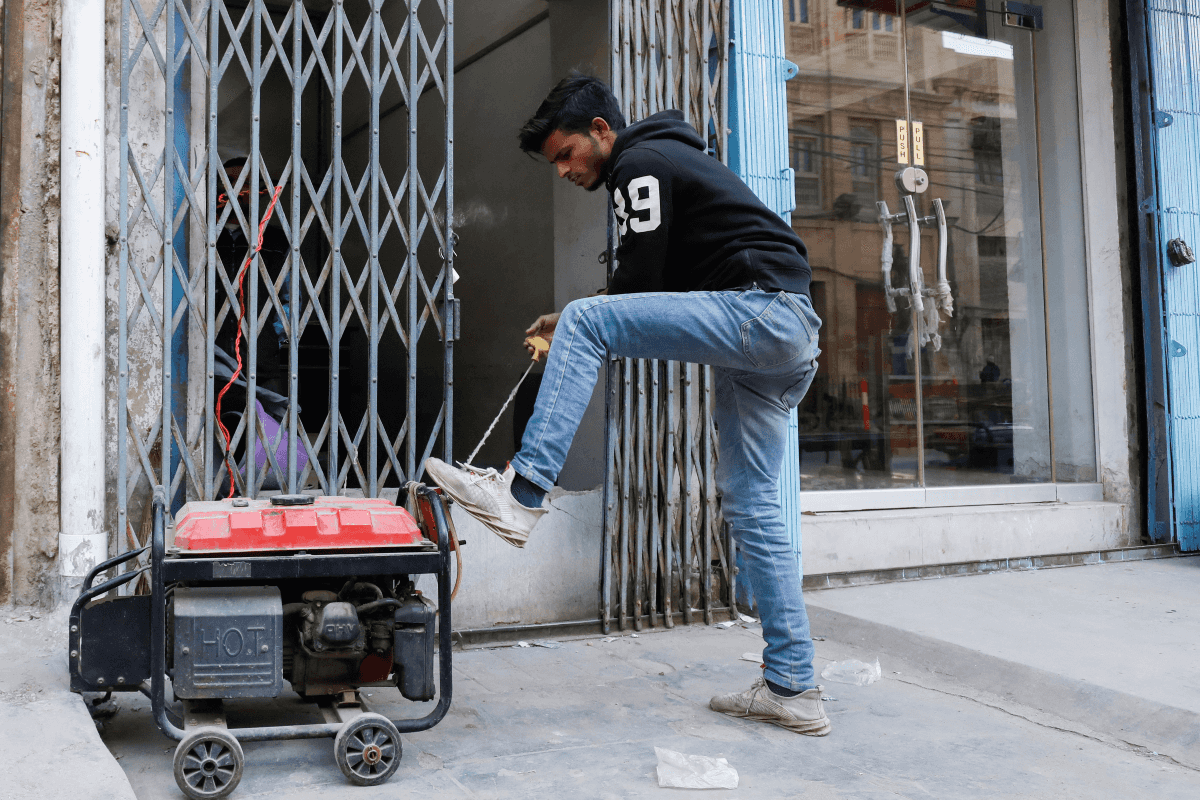
A man starts a generator outside his shop during a country-wide power breakdown in Karachi, Pakistan.
Reuters
The Karachi Chamber of Commerce and Industry (KCCI) has warned that prolonged power outages are hurting industrial production, commercial activity, employment and exports in the city.
KCCI President Talat Mahmood said Wednesday that the chamber had received reports of load-shedding lasting up to 14 hours a day in some areas, while localities previously exempt from scheduled cuts had also experienced outages.
He urged K-Electric to restore normal electricity supplies as soon as possible and provide a clear explanation of the disruptions and measures being taken to address them.
“Karachi cannot be expected to drive Pakistan’s economy while its industries, businesses and households are repeatedly plunged into darkness,” Mahmood said in a statement.
Separately, K-Electric said Tuesday that temporary additional load management had ended after RLNG supplies resumed and generation at its Bin Qasim Power Station-III stabilized.
How are Karachi's power outages affecting businesses?
KCCI says unreliable electricity is increasing manufacturers’ operating costs, disrupting production schedules and threatening deliveries and export commitments. Smaller businesses are particularly exposed because many cannot afford alternative power arrangements, while outages also affect shops, offices, service providers and daily-wage workers who depend on uninterrupted commercial activity.
Mahmood said manufacturers were already facing high energy expenses and intense competition in international markets.
Power cuts were also increasing the risk of machinery-related damage and making it harder for businesses to meet production and delivery schedules, he said.
Small and medium-sized enterprises were particularly vulnerable because many could not afford expensive backup power arrangements.
The chamber said the disruption was also affecting markets, offices and service providers, with consequences for daily-wage workers whose earnings depend on continued commercial activity.
What has K-Electric said about the outages?
K-Electric had attributed the recent additional load management to reduced RLNG availability caused by disruptions to international LNG supplies and delayed cargoes.
On October 13, the utility said RLNG supplies had resumed and generation at BQPS-III had stabilized, allowing it to end the temporary additional load-management measures. It said scheduled outages would continue in areas with high electricity theft and low bill recovery.
Mahmood acknowledged that fuel shortages could create difficulties for electricity generation but said consumers should not bear the burden through prolonged outages without transparent explanations, effective contingency planning and clear timelines for relief.
He called on K-Electric to review its load-management arrangements, maximize available generation and electricity supplies, and coordinate with federal authorities to minimize disruptions.
The chamber president also urged the federal and provincial governments, the Ministry of Energy and relevant regulators to investigate the causes and extent of the outages and ensure shortages were managed transparently, equitably and within defined timelines.
The latest criticism comes after the National Electric Power Regulatory Authority on August 31 ordered K-Electric to stop unannounced, unscheduled and excessive load-shedding and to end feeder-level outages based on aggregate technical and commercial losses.
NEPRA said commercial defaults, electricity theft or high loss ratios on a feeder could not be used to cut supply to compliant, paying consumers. The regulator also said KCCI had previously lodged formal complaints over excessive load-shedding affecting commercial and industrial consumers and that separate proceedings on those complaints were underway.
KCCI said it would continue pressing for reliable and affordable electricity for Karachi’s industries, businesses and residents.





Comments
See what people are discussing