

KSE-100 among world's worst performers in March quarter as oil shock hits Pakistan stocks
Pakistan's KSE-100 fell 15% in Q1 2026, ranking third worst globally. Here's what drove the sell-off and what analysts expect next

Haris Zamir
Business Editor
Experience of almost 33 years where started the journey of financial journalism from Business Recorder in 1992. From 2006 onwards attached with Television Media worked at Sun Tv, Dawn Tv, Geo Tv and Dunya Tv. During the period also worked as a stringer for Bloomberg for seven years and Dow Jones for five years. Also wrote articles for several highly acclaimed periodicals like the Newsline, Pakistan Gulf Economist and Money Matters (The News publications)
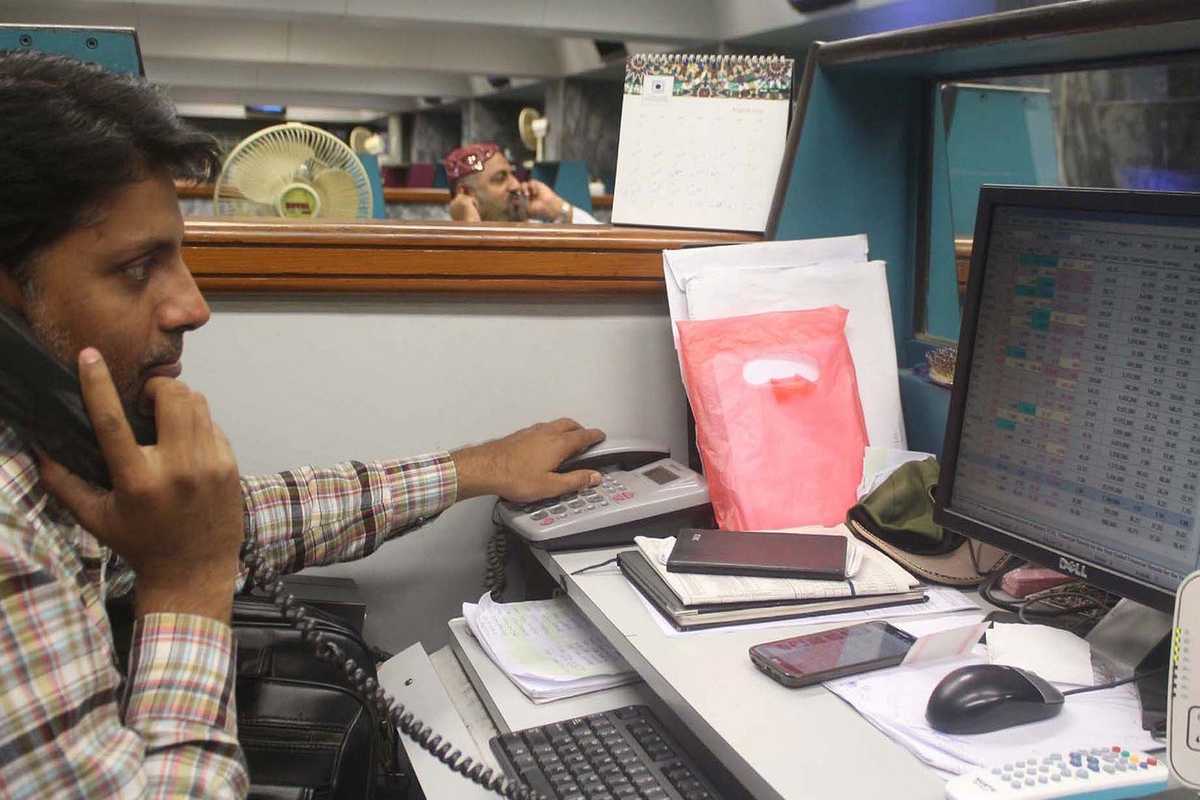
Pakistan's KSE-100 index ranked among the world's worst-performing stock markets in the March 2026 quarter, posting a 15% decline as surging global oil prices and geopolitical tensions hit investor sentiment. This came despite Pakistan having no direct involvement in the Middle East conflict, according to analyses by Topline Securities and InterMarket Securities.
Why did the KSE-100 fall so sharply in the March 2026 quarter?
The KSE-100 dropped 15% in the March 2026 quarter, making it the third worst-performing market globally. Pakistan's heavy dependence on imported energy is the primary reason.
The country imports roughly 85% of its energy needs, with petroleum imports projected at $15 billion for FY26, equal to about 22% of total imports. A surge in global oil prices above $100 per barrel amplified the impact on the external account and investor sentiment.
India and Indonesia fared even worse, recording declines of 19.4% and 19.0% respectively. Global crude prices briefly crossed $120 per barrel, driven by escalating US-Iran tensions and uncertainty following the UAE's planned exit from OPEC+.
"Despite no direct exposure to the conflict, Pakistan remains highly vulnerable to oil price shocks given its external account dynamics," analysts at Topline Securities said.
How are rising oil prices affecting Pakistan's macro outlook?
The oil price surge has intensified concerns around inflation, fiscal pressures and external account stability. Pakistan's central bank has already raised its policy rate by 100 basis points to 11.5%, reinforcing expectations of a higher-for-longer interest rate environment. Analysts warned that fuel-driven inflation could further limit upside in equities.
Topline Securities said a 100-basis-point increase in the risk-free rate, now around 13%, reduces its earlier index target by 7–8%. The firm revised its benchmark KSE-100 forecast to 187,000, down from 203,000.
InterMarket Securities said rising fuel costs, inflation and interest rates are likely to keep market sentiment subdued in the near term. "The direction of the market will remain closely tied to global oil prices and macro indicators, alongside expectations of an IMF tranche of $1.2 billion," the firm said.
Is the Pakistan stock market a good investment right now?
The KSE-100 is currently trading at a forward price-to-earnings ratio of about 7.8 times, still below its historical average, which suggests valuations remain supportive.
Both Topline Securities and InterMarket Securities maintained a cautiously constructive stance, recommending selective investment strategies rather than broad exposure. Analysts cautioned that rising rates and persistent geopolitical risks could cap near-term gains.
Topline said it remains overweight on exploration and production, fertilizers and banks, while advising caution on cyclicals due to growth risks. InterMarket Securities highlighted a shift toward defensive and high-yield stocks.
What could trigger a recovery in Pakistan stocks?
Both firms said any de-escalation in Middle East tensions or a pullback in oil prices could provide relief and revive investor risk appetite. Until that point, volatility is expected to persist. Analysts advised investors to focus on fundamentally strong, dividend-yielding stocks while monitoring global oil prices and upcoming IMF tranche developments.




Comments
See what people are discussing