

Over 12M families in Pakistan to get PKR 13,000 under Ramadan relief package
The Economic Coordination Committee has approved funds for the Prime Minister’s Ramadan Relief Package 2026

Business Desk
The Business Desk tracks economic trends, market movements, and business developments, offering analysis of both local and global financial news.
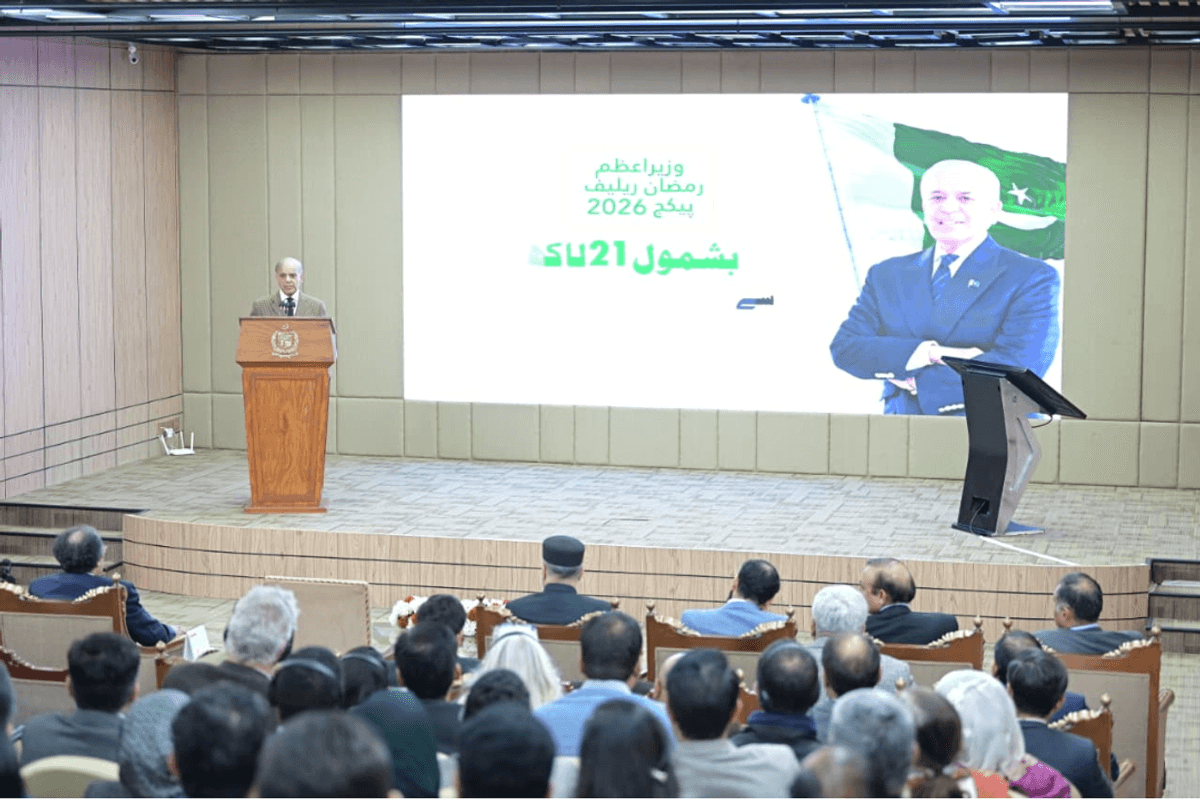
Prime Minister Shehbaz Sharif addresses the launch ceremony of the PM Ramadan Relief Package 2026
Facebook / Govt of Pakistan
Over 12 million families in Pakistan will receive PKR 13,000 each during Ramadan as part of the relief package announced by the prime minister.
The Prime Minister’s Ramadan Relief Package 2026 was approved by the Economic Coordination Committee (ECC), Pakistan’s highest economic decision-making body.
An official statement said the Ministry of Poverty Alleviation and Social Safety presented a summary to the ECC for approval.
Under the package, funds will be transferred to beneficiaries through digital wallets during the first week of Ramadan.
The total size of the package is PKR 38 billion.
The Committee also discussed the operational expenditure component proposed in the summary and stressed the importance of providing a detailed breakdown of costs, including payments to partner financial institutions and expenses related to outreach and communication. The ECC granted in-principle approval for operational expenses of PKR 1 billion, subject to submission of comprehensive details to the Finance Division to ensure that allocations are aligned with actual needs and financial rules.
The ECC also took note of the urgency involved in initiating payments and regularized the steps already taken to facilitate early disbursement through re-appropriated funds. It was agreed that expenditures would be managed in a manner consistent with Pakistan’s fiscal commitments and that any unutilized funds would be surrendered in accordance with established procedures.
The package will use data from the National Socio-Economic Registry to select the beneficiaries to eliminate discretion and strengthen accountability.
It envisages one-time cash assistance to identified low-income households, along with the enhancement of existing social protection support, with funds to be disbursed directly to beneficiaries through formal banking and digital channels to ensure secure and efficient delivery.





Comments
See what people are discussing