

Kuwait and Bahrain respond to Iran drone attacks amid Hormuz battle
Kuwait and Bahrain face renewed Iran drone attacks as Tehran and Washington fight for control of the Strait of Hormuz.

News Desk
The News Desk provides timely and factual coverage of national and international events, with an emphasis on accuracy and clarity.
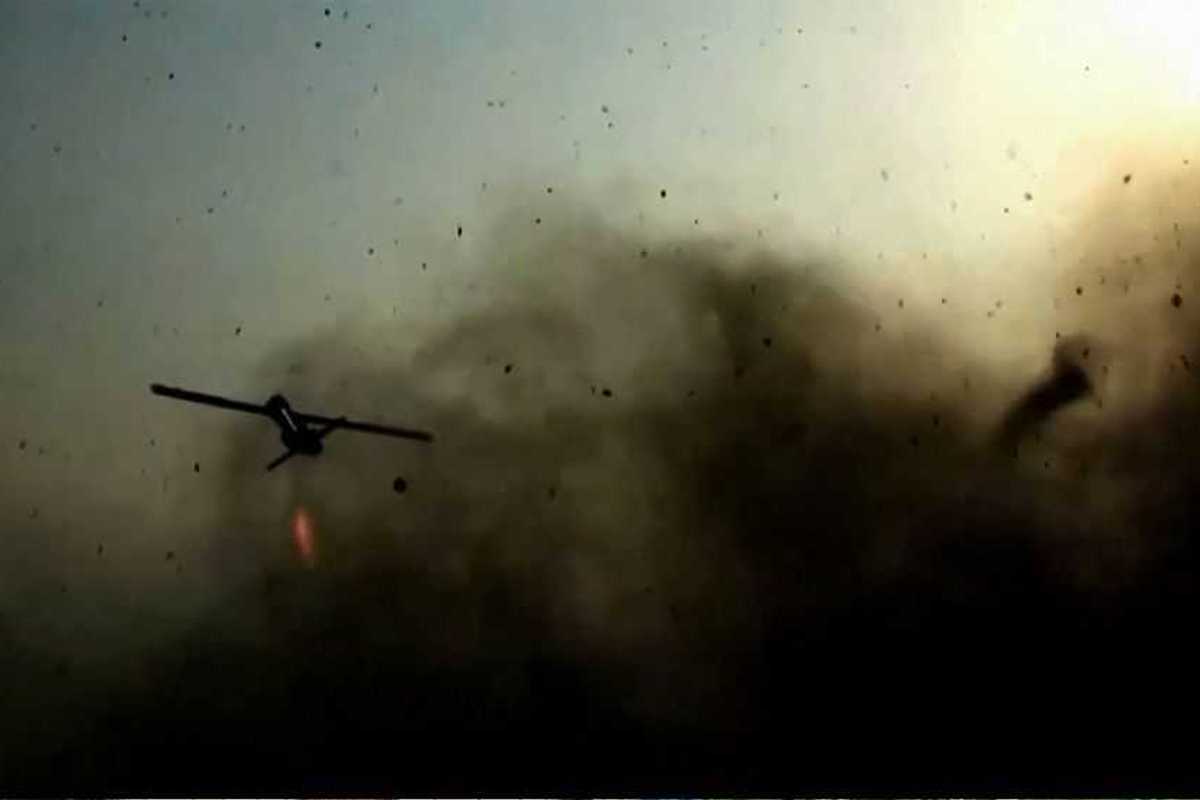
This screen grab taken on July 15, 2026, from video footage released by Iran's Revolutionary Guards (IRGC)'s Sepah News website on July 14, 2026, allegedly shows a drone being launched from an undisclosed location towards US targets in Bahrain and Kuwait.
AFP
Kuwait and Bahrain faced renewed Iran drone attacks on Thursday, their militaries said, as Tehran and Washington exchanged strikes in a battle for control of the Strait of Hormuz. The Kuwaiti army said it was responding to a fresh salvo of drones, blaming what it called Iranian aggression. An AFP journalist reported hearing explosions near Kuwait City.
Why did Iran attack Kuwait and Bahrain?
Iran said it targeted radar systems, an air defense system, and fuel storage facilities at the Ali al-Salem airbase in Kuwait, along with US military installations at Sheikh Isa Airbase in Bahrain. Tehran has said its strikes are aimed at US forces in the region, not civilians.
Is Bahrain under attack by Iran?
Bahrain said earlier Thursday that its air defenses had intercepted a previous round of Iranian drones, with warning sirens sounding across the capital, Manama. Kuwait reported a similar interception before the fresh wave of drones hit later in the day.
Both Gulf nations have accused Iran of targeting civilian sites, despite Tehran's insistence that its operations are directed only at American military assets stationed on their soil.
Why does the Strait of Hormuz matter in this conflict?
The Strait of Hormuz is a vital waterway for Gulf exports of oil and gas, and control over it sits at the center of the wider standoff between Iran and the United States. The latest fighting was sparked by Iran's targeting of ships transiting the strait.
Kuwait and Bahrain have faced repeated Iranian attacks since hostilities between Washington and Tehran resumed on July 7. The renewed fighting has pushed the conflict beyond the intensity seen since before an April 8 ceasefire.
What happened to the truce agreement?
A June agreement had set a 60-day truce meant to pave the way toward a permanent end to the war and reopen the Strait of Hormuz to normal shipping traffic. That truce has not held, and hostilities have escalated rather than eased in the weeks since.
The renewed Iran drone attacks on Kuwait and Bahrain underscore how fragile that agreement proved to be, with both Gulf states now drawn directly into a conflict they are not formally party to.




Comments
See what people are discussing