

Pakistan sees sharp drop in lead paint, but most brands still exceed toxic limits
11 major brands now lead-free, but 47 million Pakistani children still affected by lead poisoning—the second highest rate globally
Umer Zaib
Senior Producer
Umer Zaib is a Karachi-based journalist and good Samaritan with five years of experience at Pakistan's leading news publications.
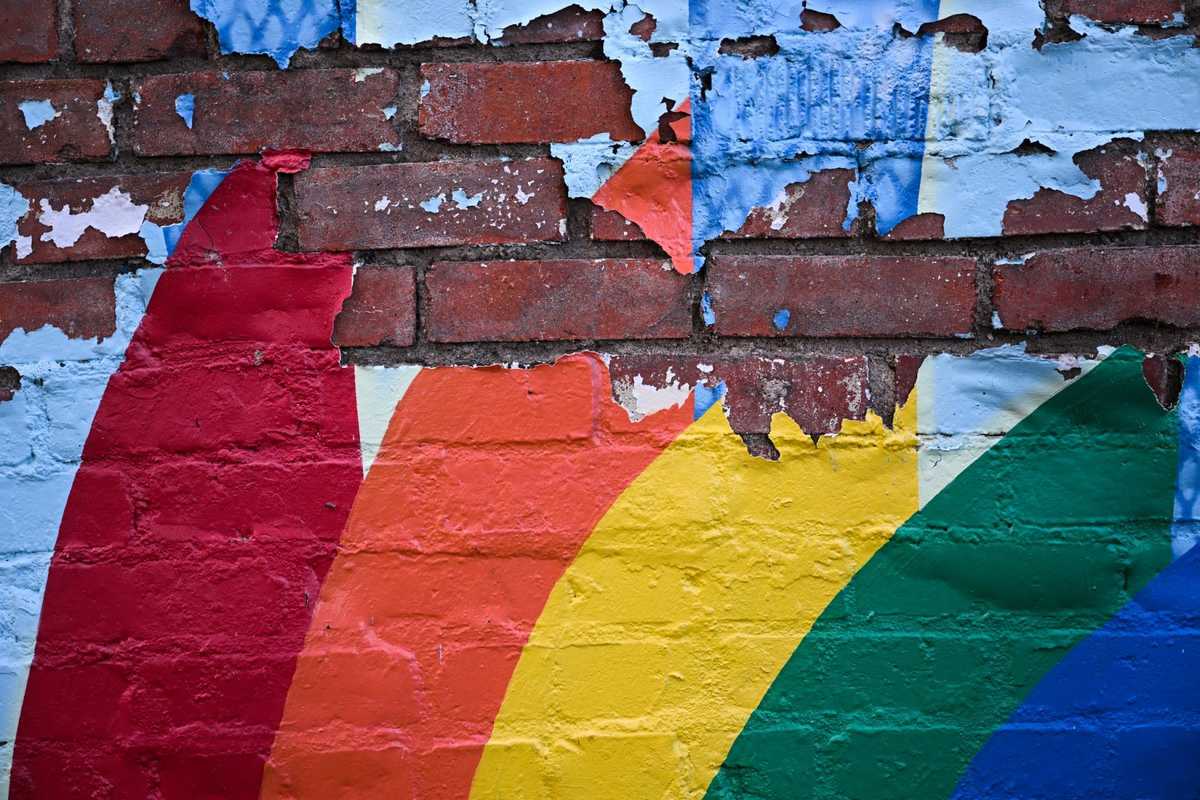
The paint of a rainbow peels off a brick wall.
AFP/File
Lead paint market share fell from 88% to 41% between 2021 and 2024
However, 59 of 84 brands tested still exceed Pakistan's legal safety limit
The informal sector, representing 34% of the market, remains untested
The share of Pakistan's paint market selling toxic lead paint has fallen by more than half since 2021, according to new government research, but seven out of ten brands tested still exceed safe limits.
The study, released Wednesday by the Pakistan Standards and Quality Control Authority (PSQCA) in partnership with the international nonprofit Lead Exposure Elimination Project (LEEP), found that market share of lead paint dropped from 88% to 41% between 2021 and 2024. All 11 major paint brands are now lead free, compared with just three in 2021.
"This is a huge achievement," said Abid Hasan, LEEP's country manager for Pakistan, at a press conference in Karachi. "When the private sector and the government work together, we can achieve goals which benefit future generations."
Progress concentrated at the top
Of 84 brands tested, 59 still produced paint with lead concentrations exceeding Pakistan's legal limit of 90 parts per million. Some exceeded the limit by nearly 1,000 times, with one sample registering 82,000 ppm.
The non-compliant brands are mostly small and medium manufacturers who collectively account for about 10% of the formal market. While officials emphasize their small market share, these brands remain widely available in hardware stores across Pakistan's major cities, from Karachi to Peshawar.
Lead poisoning affects an estimated 47 million children in Pakistan, the second highest rate in the world. The toxin causes permanent brain damage, stunted growth, anemia and behavioral disorders. Hassam Khattak, LEEP's program manager for Pakistan, called lead paint "a devastating source of lead poisoning for children" that also damages their future earning potential.
Pakistan's informal paint sector, which accounts for an estimated 34% of the market, represents an enduring research gap. These unregistered manufacturers were not directly tested, though researchers assume they continue using cheap lead based pigments.
Questions over stalled progress
Dr Sayeda Zia Batool, director general of PSQCA, acknowledged the work remains incomplete.
"Our journey will continue until we bring this 41% to zero percent," she said, adding that enforcement notices have been issued to 37 non-compliant brands since May.
However, closer examination of the data suggests progress may have plateaued. In the 2021 baseline study conducted by Aga Khan University and LEEP, 81% of brands tested contained dangerous lead levels. Today that figure stands at 70%. While this represents improvement, it is far less dramatic than the market share statistics suggest.
When pressed on whether progress had stalled given that 40% of samples were contaminated in 2021 and a similar proportion of brands remain non-compliant today, Dr Batool said the figures represent different parameters. She emphasized that large brands, which dominate household use, are now fully compliant.
"The small brands, we will now start checking their samples as well," she said.
Sustainability concerns
Perhaps the most pressing question is what happens when LEEP scales back its involvement. The international nonprofit has provided technical expertise, free reformulation support to manufacturers, and access to accredited laboratories in the United States for sample testing.
Pakistan's domestic testing infrastructure has historically been inadequate. Three local laboratories have now been validated with up to 94% accuracy compared to international standards, but whether this capacity will be maintained and funded remains uncertain.
However, this claim warrants scrutiny. In 2022, environmental researcher Dr Nausheen Zaidi sent samples spiked with known lead concentrations to PCSIR Lahore for testing. The lab reported no lead content in samples containing 500 micrograms per liter, a concentration 50 times the WHO permissible limit for water.
Dr Batool insisted that building local capacity is "a national responsibility" that PSQCA is already addressing.
"We don't have to wait for LEEP's coming and going," she said. "This is a national agenda."
Khattak noted that expanding to other lead sources, including cosmetics and spices, will require similar efforts to identify lead free alternatives and convince manufacturers to adopt them.



Comments
See what people are discussing