

Maduro’s fall paves way for American grip on Venezuela’s oil wealth
Kamran Khan says US operation showed a 'new model' of regime change via intelligence, not war

News Desk
The News Desk provides timely and factual coverage of national and international events, with an emphasis on accuracy and clarity.
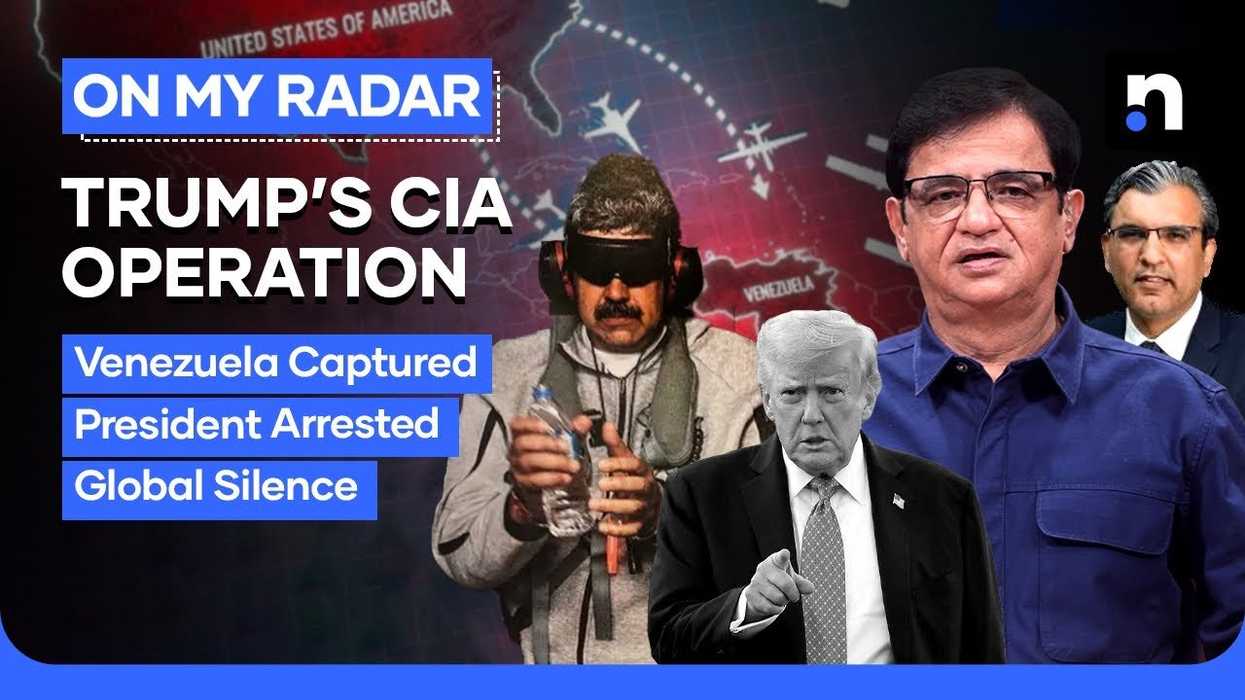
In an unprecedented development that has sent shockwaves across global political and energy circles, U.S. forces have taken control of Venezuela’s oil and gas resources following the arrest of President Nicolas Maduro and his wife.
The operation, executed in the early hours of January 3, 2026, involved highly coordinated intelligence and military action and marks one of the most significant examples of direct intervention by a foreign power in the 21st century. Analysts say the move underscores a shift in global power dynamics, with military strength and strategic resource control emerging as key instruments of influence.
In the latest episode of On My Radar, Kamran Khan said the operation demonstrated a “new model of intervention,” where advanced intelligence capabilities and long-term planning can achieve regime change without conventional warfare.
He noted that the arrest and subsequent transfer of Maduro to New York effectively placed Venezuela’s oil, gas, and mineral economy under U.S. control, highlighting the strategic importance of the country’s 300 billion barrels of proven oil reserves - the largest in the world - along with significant natural gas, gold, and other minerals.
According to verified sources, the operation was carried out by U.S. Delta Force units, with extensive prior intelligence from the CIA, which had infiltrated the presidential palace in Caracas.
Maduro’s security personnel were reportedly compromised or aligned with U.S. interests, allowing the arrests to occur without gunfire, clashes, or countermanded orders. U.S. officials emphasized that the mission was months in the making, combining precision military planning with deep intelligence work.
Following the arrest, Venezuela’s vice president assumed interim governance under constitutional protocols, while the U.S. began issuing operating licenses to American energy companies and restructuring the state-owned oil company PDVSA.
President Trump described the operation as a necessary step to secure the administration of Venezuela’s energy resources, though international reactions were mixed. Russia emphasized respect for Venezuelan sovereignty, China condemned the action as a serious violation, and European nations responded cautiously, with Italy calling it “justified” and France issuing limited criticism.
Observers note that the operation marks a turning point in U.S. foreign policy, demonstrating the ability to assert control over strategic assets without conventional conflict or multilateral approval.
Experts warn that this could set a precedent for other resource-rich nations, particularly in Latin America and Asia, and has already fueled speculation in China regarding Taiwan. Social media in China widely circulated footage of Maduro’s arrest, with millions of users suggesting similar actions could be taken elsewhere.
The January 3 operation and the global response signal a new phase in international relations, where direct action and strategic intelligence are increasingly shaping outcomes in ways that challenge traditional diplomacy, multilateral oversight, and global norms.


Comments
See what people are discussing