

Migrant women tell of sexual harassment in Spain's crisis-hit Ceuta
Migrant women in Spain's Ceuta describe sexual harassment while sleeping rough outside an overcrowded reception centre awaiting registration

News Desk
The News Desk provides timely and factual coverage of national and international events, with an emphasis on accuracy and clarity.
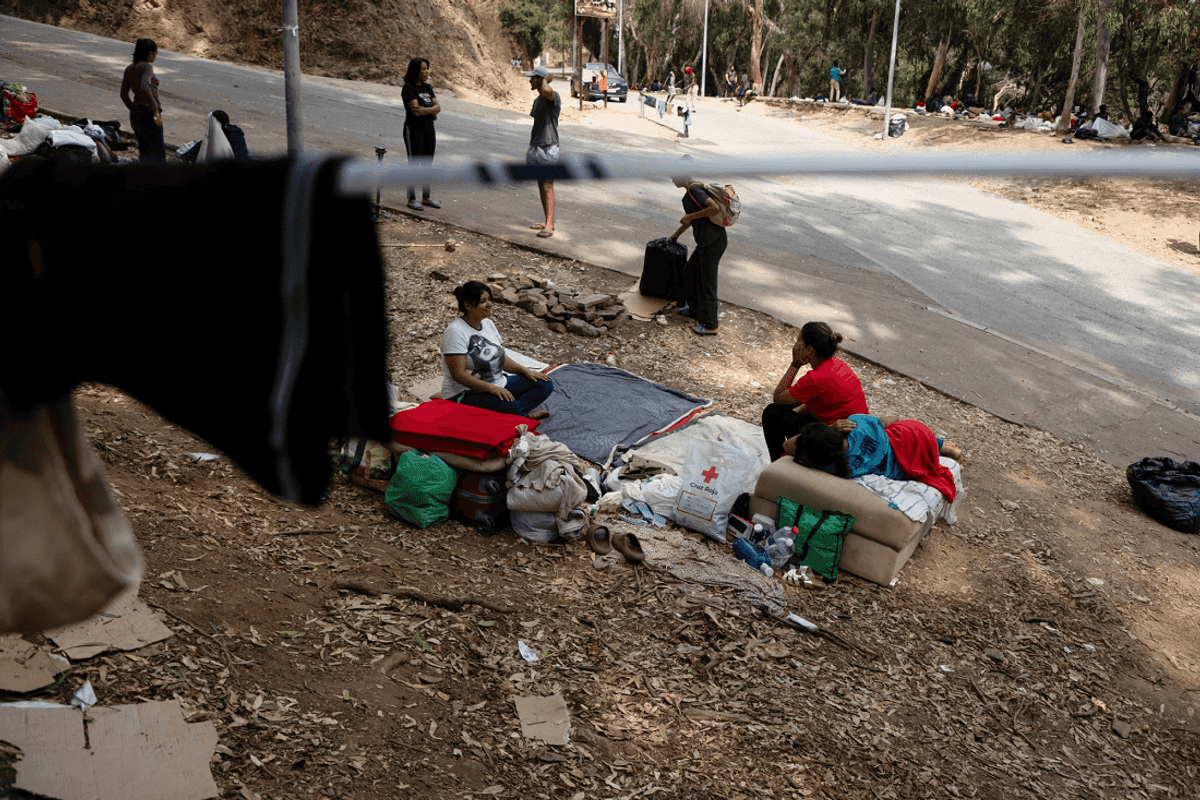
Women camped outside Ceuta's overcrowded reception center say men also staying nearby have harassed them.
Reuters
Some women who entered Spain's North African enclave of Ceuta on 30 July, as part of a mass migrant crossing, say the hardship of sleeping rough while awaiting registration is worsened by fear of sexual harassment.
More than a dozen have camped on a wooded roadside near the government-run reception center.
Why are migrant women in Ceuta reporting sexual harassment?
Women camped outside Ceuta's overcrowded reception center say men also staying nearby have harassed them, particularly at night and when using toilets.
Reuters spoke to three women who described being followed and targeted by men of different nationalities. The center houses about 700 people, 200 more than its capacity, according to local authorities.
How many migrants remain in Ceuta after the mass crossing?
Between 5,000 and 8,000 people remain in the enclave, authorities say, more than two weeks after 72,000 people crossed from Morocco in a deadly border surge.
Most were young men and many have since returned to Morocco, but a significant number of women and children also made the crossing. As of Tuesday, 2,168 children had been registered, along with 500 adult asylum applications as of the previous week.
Wafae Atid, 28, from the northern Moroccan city of Taza, told Reuters that she and more than a dozen other women had built a makeshift camp from cardboard boxes, inflatable mattresses and blankets as close as possible to a police van stationed at the centre's entrance. "It's really bad. A lot of guys are trying to attack the girls every night, sometimes just when you go to the toilet. They follow you," she said.
How many sexual assault cases have been reported in Ceuta?
Spain's largest police union, the SUP, said 15 sexual assaults of varying severity had been reported in Ceuta since 30 July, with the significant majority of victims underage. It said most alleged assaults occurred in the beach and wooded areas where migrants were concentrated, and that many cases would be difficult to prosecute due to limited information from victims. Spain's Interior Ministry and police declined to confirm the figure.
Women who reported assaults were attended to by police, judicial and health authorities and are now housed in a new centre for sexual assault victims run by local social services, the SUP added. It called for the expansion of Ceuta police's women and families unit and more civilian safety patrols of the camps. For comparison, Spanish Interior Ministry figures show 42 sexual assaults and five rapes were reported in Ceuta in 2024, the latest full year for which data is available.
What sexual assault cases have gone through Ceuta's courts?
Ceuta's court authorities confirmed last week that they had processed three cases of sexual assault against migrant women allegedly committed by Moroccan migrants who arrived during the mass influx. Two of the cases involved minors, one allegedly assaulted by penetration and forced to sell drugs, and another indecently touched, with the accused men jailed on remand in both cases. In a third case, an adult woman alleged she was indecently assaulted, and a judge ordered the alleged assailant's deportation.
A separate deportation order was issued for a man who broke into a local woman's home and climbed into her bed in his underpants, on a charge of breaking and entering.
How is Spain responding to the crisis in Ceuta?
Spain's Interior, Migration and Equality Ministries did not respond to Reuters questions about the allegations. Health Minister Monica Garcia confirmed medical services had treated five women for sexual violence and said the most urgent challenge was providing shelter. "The best way to protect women and children is to ensure they are in safe spaces," she said.
Migration and Social Security Minister Elma Saiz said authorities and the Red Cross were distributing 4,000 meals daily along with female hygiene kits, and that temporary reception centres with 1,500 further places were being set up. She said the government remained committed to providing humanitarian assistance.
Several human rights organisations, including Save the Children, Unicef and Amnesty International, have warned of the extreme vulnerability of migrant women and girls in Ceuta. They have called for urgent measures including safe housing and specialised support. Lucila Rodriguez-Alarcon, director-general of the PorCausa Foundation, said such situations of sexual violence arise when large numbers of displaced people are held together in overcrowded spaces, and called for gender-segregated toilets and showers with the same safety protocols used in refugee camps.
What are migrant women saying about conditions in the camp?
Atid said she is unable to sleep at night out of fear, instead resting between 7am and noon in the relative safety of daylight. She said the women have no access to separate showers, and that her periods have stopped due to the stress of her situation. She said she would rather live on the street in Spain than remain in Morocco, which she left because her religious family did not accept her lack of belief in Islam.
Her neighbour at the camp, Dikra Tetouan, 20, crossed into Ceuta with her 17-year-old sister. She said women in their makeshift camp have faced repeated harassment and sexual assault. "We try to protect ourselves by screaming so that people gather around us," Tetouan said. She added that police had told the women there was little they could do.





Comments
See what people are discussing