

Military gains boost Pakistan’s global standing, but economy remains fragile
Kamran Khan says Pakistan’s global standing has improved, but debt, inflation and weak exports remain risks.

News Desk
The News Desk provides timely and factual coverage of national and international events, with an emphasis on accuracy and clarity.
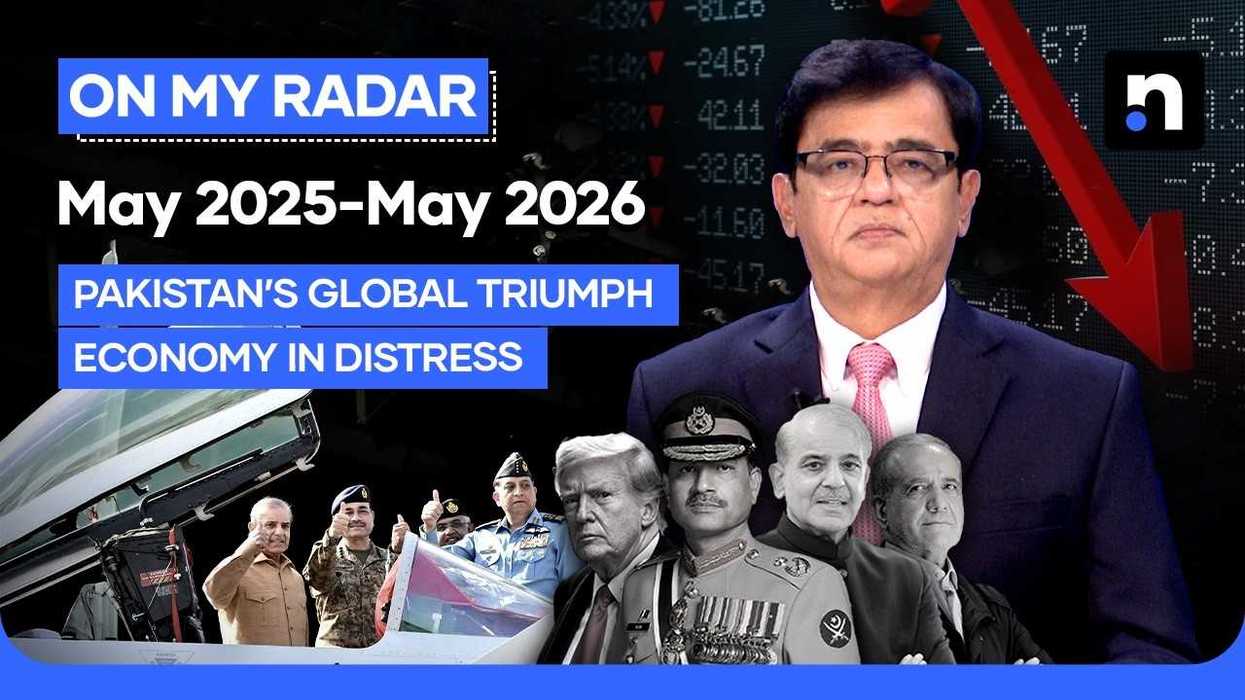
Kamran Khan says Pakistan’s military success against India last year strengthened the country’s global standing, but warned that economic weakness, rising inflation and structural problems continue to threaten long-term stability.
Speaking during an episode of “On My Radar,” Kamran Khan marked the first anniversary of Marka-e-Haq, referring to the May 2025 military confrontation between Pakistan and India.
Kamran Khan said Pakistan had successfully countered what he called Indian aggression following the April 2025 Pahalgam incident in Indian-administered Kashmir, which India blamed on Pakistan-based militants.
He said Pakistan’s response changed regional perceptions and elevated the country’s international prestige.
Marking the anniversary, Pakistan’s armed forces held a joint press briefing attended by senior military officials.
According to Kamran Khan, Inter-Services Public Relations Director General Lt. Gen. Ahmed Sharif Chaudhry said India had failed to provide evidence linking Pakistan to the Pahalgam attack even a year later.
Kamran Khan said the military spokesperson questioned who was responsible for the attack and claimed India’s “terrorism narrative” had collapsed internationally.
He also quoted Chaudhry as saying war between two nuclear-armed neighbors would be “madness,” but warned Pakistan was prepared if conflict was imposed on it.
Kamran Khan said Air Vice Marshal Tariq Ghazi highlighted the Pakistan Air Force’s operational performance during the confrontation, particularly actions taken on May 7, 2025.
He said Pakistan’s military achievements were made possible by the leadership of Chief of Army Staff Field Marshal Syed Asim Munir, whom he credited for steering the country militarily and diplomatically during the crisis.
Kamran Khan said the past year had brought Pakistan diplomatic gains, improved global prestige and recognition of its military strength.
He added that Pakistan’s role as a mediator during the recent U.S.-Iran tensions had further enhanced its international image.
However, Kamran Khan warned that military strength alone could not compensate for economic fragility.
He said Pakistan’s economy remained weak, with average GDP growth hovering around 3% since 2008.
According to Kamran Khan, imports continue to significantly outpace exports, which have remained between $25 billion and $30 billion for nearly two decades.
He said the imbalance has repeatedly widened Pakistan’s trade deficit, pressured foreign exchange reserves and pushed the country back toward International Monetary Fund support programs.
Kamran Khan said Pakistan’s public debt had reached nearly $289 billion by fiscal year 2025, while GDP stood at about $407.1 billion.
He warned that instability in the Middle East, including tensions involving Iran and the Strait of Hormuz, posed additional risks for Pakistan because the country imports 80% to 85% of its oil needs.
Kamran Khan said higher global oil prices directly increase the cost of fuel, electricity, transport, agriculture and daily consumer goods in Pakistan.
He said the government’s decision to raise petroleum prices helped prevent disruptions in the oil supply chain, but added that ordinary Pakistanis were now bearing the burden through inflation.
According to Kamran Khan, inflation has returned to double digits, reaching about 11% after nearly two years.
He said rising transportation and utility costs were further increasing pressure on households already struggling with expensive electricity and gas prices.
Kamran Khan described the State Bank of Pakistan’s decision to raise interest rates as a realistic response to inflation and external risks.
However, he said higher borrowing costs also slow industrial activity and job creation.
He noted that nearly 2 million young people enter Pakistan’s job market annually, while the economy is failing to create enough employment opportunities.
Kamran Khan said Pakistan’s current economic stability relies heavily on IMF support, deposits from friendly countries, Chinese financing and remittances from overseas Pakistanis.
He added that while the government had achieved tactical successes, including maintaining oil supplies, replenishing deposits from the United Arab Emirates and advancing Pakistan International Airlines privatization efforts, major structural reforms were still needed.
Kamran Khan said Pakistan continues to await deeper reforms in taxation, energy, exports, state-owned enterprises and industrial competitiveness.


Comments
See what people are discussing