

Modi faces growing street protests as opposition challenges India’s electoral system
Kamran Khan examines how growing protests over voter disenfranchisement are challenging Modi and reshaping India’s political landscape.

News Desk
The News Desk provides timely and factual coverage of national and international events, with an emphasis on accuracy and clarity.
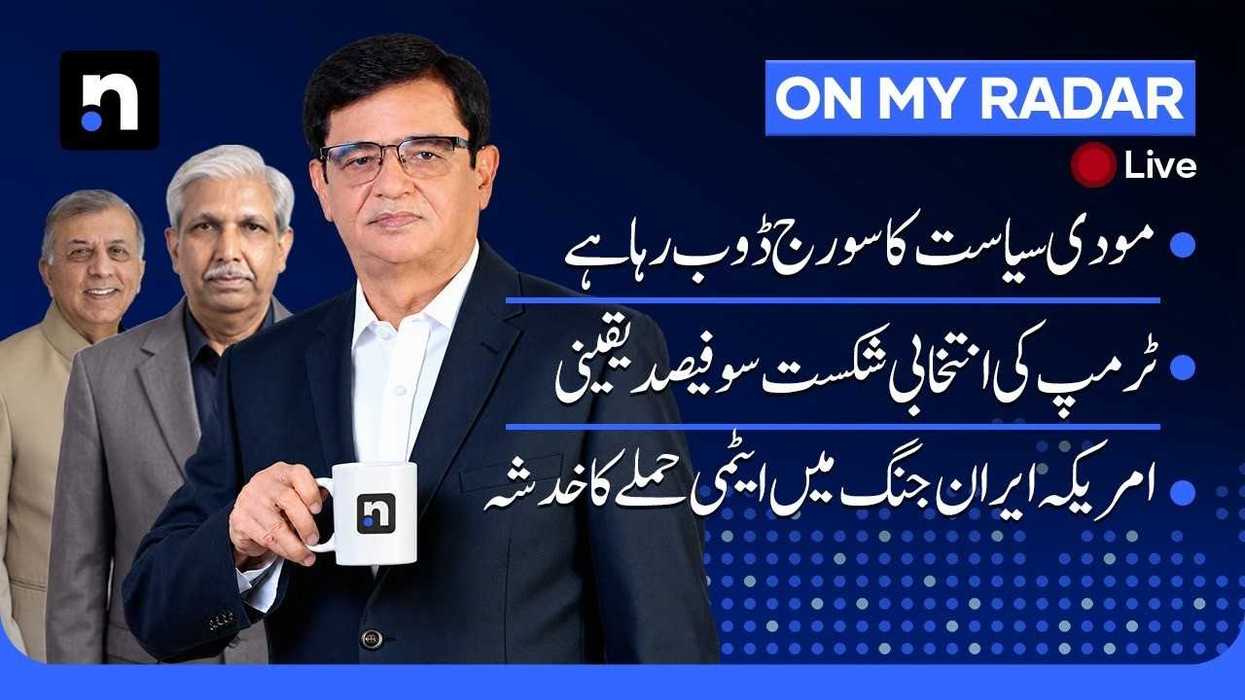
India’s Prime Minister Narendra Modi is facing renewed political pressure as opposition parties and youth-led groups take to the streets, challenging his government over alleged electoral irregularities and growing public discontent. Large demonstrations in New Delhi have brought the BJP’s political record and the credibility of India’s electoral process under renewed scrutiny, marking a more visible phase of resistance after 12 years of Modi’s rule.
In the latest episode of On My Radar, Kamran Khan examines the growing protests and the political challenges confronting Modi, arguing that the developments could signal a significant shift in India’s political landscape. At the center of the unrest is a dispute over voter registration, with opposition parties accusing the authorities of undermining the voting rights of millions of eligible citizens.
New Delhi witnessed a major anti-government demonstration on Sunday, as protesters gathered at the historic Ramlila Maidan and chanted slogans against Modi and his Bharatiya Janata Party (BJP), including “Vote thieves, vacate your seats!” The Congress party claimed that more than one million people attended the rally, which it described as one of the largest demonstrations against the government in recent years. Independent reports also indicated that hundreds of thousands of people had gathered.
The rally was not simply an expression of opposition to the government. It also reflected growing concerns over the electoral process, public frustration and the emergence of a broader political challenge to Modi’s leadership.
A major source of that discontent is the revision of electoral rolls, during which around 133 million names have reportedly been removed from voter lists across India. Opposition parties allege that the exercise has deprived millions of eligible voters, particularly Muslims, other minorities and disadvantaged communities, of their right to vote.
The controversy has also exposed disagreements within India's own Election Commission. An investigation by The Indian Express found that two members of the three-member body, Sukhbir Singh Sandhu and Vivek Joshi, raised written objections at least 14 times over the past 10 months.
Their concerns reportedly involved decisions on voter registration, the deletion of names, electoral software and control of voter data. They said key measures had been taken without their knowledge or approval, with some actions described as unauthorized and illegal.
The reported disagreements are politically significant because questions about electoral transparency have emerged not only from opposition parties but also from within the institution responsible for overseeing elections.
At Sunday's rally, opposition leader Rahul Gandhi directly targeted Modi, Home Minister Amit Shah and Chief Election Commissioner Gyanesh Kumar. Gandhi described alleged manipulation of the electoral process as a betrayal of democracy and called for legal action against the chief election commissioner. Protesters repeatedly raised the slogan, “Vote thieves, vacate your seats!”
Alongside the opposition's mobilization, a separate youth-led protest movement is adding to the pressure on the government. Operating under the name “Cockroach Janata Party”, the group has emerged as a new form of political dissent outside established party structures.
On October 10, when the movement called for protests in New Delhi, police imposed restrictions in key parts of the capital, shut down metro stations and detained more than 2,000 demonstrators. Its leaders later expressed support for Sunday's opposition rally, although they did not join the gathering.
The developments come as the BJP's parliamentary position has weakened since its landslide victories in 2014 and 2019. In the 2024 general election, the party lost its outright majority and was forced to rely on coalition partners to form the government.
The political landscape now features two parallel sources of pressure: an opposition led by Rahul Gandhi seeking to rebuild its presence on the streets, and an independent youth movement challenging government institutions through protests.
The two groups have not yet joined forces under a common platform. Their simultaneous emergence, however, points to a changing political environment in which the BJP faces growing scrutiny over electoral transparency, public rights and youth discontent, in addition to criticism of its religious nationalist and Hindutva politics.
The demonstrations do not, at this stage, pose an immediate threat to Modi's hold on power. But they indicate that public resistance to his government is becoming more visible and organised after more than a decade in office.
For Modi, the challenge is no longer confined to opposition parties and parliamentary debates. Growing street protests are adding another layer of political pressure on his government.





Comments
See what people are discussing