

MQM-P launches push for national dialogue on new Pakistan provinces
Party calls for a grand national dialogue on new provinces as Pakistan's political parties clash over administrative restructuring.

News Desk
The News Desk provides timely and factual coverage of national and international events, with an emphasis on accuracy and clarity.
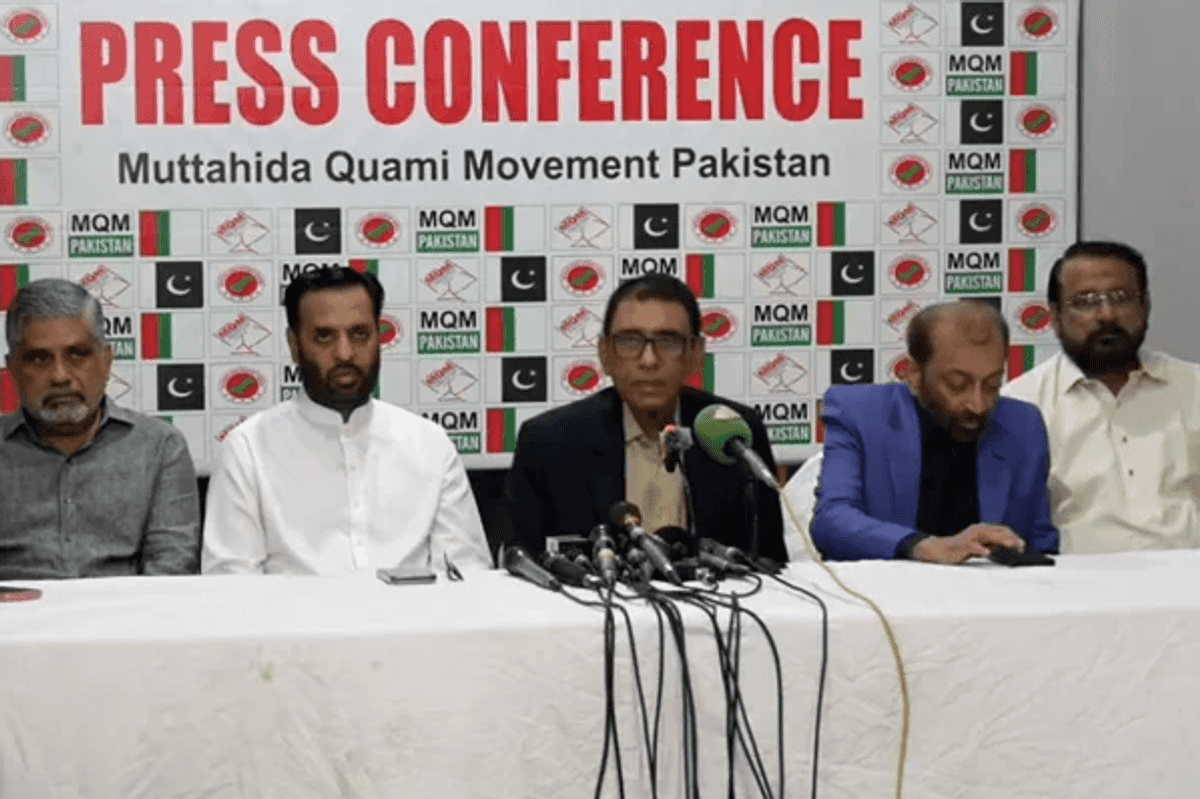
MQM-P Chairman Dr Khalid Maqbool Siddiqui made the announcement at a news conference in Karachi.
Screengrab
The Muttahida Qaumi Movement-Pakistan said on Sunday it would approach political parties to launch a "grand national dialogue" on creating new provinces. The announcement comes as debate over reorganizing Pakistan's administrative structure gains momentum. MQM-P Chairman Dr Khalid Maqbool Siddiqui made the announcement at a news conference in Karachi.
What is MQM-P's national dialogue proposal?
MQM-P wants political parties to set aside their differences and discuss proposals and reservations on creating new provinces and administrative units. Siddiqui said the party would initiate talks with political groups across Pakistan, not only in Sindh. He described the demand for new provinces as a 40-year-old MQM-P position rooted in how the current provinces were drawn.
Why is MQM-P raising this demand now?
Siddiqui said Pakistan's existing provinces were not created according to legal merit and were instead based on linguistic lines. He argued the country's growing population now requires new administrative units. He welcomed support from any political party or group backing the idea, while maintaining that the case for new provinces is strongest in Sindh.
The demand follows Interior Minister Mohsin Naqvi's call last month for parties to consider creating new provinces to address what he called the country's "collapsed" condition. A day later, the military's spokesperson also urged an administrative reset, saying Pakistan's security and stability depend on governance structures suited to a growing population. A senior government official said discussions are underway, potentially linked to a proposed 28th Constitutional Amendment, though consensus remains a significant challenge at this early stage.
How does MQM-P link new provinces to local government?
Siddiqui tied the demand to Article 140-A of the Constitution, added through the 18th Amendment in 2010, which requires provinces to devolve authority to elected local governments. He said MQM-P supported the 18th Amendment so that ordinary Pakistanis could benefit from democracy through this article. He criticized the lack of implementation and said MQM-P had previously taken the issue to the Supreme Court, which issued a detailed ruling.
Siddiqui said stronger local governance was no longer just an MQM-P demand but a national need, even though the party holds no council seats nationwide. He questioned why creating additional provinces should be viewed as controversial when the Constitution itself allows for it. He said MQM-P would engage lawyers to petition the Supreme Court over what he called disregard for its earlier ruling.
Why does PPP oppose dividing Sindh?
Siddiqui has previously called for Karachi to become a separate province from Sindh, a proposal the Pakistan Peoples Party strongly opposes. The PPP governs Sindh and is a coalition partner of MQM-P and the Pakistan Muslim League-Nawaz at the federal level. MQM-P Health Minister Mustafa Kamal said the demand was about administrative rearrangement, not division, and called for accountability if a city's livability worsens.
PPP leader Qadir Mandokhail rejected any move targeting Sindh's unity, saying his party supports new provinces elsewhere but will not allow Sindh to be divided. He said Sindh was not a line on a map that could be redrawn at will. He also criticized MQM-P's record, noting the party lacks council seats in its own constituencies, and said the PPP would not allow the constitution to be undermined in the name of dividing Sindh.
The PPP and Pakistan Tehreek-e-Insaf have separately long supported creating a South Punjab province. The question of new provinces or administrative units remains a recurring issue in Pakistan's political debate.


Comments
See what people are discussing