

Musk backs SpaceX-Tesla mega-merger as rocket firm posts maiden $4.4B profit on AI boom
Elon Musk expressed support for a potential combination between SpaceX and Tesla as independent board committees review a tie-up, following SpaceX’s first profitable quarter

News Desk
The News Desk provides timely and factual coverage of national and international events, with an emphasis on accuracy and clarity.
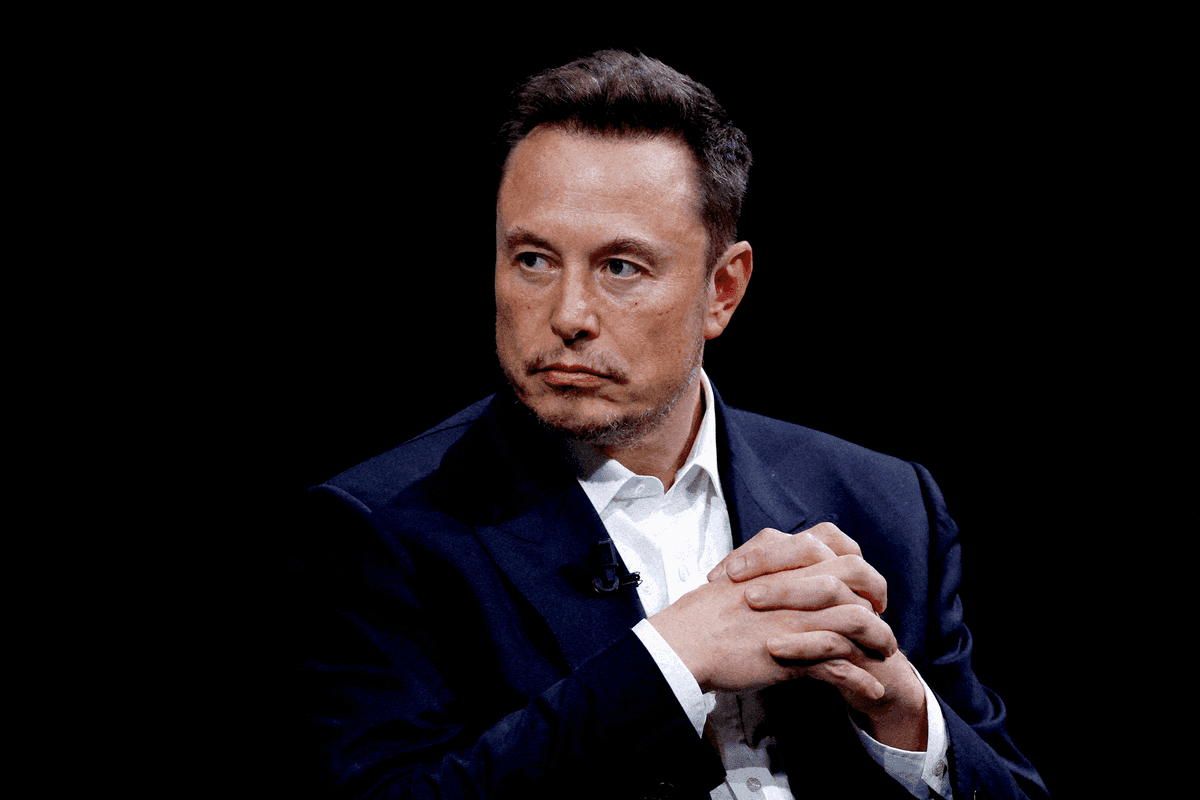
Elon Musk voiced support on Tuesday, October 20, for a potential merger between SpaceX and Tesla, revealing that independent board committees are formally evaluating a tie-up just as the newly listed aerospace company reported its first quarterly profit of $4.4 billion, propelled by rapid growth in its artificial intelligence computing business.
Why is Musk exploring a SpaceX-Tesla merger and what hurdles exist?
Addressing analysts on an earnings call, Musk described the prospect of combining his two flagship enterprises as "a good idea," though he acknowledged that discussing the proposal felt like "tap dancing through a minefield." News of his backing sent SpaceX shares surging nearly 5 percent in after-hours trading. Musk disclosed that special committees composed of independent directors at both SpaceX and Tesla have been formed at the request of shareholders to review the legal and financial merits of a consolidation.
Musk noted that he is recused from direct negotiations due to clear conflicts of interest, serving as chief executive of both companies, as well as chairman and chief technology officer of SpaceX. Regulatory filings show that Musk holds a 48.4 percent equity stake in SpaceX while controlling over 82 percent of its voting power through super-voting stock, alongside an approximate 20 percent ownership stake in Tesla.
Cautioning that a deal remains far from guaranteed, Musk emphasized that any transaction would require approval from a majority of all outstanding Tesla shares—rather than a simple majority of votes cast—calling it "quite a high hurdle." He outlined significant technical and operational synergies, arguing that an integrated structure would accelerate shared development in AI software, in-house chip architecture, robotics, and orbital, space-based computing infrastructure.
How did AI 'Super Intelligence' division power SpaceX's maiden profit?
The merger discussions coincided with a milestone third-quarter financial report, marking SpaceX’s first profitable period since its June 12 initial public offering on the Nasdaq, which raised $85.7 billion at $135 per share. SpaceX posted net income of $4.4 billion for the July–September quarter, rebounding from a $1.1 billion net loss during the same period last year and reversing a second-quarter loss of $541 million. Total revenue surged 161 percent year-over-year to $14.6 billion.
The turnaround was spearheaded by SpaceX’s AI division—branded as "Super Intelligence," adopting US President Donald Trump’s preferred terminology. Division revenues jumped more than ninefold from a year earlier to $7.6 billion, eclipsing the company's Starlink satellite internet network as its primary revenue engine.
The unit generated an operating profit of $431 million, compared to an operating loss of $1.7 billion twelve months prior, driven by commercial hosting agreements at its Colossus data centers, growing enterprise adoption of its Grok model, and the acquisition of AI coding assistant Cursor. Major enterprise customers include Anthropic, which committed nearly $45 billion over three years, and Google, which contracted for $920 million per month through mid-2029.
Despite strong cash generation, capital expenditures remained aggressive, totaling $19.6 billion for the quarter—with $16.4 billion allocated directly to AI computing infrastructure—bringing nine-month capital outlays to $48 billion.
Total active computing capacity reached 1.7 gigawatts, with Musk projecting capacity to reach up to 3.0 gigawatts by year-end and expressing confidence in adding another 10 gigawatts by 2027, despite supply constraints in power distribution and liquid cooling equipment.
Meanwhile, Starlink posted a 69 percent revenue increase to $5.2 billion across 13.6 million consumer subscribers, and SpaceX marked another milestone with the first commercial, revenue-generating orbital launch of its heavy-lift Starship rocket, deploying 26 next-generation Starlink satellites.
According to reporting by Bloomberg and The Wall Street Journal, Wall Street analysts and institutional shareholders are awaiting detailed disclosure on relative valuation models before the board committees deliver their initial merger recommendations.





Comments
See what people are discussing