

Pakistan parliament approves bill reshaping military command structure
Pakistan's National Assembly approves a bill creating a Chief of Defense Forces role to head the new Defense Forces Headquarters

Aamir Abbasi
Editor, Islamabad
Aamir; a journalist with 15 years of experience, working in Newspaper, TV and Digital Media. Worked in Field, covered Big Legal Constitutional and Political Events in Pakistan since 2009 with Pakistan’s Top Media Organizations. Graduate of Quaid I Azam University Islamabad.
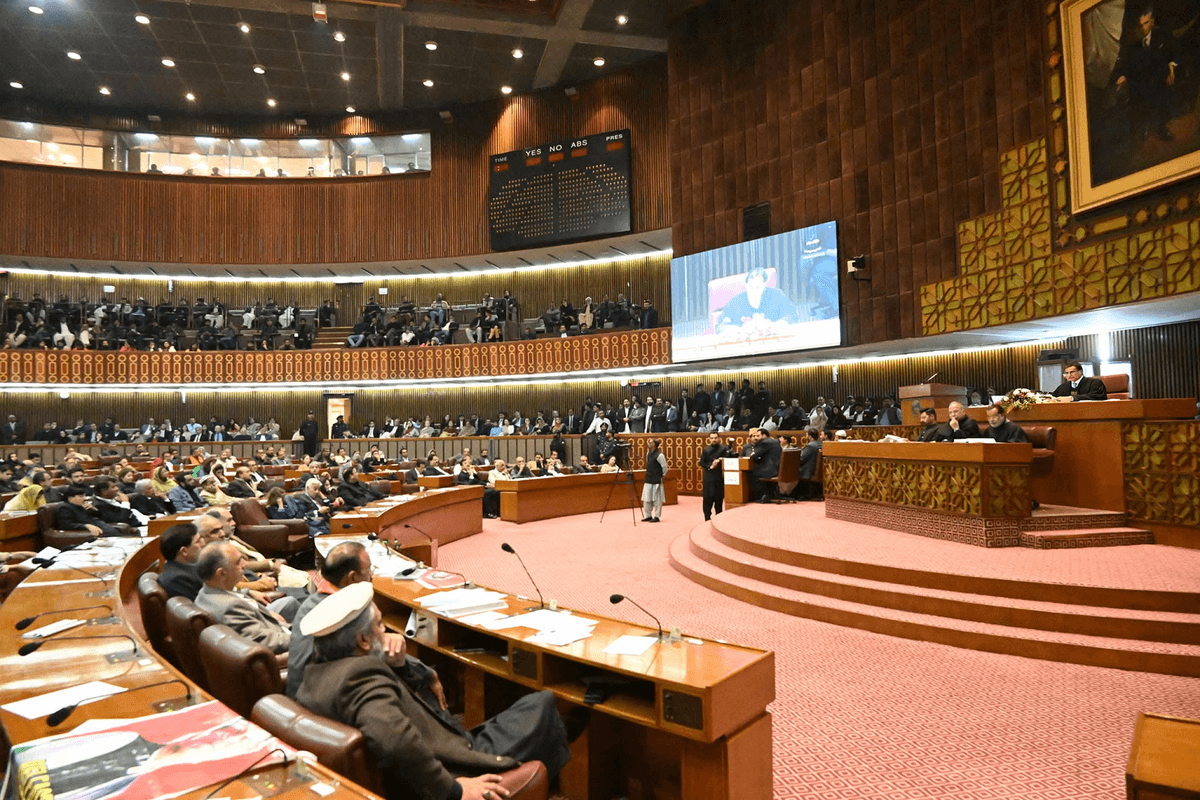
National Assembly of Pakistan.
NA/Facebook
Pakistan's National Assembly on Thursday approved legislation overhauling the legal framework governing command of the armed forces. The bill creates a Defense Forces Headquarters led by a Chief of Defense Forces (CDF).
It marks a significant restructuring of Pakistan's military command hierarchy.
What does Pakistan's new Defense Forces Act do?
The bill makes the Defense Forces Headquarters the central headquarters of the armed forces. The CDF would head this body and serve as the prime minister's senior military adviser on defense and security matters.
The role is designed to strengthen coordination and joint operational capabilities across the armed forces.
What powers would the Chief of Defense Forces hold?
The CDF could issue orders relating to the armed forces' organization, operational readiness and joint activities. The legislation grants the CDF broad administrative powers over officers and personnel of security institutions, including authority to dismiss or discipline personnel. In certain cases, the CDF could shorten or extend personnel service terms, though some decisions would require the prime minister's approval.
The CDF would oversee joint military operations and coordinate matters related to national and regional security. The role remains accountable to the prime minister on armed forces issues and would advise the government on major defense, national security and strategic matters. The federal government would be empowered to make rules governing the CDF's powers and issue directions to implement the legislation.
How does the bill affect existing military laws?
The legislation brings the Pakistan Army Act 1952, Pakistan Air Force Act 1953 and Pakistan Navy Ordinance 1961 into line with the new framework. Actions taken under existing laws would remain protected unless they conflict with the new legislation. Orders, notifications and directions issued before the law takes effect would also remain valid under transitional provisions, unless they conflict with the new Act.
The legislation cites Article 243 of Pakistan's Constitution, which governs command of the armed forces, as its constitutional basis. It establishes a new statutory framework for the country's defense command structure.
What changes were made to the National Command Authority law?
The National Assembly also approved amendments to the National Command Authority law, set to take effect immediately upon enactment. The provisions would have retrospective effect from November 27, 2025. The amendments replace references to "Chairman Joint Chiefs of Staff Committee" with "Chief of Defense Forces" throughout relevant provisions.
The CDF would become a member of the National Command Authority under the changes. The Commander National Strategic Command would also be added to the authority's membership.





Comments
See what people are discussing