

Nepal flood death toll rises to 1,204, thousands still missing
Nepal flood death toll has risen to 1,204, with thousands still missing, as rescue teams keep searching devastated Himalayan communities a week on

News Desk
The News Desk provides timely and factual coverage of national and international events, with an emphasis on accuracy and clarity.
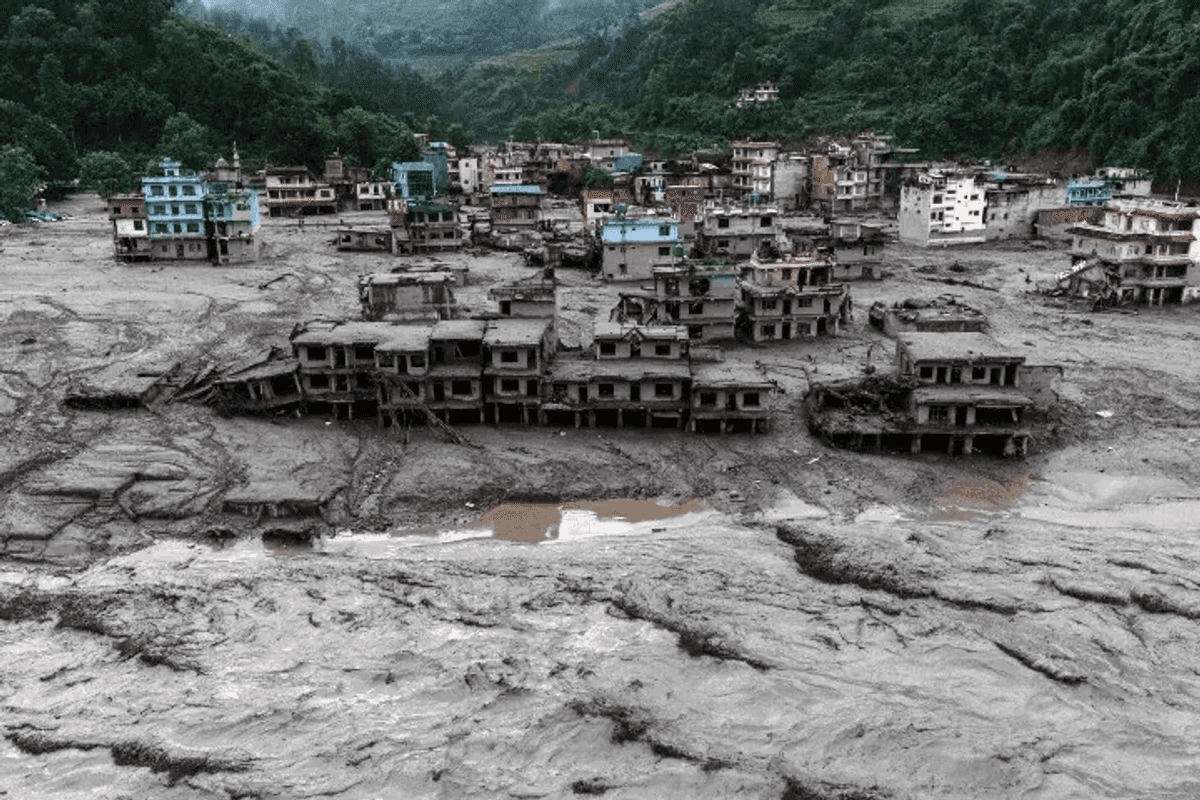
Nepal's disaster authority reported 1,204 deaths and 4,216 people missing on Sep 2.
Reuters
The death toll from devastating floods and a glacial collapse along the China-Nepal border has risen to 1,204 in Nepal, with 4,216 people still missing, the country's disaster authority said on Wednesday.
The disaster struck a week ago, when torrents of freezing water, rocks and debris swept through Himalayan communities.
How many people have died in the Nepal flood disaster?
Nepal's disaster authority reported 1,204 deaths and 4,216 people missing on Wednesday, a week after floods and a glacial collapse hit the China-Nepal border. Chinese state media separately reported 21 deaths and 541 missing in Tibet, bringing the combined toll across both countries to 1,225 dead and 4,757 missing.
The updated figures came as Nepali families held symbolic funerals for relatives who have disappeared since flash floods tore through villages and homes in the Himalayan region. Rescue teams have recovered more than 1,100 bodies in Nepal and are continuing to search for survivors and victims, with some of the most difficult operations taking place in areas buried under thick layers of mud and debris.
In Nepal's high-altitude Rasuwa district, the first and hardest-hit area, government official Dhruba Prasad Adhikari described the devastation as an "unimaginable disaster." "We have to face the reality: this flood is far bigger than anything we could have thought of," he told an AFP journalist who reached the area after a more than 12-hour journey along treacherous, mud-covered roads.
How are families in Nepal searching for missing loved ones?
The disaster has left families across Nepal facing agonizing uncertainty over relatives who have yet to be found. In the capital Kathmandu, hundreds queued to provide DNA samples in the hope of identifying loved ones among the recovered bodies.
With mortuaries overwhelmed, some families have begun performing last rites despite the absence of their relatives' remains. Others have turned to Hindu rituals involving straw effigies to symbolically lay their loved ones to rest. Dolma Newar Tamang held such a ceremony for her missing husband, alongside their grieving son.
"We had to do this to set his soul free, so that he is at peace and happy wherever he is," she said.
Is the search for survivors still continuing in Nepal?
Rescue teams are still looking for survivors, including inside tunnels serving hydropower plants that have been buried by sludge and debris. So far, only bodies have been recovered from the tunnels, but crews have continued digging, drilling and blasting through the wreckage in the hope of reaching anyone who may have survived.
Nepal's Foreign Minister Shisir Khanal said authorities were reluctant to abandon hope. "Miracles do happen," he told AFP. "At this point, I do not want to completely give up hope." The ongoing search comes as the full scale of the disaster's economic and environmental impact begins to emerge.
Why is Nepal urging global action on climate change?
The destruction has also fueled concerns about the growing risks posed by climate change in the Himalayan region. Nepal, a largely rural country of about 30 million people, has contributed relatively little to the greenhouse gas emissions driving global warming but is increasingly exposed to its effects.
Prime Minister Balendra Shah described the disaster as a "serious indication" of the dangers facing the Himalayan nation. Scientists say the Himalayas, the world's highest mountain range, are warming rapidly as global temperatures rise, accelerating glacier melt and increasing the risk of glacial disasters. The wider Himalayan and Hindu Kush ranges are a vital source of water for about 240 million people living in the mountains and another 1.65 billion downstream.
"Climate change is a global contribution, and disaster response is also a global responsibility," Shah said in a social media post.
What is the economic cost of the Nepal flood disaster?
Nepal's limited resources have complicated its response, with the disaster striking as the country continues to deal with broader economic difficulties following political upheaval last year. In a preliminary assessment, the United Nations estimated damage to buildings alone at about $158 million. The overall cost is expected to be considerably higher once damage to roads, bridges and farmland, as well as humanitarian needs, is included.
Kathmandu has warned that reconstruction could cost billions of dollars. Shah, a 36-year-old former rapper, described the disaster as a national "thunderbolt" in an emotional address to parliament on Wednesday.
"My heart chills when I hear the cries of flood victims," he said. "But we have no time to rest simply because our bodies are tired. Even with broken hearts, there is no time to sit and mourn together."
How has the disaster affected the China-Nepal border region?
The devastation has also severely disrupted areas on the Chinese side of the border. Chinese state media said road access to the hard-hit Gyirong Port in Tibet was restored on Wednesday following "days of round-the-clock repair work."
The disaster has also affected foreign nationals, with more than 800 people from over 30 countries reported missing in Nepal and China. They include tourists trekking in the Himalayas and Hindu pilgrims visiting Tibet's sacred Mount Kailash. At least 17 bodies have also been recovered from rivers downstream in neighbouring India.
Why is it hard to verify the damage in Tibet?
The extent of the destruction in Tibet has been difficult to independently verify because foreign journalists face restrictions on reporting from the region and Chinese authorities maintain tight control over information and access to local sources. Tibetan advocacy groups in exile have questioned Beijing's account of the disaster, while Chinese authorities have defended their handling of the crisis. Beijing has said the "release of information has been open, transparent and timely."
With thousands still unaccounted for, rescue teams remain focused on searching damaged communities and infrastructure, while authorities begin assessing the enormous task of rebuilding areas devastated by the floods and glacial collapse.





Comments
See what people are discussing