

New gas allocations could lift Mari Energies volumes and earnings, analysts say
Government move channels Mari field gas to fertilizer producers at OGRA-notified prices

Business Desk
The Business Desk tracks economic trends, market movements, and business developments, offering analysis of both local and global financial news.
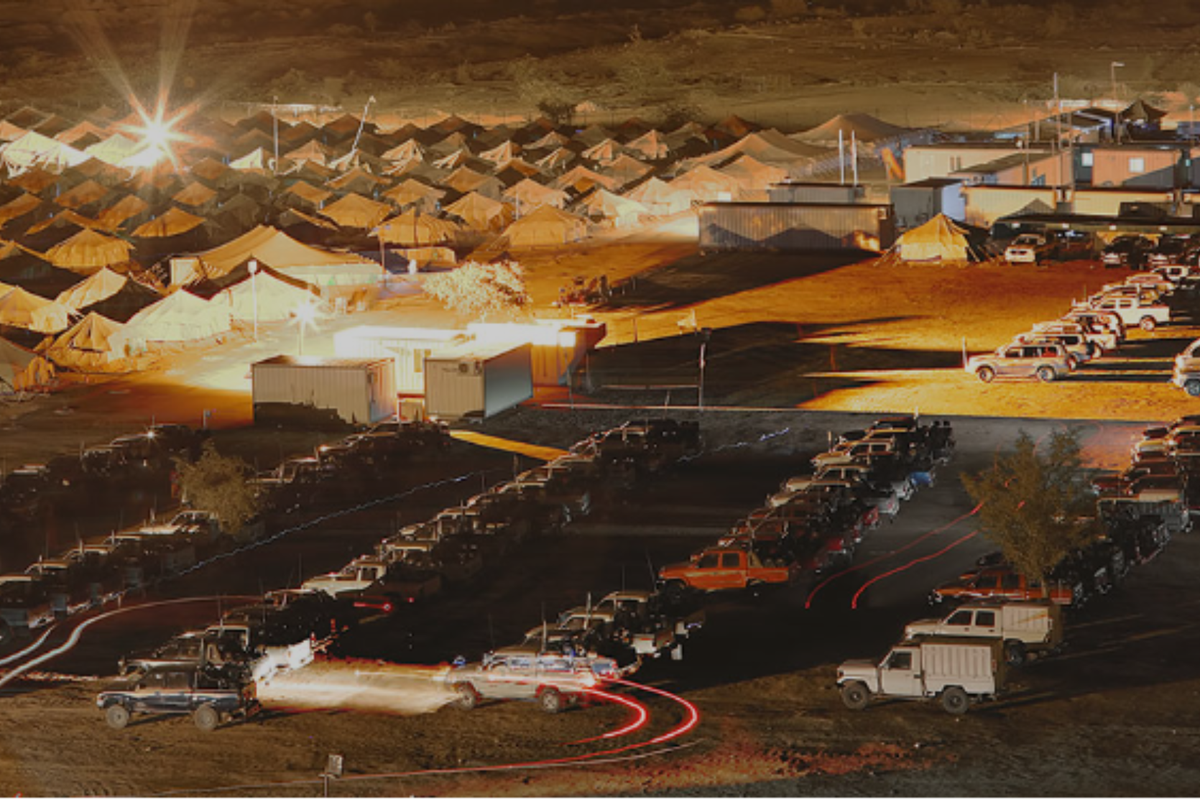
Pakistan’s upstream oil and gas sector is set for a material shift after the federal government approved fresh gas allocations from Mari Energies Ltd.’s (MARI) Ghazij and Shawal discoveries in the Mari field to fertilizer producers, a move analysts say positions MARI as the single largest beneficiary while securing long-term gas supply for the fertilizer industry.
According to research reports issued by Intermarket Securities (IMS) and Topline Securities, the newly approved allocations allow gas from Ghazij/Shawal to be supplied at wellhead prices notified by the Oil and Gas Regulatory Authority (OGRA) under the Petroleum Policy 2012.
The gas will be transported through Sui companies’ pipeline networks under the Third-Party Access (TPA) Rules 2018, with applicable wheeling charges borne by the end consumers.
Major uplift in MARI volumes
Intermarket Securities noted that once the required infrastructure is developed over the next two to three years, cumulative gas flows from MARI’s HRL, Ghazij/Shawal, Deep and SML/SUL reservoirs are expected to rise to 1,054 million cubic feet per day (mmcfd) from the current direct allocation of around 850-900 mmcfd.
This represents an increase of roughly 180 mmcfd.
In earlier forecasts, IMS had assumed cumulative flows of about 875 mmcfd in FY27-28. However, based on an official Ministry of Energy document, analysts now believe volumes could reach the higher 1,054 mmcfd level. Until infrastructure upgrades are completed, gas supply will continue under existing arrangements.
RLNG substitution to favor MARI
IMS highlighted that in 2025 all fertilizer plants were operating at full capacity, suggesting gas supply was already at optimal levels. Previously, Fatima Fertilizer’s Sheikhupura plant and Agritech Limited were supplied regasified liquefied natural gas (RLNG), while Fauji Fertilizer Company’s Port Qasim (FFC PQ) plant received gas via SSGC from multiple fields.
With the recent deferment of RLNG cargoes, analysts believe MARI’s Ghazij/Shawal gas will increasingly substitute RLNG volumes, directly benefiting the producer. However, since Mari fields produce low-BTU gas, certain capital expenditures will be required to upgrade the gas to pipeline-quality standards, costs that analysts expect beneficiary fertilizer companies to bear.
Earnings impact for MARI
Intermarket Securities estimates that a 100 mmcfd increase in MARI’s gas volumes could add PKR 13.5 per share to earnings, equivalent to 25-29% of projected FY26-27 earnings. With the full incremental increase of 180 mmcfd, the earnings impact could rise to PKR 24.1 per share, or 40-50%, assuming all incremental volumes are sold at Petroleum Policy 2012 rates.
“MARI remains the biggest beneficiary of this development,” IMS said, noting that direct access to fertilizer consumers would also help the company bypass Sui intermediaries, which have historically caused cash-flow delays. The brokerage added that ramping up Ghazij/Shawal production to more than 200 mmcfd would lift total Mari field output above 1,050 mmcfd.
Sector-wide implications
Analysts believe reduced RLNG imports, replaced by higher domestic gas production, will benefit the oil and gas exploration sector overall, though MARI is expected to capture the largest share of displaced RLNG volumes.
However, IMS cautioned that gas currently supplied to FFC’s Port Qasim plant from other domestic fields could be curtailed, potentially affecting offtake for other exploration and production companies.
For the fertilizer sector, the move is largely seen as neutral to positive. Gas allocations that were previously subsidized or temporary have now been made permanent, ensuring supply certainty.
Details of allocations and pricing
According to Topline Securities, the government has approved the following processed gas allocations from MARI
- Fauji Fertilizer Company (Port Qasim): 80 mmcfd
- Fatima Fertilizer (Sheikhupura): 52 mmcfd
- Agritech Limited (AGL): 38 mmcfd
- Engro Fertilizers (EFERT): Allocation from HRL reservoir increased to 105 mmcfd from 26 mmcfd
Implementation to take time
Topline Securities cautioned that the allocation will not translate into immediate supply increases.
MARI’s Ghazij reservoir currently produces around 30 mmcfd, and management estimates it could take at least two years to reach optimal production levels at Ghazij/Shawal.
In addition, fertilizer companies will need to install gas processing facilities to convert off-specification raw gas into pipeline-quality gas before injection into SNGP’s network.
Separately, FFC, EFERT and Fatima Fertilizer have jointly invested in a Production Enhancement Facility (PEF) to maintain pressure at the Mari field. The project, with a total capex of $300 million (FFC: 48%, EFERT: 34%, Fatima: 18%), has entered Phase II, during which about 80% of total costs are expected to be incurred.
Impact on fertilizer companies
Topline Securities said the allocation is particularly positive for FFC’s Port Qasim plant, which requires about 83 mmcfd of gas to operate at full capacity, producing 0.55 million tons of urea and 0.65 million tons of DAP annually. The new allocation of 80 mmcfd is expected to largely eliminate winter curtailments and could add PKR 1.31 per share to FFC’s earnings if fully implemented.
FFBL is also expected to benefit from lower feedstock gas rates.
For Engro Fertilizers, the increased allocation secures long-term gas supply for its base plant, though Topline expects no significant incremental earnings impact as pricing remains unchanged.
Fatima Fertilizer and Agritech are also expected to benefit from Petroleum Policy 2012 gas rates, though these companies are not formally covered by Topline.
Sui companies face challenges
Intermarket Securities flagged potential downside risks for Sui gas companies, noting that the removal of captive consumers could increase unaccounted-for gas (UFG).
Volumes either curtailed or diverted to retail consumers, which are more prone to losses, could push UFG ratios higher.
Analysts said clarity is still needed on whether the displaced allocations were previously supplied as natural gas or RLNG.
Overall, analysts from both brokerage houses view the development as a structural positive for MARI and a stabilizing move for the fertilizer sector, while underscoring transitional challenges for gas utilities and the need for significant upfront infrastructure investment.




Comments
See what people are discussing