

Pakistan says IMF didn’t link any new conditions to loan deal
Says agenda outlined in the Fund’s latest report already in different phases of implementation

Business Desk
The Business Desk tracks economic trends, market movements, and business developments, offering analysis of both local and global financial news.
The Ministry of Finance has clarified that the IMF has not proposed any new tax measures to bridge the revenue shortfall.
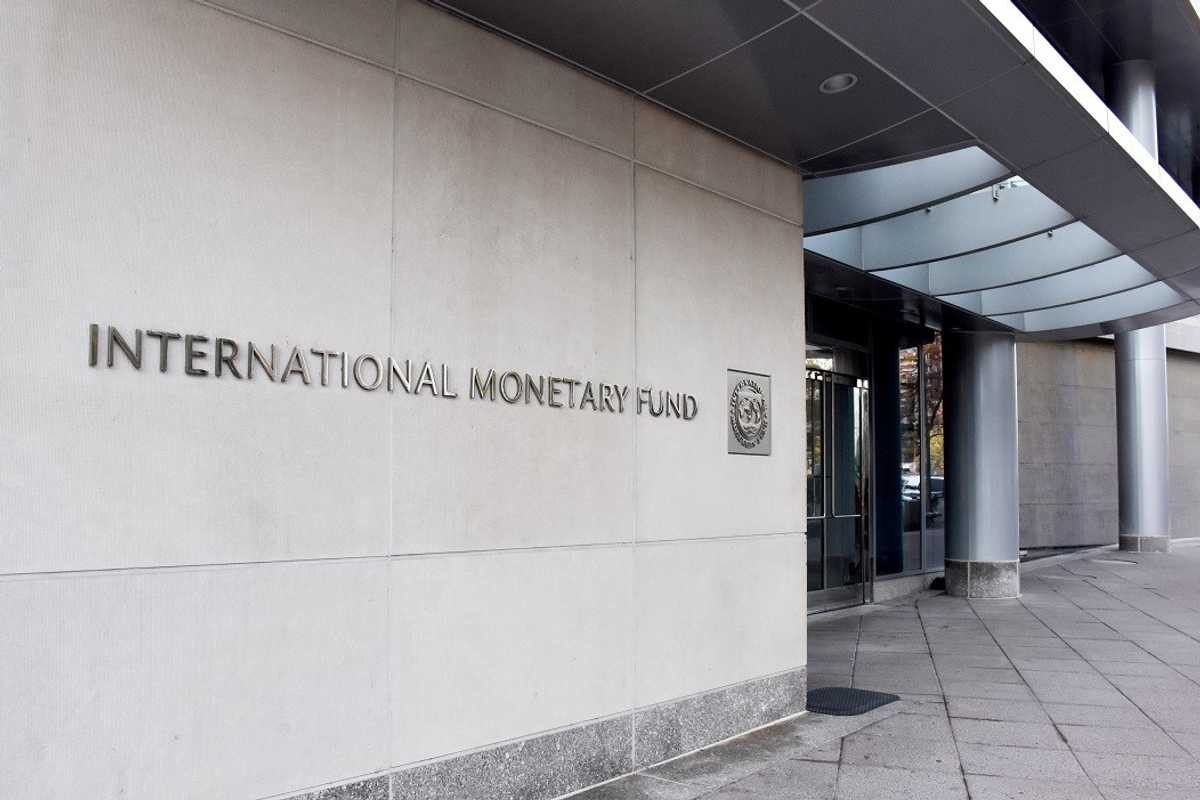
Pakistan has said the International Monetary Fund (IMF) has not imposed any new conditions as part of its $7 billion loan deal with Pakistan, and the measures outlined in the Fund’s latest statement are a “natural continuation” of the reform agenda agreed with Pakistan.
The clarification was issued on Sunday, after the IMF said the country missed several structural and fiscal targets but met most benchmarks as part of the loan agreement.
The media had reported that Pakistan agreed to 11 new targets with the IMF to meet the tax shortfall and cut expenditure – two key conditions associated with the $7 billion Extended Fund Facility (EFF).
The Ministry of Finance on Sunday said reform measures are being implemented in a phased manner to ensure economic stability and sustainable growth. It added that portraying these measures as new “reflects a misunderstanding of the facts”.
The statement emphasized that IMF’s Extended Fund Facility allows member countries to implement medium-term structural reforms to achieve agreed policy objectives.
“These reforms are not introduced all at once but are implemented gradually over the course of the program.”
These measures are divided into phases, and after every review, new targets are added to achieve the final objectives agreed at the start of the program.
During negotiations with the IMF, the government also presents its own proposed reform policies and the Fund accepts them if it determines that these reforms support the objectives of the EFF, the statement added.
“This is why many structural measures in the latest MEFP are initiatives that the government had already launched or was in the process of implementing,” the statement said about the Memorandum of Economic and Financial Policies (MEFP) issued after the IMF approved $1.3 billion loan tranche for Pakistan.
The ministry also clarified that the IMF has not proposed any new tax measures to bridge the revenue shortfall.
The proposal to impose 5% federal excise duty on fertilizers and pesticides in case of potential revenue shortfalls have been included in the MEFP since May 2024.
It added that other action points outlined in the MEEP is already in various phases of implementation.
About the mandatory asset declaration by civil servants, the ministry said this issue has been part of the MEFP since May 2024. The current structural benchmark is the next logical step following amendments to the Civil Servants Act, 1973, which have already been successfully completed.
Pakistan has already agreed to strengthen the effective functioning of the National Accountability Bureau (NAB) and enhance cooperation with other investigative bodies, particularly provincial anti-corruption institutions.
Moreover, provincial institutions are being provided with information to investigate financial corruption, which is part of Anti-Money Laundering and Counter-Terrorist Financing (AML/CFT) reforms included since the beginning of the IMF program.
The statement added that Pakistan has already taken steps to increase workers’ remittances through formal channels.
“Following efforts to discourage informal channels, remittances increased by 26% in fiscal year 2025 compared with fiscal year 2024, with a further 9.3% increase projected for fiscal year 2026,” it claimed.
The government and the State Bank of Pakistan are removing barriers to reduce the cost of remittance transfers, and the IMF has “incorporated these measures into the MEFP to further strengthen them”.
Other measures reported as new conditions, such as reforming the local bond market to broaden the investor base, have now been included in the program as structural benchmarks but have been in the works for months.
The reforms in the sugar sector, demanded by the IMF, are also being implemented, the ministry said.
It stated that the Prime Minister’s Office has established a task force, headed by the Minister for Energy, to prepare recommendations, in consultation with the provinces, for the full liberalisation of the sugar market and a national policy.
The FBR reforms are also part of the government’s revenue-enhancement agenda. The ministry’s statement outlined several reforms, such as approval of a transformation plan, establishment of a Tax Policy Office, and improvements in compliance risk management, which have already been put in place.
On the privatization of electricity distribution companies, the ministry said it is being done in phases.





Comments
See what people are discussing