

North Korea fires ballistic missile ahead of US-South Korea drills
North Korea fired a ballistic missile toward the Sea of Japan on Wednesday, just days before the US and South Korea begin their annual joint military drills

News Desk
The News Desk provides timely and factual coverage of national and international events, with an emphasis on accuracy and clarity.
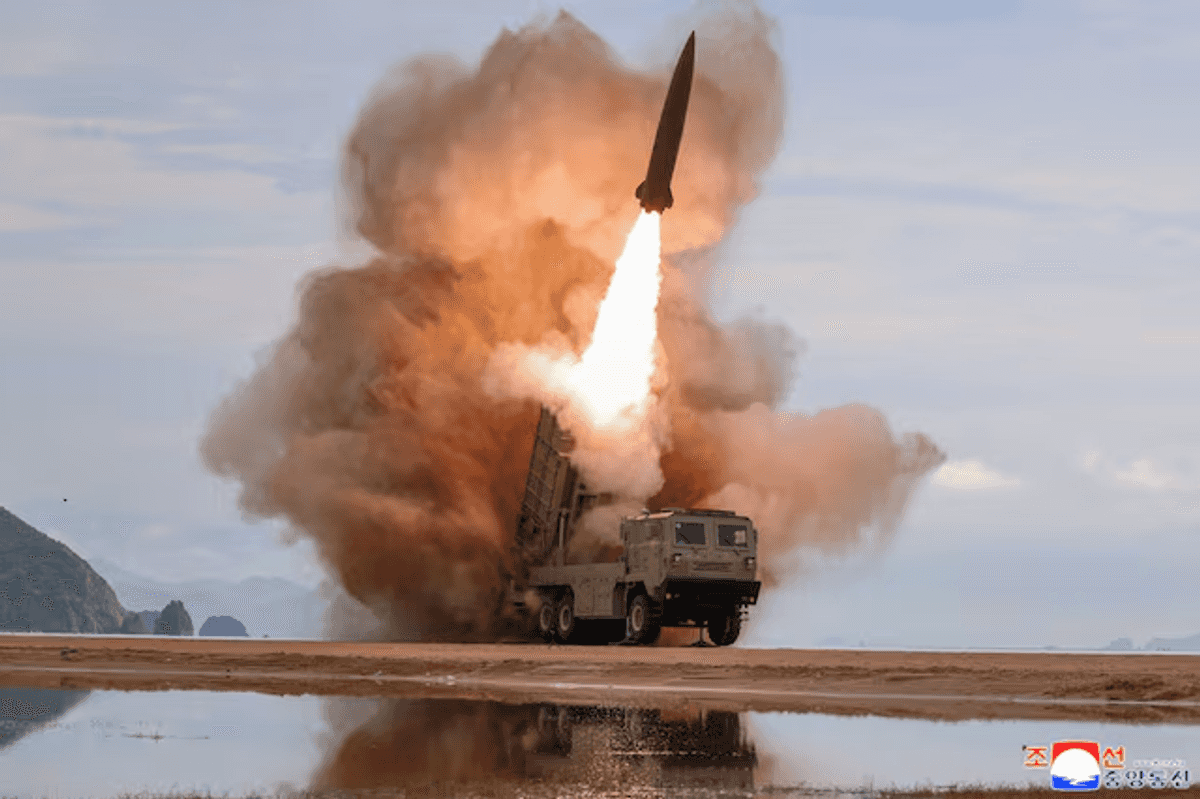
A rocket launcher fires a munition during tests in North Korea, June 25, 2026, in this picture released by North Korea's official Korean Central News Agency.
Reuters
North Korea fired a ballistic missile off its east coast toward Japan early Wednesday, South Korea's military said, days before the US and South Korea begin 11-day joint drills. The missile traveled more than 700 kilometers over the Sea of Japan. Pyongyang has staged similar launches around past exercises, which it calls rehearsals for invasion.
Why did North Korea fire a ballistic missile?
North Korea has a pattern of responding to US-South Korea military exercises with missile launches, treating the drills as a provocation to answer. Seoul's Joint Chiefs of Staff said the missile launched from the Wonsan area around 6 a.m. and flew over the Sea of Japan while Washington and Seoul analyzed its specifications. Japan's Defense Ministry separately described the object as a suspected ballistic missile that had already fallen, without offering further details.
North Korea expert Lim Eul-chul of Kyungnam University said the country has never let a joint exercise pass without some form of response. He described the launch as a signal that Pyongyang is closely watching the drills and could stage a further provocation if it judges one necessary. The Wonsan launch came days before South Korea's national security office convened an emergency meeting, where officials labeled recent launches "provocative acts" and demanded Pyongyang halt them.
How has Japan responded to the missile launch?
Japan's Defense Minister Shinjiro Koizumi called the launch a threat to peace and security in the region and said Tokyo had lodged a strong protest with North Korea through diplomatic channels in Beijing. Pyongyang has recently criticized Japan over what it calls the country's remilitarization, a charge tied to Tokyo's growing defense spending. Japan has held a pacifist stance for decades but has expanded its military budget, signed new defense pacts and deployed missile launchers to its outer islands.
Koizumi said last week that Japan needed to strengthen its military with a sense of urgency and crisis. Pyongyang responded by condemning Japan's transformation into what it called a war state, then fired a short-range ballistic missile off its own eastern coast shortly afterward. Tokyo's governor also announced plans last week to convert a 13,000-square-meter underground carpark near Tokyo Station into a missile shelter.
Past North Korean missiles have flown directly over Japan, triggering sirens, smartphone alerts and special television broadcasts. As of April 2025, Japan had 61,142 shelters nationwide, though fewer than 7% were underground.
What are the US-South Korea military drills?
The Ulchi Freedom Shield exercises are due to begin Monday and will run for 11 days, involving 18,000 South Korean troops alongside the 28,500-strong US contingent stationed in the country. A military spokesman said the drills are designed to prepare troops for a potential fight against North Korean forces hardened by deployment in Europe. Pyongyang has previously called the exercises rehearsals for an invasion and staged missile launches both before and after them.
Colonel Ryan Donald, spokesman for the US and South Korean Combined Forces Command, said North Korean soldiers have taken lessons learned on European battlefields and brought them back home. He told reporters this week that the allied training accounts for that evolving threat.
How is North Korea connected to the war in Ukraine?
North Korea has taken an increasingly active role in international conflicts, notably by backing Russia's invasion of Ukraine. Ukraine accused Russia on Tuesday of using North Korean missiles in an attack that killed 10 people and wounded dozens more. Ukrainian President Volodymyr Zelensky has also claimed, without providing evidence, that Moscow is receiving a growing supply of ballistic projectiles and troops from Pyongyang.
Analysts say North Korea has received financial and military benefits from Moscow in exchange for its support. Its troops have also gained direct combat experience on modern battlefields as a result of the deployment.





Comments
See what people are discussing