

Oil prices fall as US-Iran peace deal takes effect
Kamran Khan says Islamabad-brokered accord is reshaping regional politics and easing energy market fears

News Desk
The News Desk provides timely and factual coverage of national and international events, with an emphasis on accuracy and clarity.
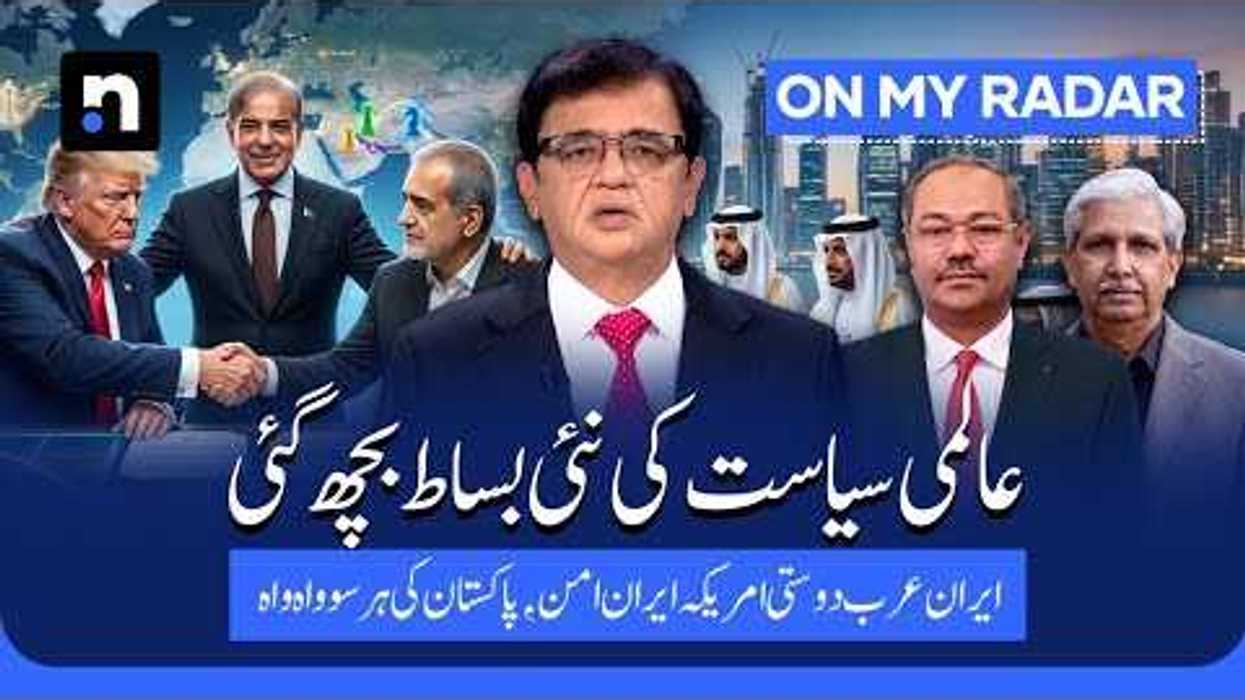
A U.S.-Iran peace agreement brokered with Pakistan's mediation has triggered a sharp decline in global oil prices and opened a new phase of negotiations between Washington and Tehran, according to analysts and officials cited by Kamran Khan.
In the latest episode of On My Radar, Khan described the agreement as the beginning of "a new era of peace," saying that after decades of hostility, the United States and Iran had chosen negotiations over conflict.
The accord, formally titled the Islamabad Memorandum of Understanding (MoU), was electronically signed early Thursday by U.S. President Donald Trump and Iranian President Masoud Pezeshkian. Pakistani Prime Minister Shehbaz Sharif also signed the document as the recognized mediator of the agreement.
According to Khan, Pakistan announced that the MoU has already entered into force. In a detailed post on X, Sharif said Iran would immediately reopen the Strait of Hormuz while the United States would end its naval blockade. U.S. officials said the agreement includes commitments related to ending the conflict and preventing Iran from developing nuclear weapons.
Trump signed a copy of the agreement following the conclusion of the Group of Seven summit in France. Video footage showed him signing a Persian-language version of the document.
The agreement has drawn sharply different reactions in Washington and Tehran. Iranian officials and media outlets portrayed the accord as a victory, arguing that U.S. military objectives had failed.
Iranian Parliament Speaker and chief negotiator Mohammad Baqer Ghalibaf said Iran was now practicing "power diplomacy" based on successes achieved on the battlefield.
Khan said criticism has also emerged within the United States, where media outlets and lawmakers – including members of Trump's own Republican Party – have questioned the terms of the deal. Some U.S. commentators have characterized the agreement as a concession to Iran, while others argue Washington needed the deal as much as, or more than, Tehran.
While world leaders broadly welcomed the agreement as a step toward peace, Israel's response remained subdued. Israeli Prime Minister Benjamin Netanyahu had not publicly commented on the accord by Thursday, according to Khan.
In an interview, however, Netanyahu said Trump had led the negotiating process and that he had communicated his views to Washington throughout the talks. "On some issues we agree and on others we disagree," he said.
Iranian Foreign Ministry spokesperson Esmaeil Baqaei said no formal signing ceremony would take place in Switzerland because the agreement had already been digitally executed. He confirmed that negotiating teams would meet there on Friday to discuss implementation.
Swiss authorities have also confirmed that representatives from the United States, Iran, Pakistan, Qatar and other involved countries will meet at Burgenstock resort to begin discussions on how the agreement will be carried out.
Questions remain over the economic dimensions of the accord, including a proposed investment and reconstruction fund for Iran.
Saudi Foreign Minister Prince Faisal bin Farhan said he was unaware of the details of any such fund but noted that Iranian attacks during the conflict had caused a "significant loss of trust" among Gulf states.
Financial markets reacted positively to the developments. Brent crude has remained below $80 per barrel for three consecutive days and fell to around $78 per barrel on Thursday, down from more than $124 per barrel during the conflict.
U.S. West Texas Intermediate crude also declined to about $75 per barrel, one of its lowest levels in three months.
In the United States, average gasoline prices fell below $4 per gallon for the first time since March, signaling that energy markets view the agreement as reducing supply risks and improving stability.
Discussing the military and strategic implications of the accord, Khan's program also featured Lt. Gen. (retd) Aamir Riaz, former corps commander of Lahore and Quetta, and Air Vice Marshal (retd) Shahzad Chaudhry, a defense and security analyst.




Comments
See what people are discussing