

Oil climbs above $111 as Middle East attacks raise supply fears
Brent climbs to USD 111.64 a barrel after deadly attacks in Saudi Arabia, while US crude inventories fall more than expected

Business Desk
The Business Desk tracks economic trends, market movements, and business developments, offering analysis of both local and global financial news.
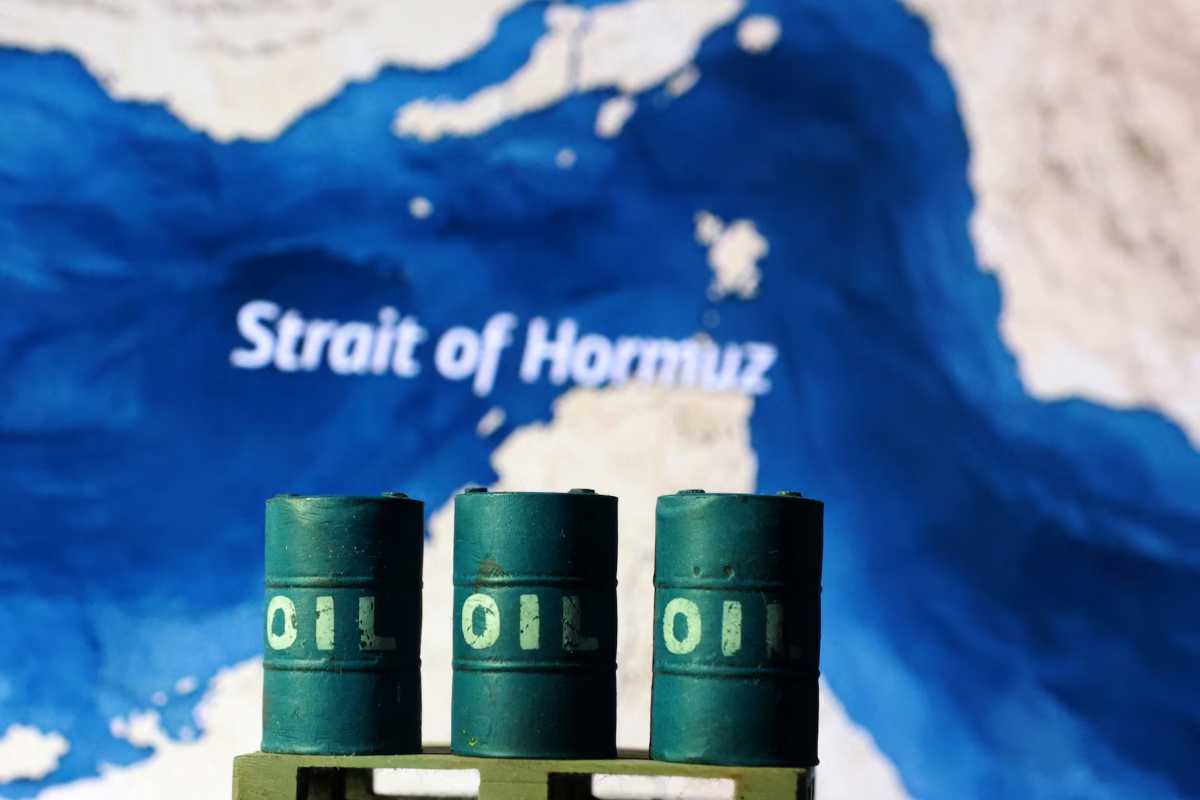
A map showing the Strait of Hormuz and 3D printed oil barrels are seen in this illustration taken March 23, 2026.
Reuters
Global oil prices surged more than USD 2 a barrel on Thursday as renewed attacks on Saudi Arabia raised concerns over escalating Middle East tensions and potential disruptions to crude supplies.
Brent crude futures rose USD 2.82, or 2.59%, to USD 111.64 a barrel at 0626 GMT on October 22, approaching a five-month high.
US West Texas Intermediate (WTI) crude futures gained USD 2.24, or 2.31%, to USD 99.39 a barrel.
The gains followed deadly attacks on Saudi energy infrastructure and an airport, alongside reports of vessels being struck in the Persian Gulf.
Why are oil prices rising?
Oil markets are reacting to renewed attacks on Saudi Arabia and the possibility of further disruption to Middle East energy supplies. The violence has heightened concerns about regional escalation, even as Saudi authorities say oil production remains unaffected. Falling US crude inventories have also added support to prices.
Yemen's Iran-aligned Houthis struck several targets in Saudi Arabia on Wednesday, with an attack on Dammam's international airport killing at least one person and injuring eight others.
Debris from an intercepted drone killed two people at the Shaybah oilfield, according to Saudi authorities.
ING analysts said Brent had climbed back above USD 110 a barrel following the attacks, warning that the escalation could deepen uncertainty over Middle East energy supplies.
In a research note published Thursday, ING said Saudi Arabia's energy ministry had reported no impact on production despite an attack targeting an oil processing facility.
The US State Department ordered non-emergency government personnel to leave Saudi Arabia and also planned to withdraw family members from several other American diplomatic missions in the region, according to US officials cited by Reuters.
ING said oil exports from the Persian Gulf were continuing despite the conflict, but concerns over future disruptions were keeping a substantial risk premium in prices.
Attacks on vessels raise regional tensions
Iran's Islamic Revolutionary Guard Corps (IRGC) Navy said Thursday that four vessels involved in illegal oil transfers in the northern Persian Gulf had been struck and caught fire after being tracked by its forces.
The IRGC also said three other vessels had collided with mines west of the Strait of Hormuz.
It warned that continued US military provocations could trigger a broader response against American bases in the region.
Separately, Iranian media reported explosions in Sirik, southern Iran, on Wednesday, saying their cause and origin were unknown.
US crude inventories fall more than expected
Oil prices also received support from a larger-than-expected decline in US crude inventories.
Commercial crude stockpiles fell by 3.06 million barrels to 412.5 million barrels in the week ended October 16, according to data released Wednesday by the US Energy Information Administration (EIA).
Analysts surveyed by Reuters had expected a smaller decline of 820,000 barrels.
However, distillate inventories, which include diesel and heating oil, rose by 1.68 million barrels to 104.3 million barrels, compared with expectations for a decline of 1.16 million barrels.
The Trump administration is offering to lend nearly one-third of the United States' 1 million-barrel emergency heating oil reserve, according to the Department of Energy, as it seeks to contain prices amid diesel shortages linked to the conflicts involving Iran and Ukraine.
Meanwhile, Russian President Vladimir Putin met US Special Envoy Steve Witkoff in St. Petersburg on Wednesday for talks aimed at ending the war in Ukraine.
The Kremlin said Putin had agreed to resume US-mediated peace negotiations as early as next month. Ukrainian President Volodymyr Zelenskyy also expressed support for restarting the talks.





Comments
See what people are discussing