

Pak-Afghan border closures halt printing trade in northwest Pakistan
Religious publishers in Khyber Pakhtunkhwa face losses as Afghanistan orders dry up

Kamran Ali
Correspondent Nukta
Kamran Ali, a seasoned journalist from Khyber Pakhtunkhwa, Pakistan, has a decade of experience covering terrorism, human rights, politics, economy, climate change, culture, and sports. With an MS in Media Studies, he has worked across print, radio, TV, and digital media, producing investigative reports and co-hosting shows that highlight critical issues.
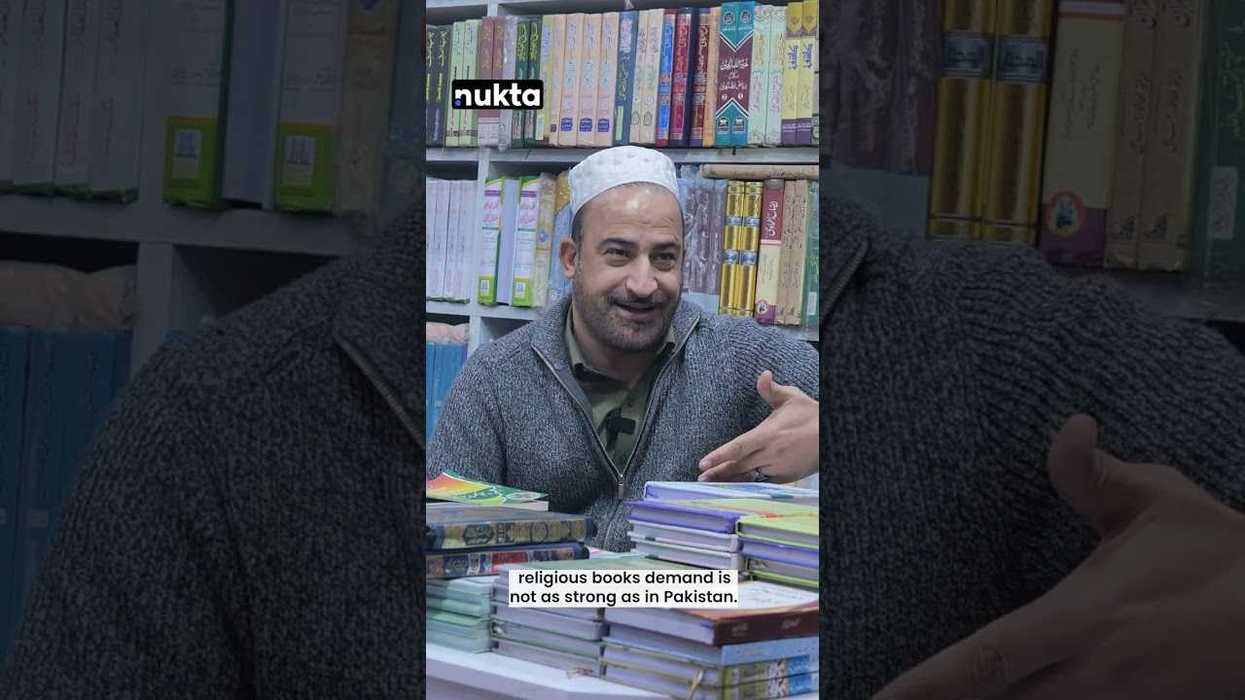
The closure of Pakistan-Afghanistan border crossings has brought industrial printing presses to a standstill in Pakistan’s northwestern Khyber Pakhtunkhwa province, underscoring how quickly a small but vital cross-border industry can be pushed to the brink.
For decades, the northwestern province has been a hub for Afghanistan’s religious publishing, with nearly 60% of its printing trade linked to the other side of the border. The closures have cut off that lifeline, halting production, squeezing cash flows and leaving thousands of traders, printers and craftsmen facing acute economic uncertainty.
The timing has compounded the damage as the shutdown has coincided with the start of the Islamic new year, traditionally the peak season for printing religious texts, leaving what was once a multi-billion-rupee industry effectively paralyzed.
“We depended on Afghanistan for 50% to 60% of our business,” said Saeed Muhammad, a bookseller in Peshawar. “We had built customers there over many years. Our annual trade ran into crores of rupees, but now even outstanding payments are stuck because no new consignments are moving.”
Muhammad said he feared the worst was still to come. “Our peak season is approaching. Normally, we would send 50 to 100 bales of books every day,” he said. “Our Afghan clients are even more anxious than we are. If they turn to Iran, the situation there is unstable, and other neighboring countries do not share the same religious affinity for our publications. The Peshawar route was the easiest and most reliable for them.”
Industry representatives say the entire ecosystem has ground to a halt. “For nearly three months, there has been no business at all,” said Abdul Wahab, a member of the Printing Press Association. “Printing houses are idle, workers have nothing to do, and even paper mills are suffering because we are no longer placing orders.”
Economic interdependence
The crisis highlights the deep cultural and economic interdependence between Pakistan and Afghanistan.
According to Wahab, Peshawar's presses have long produced Pashto translations of Quranic commentaries, books on Islamic jurisprudence, and religious curricula, materials that Afghanistan largely cannot produce domestically due to limited printing infrastructure.
“In Pakistan, only about 10% of local sales are Pashto books, mostly for madrassas,” he explained. “Our real market was Afghanistan. Even the Afghan government was a major client, placing large orders. Those losses are impossible to calculate.”
Wahab said the impact has been devastating on a personal level as well. “My monthly business of PKR 2.5 to 3 million has been completely dead for the past three months,” he said.
With the border still closed, a historic printing hub remains silent, its presses idle and its future uncertain. An entire industry is caught in the fallout of a geopolitical standoff, struggling to survive as its primary market lies just beyond a locked gate.
Pak-Afghan border crossings were closed on October 12 last year following a spike in tensions after a series of explosions in Kabul on October 9. Taliban forces responded with attacks along Pakistan’s border regions, prompting Islamabad to carry out cross-border shelling.
Since then, Pakistan and the Taliban government have held multiple rounds of talks in Qatar and Turkey, but no resolution has yet been reached.



Comments
See what people are discussing