

Pak-Afghan tensions deepen as diplomacy struggles to prevent escalation
Kamran Khan examines Pakistan’s latest strikes, cross-border attacks and stalled efforts to ease tensions with Kabul

News Desk
The News Desk provides timely and factual coverage of national and international events, with an emphasis on accuracy and clarity.
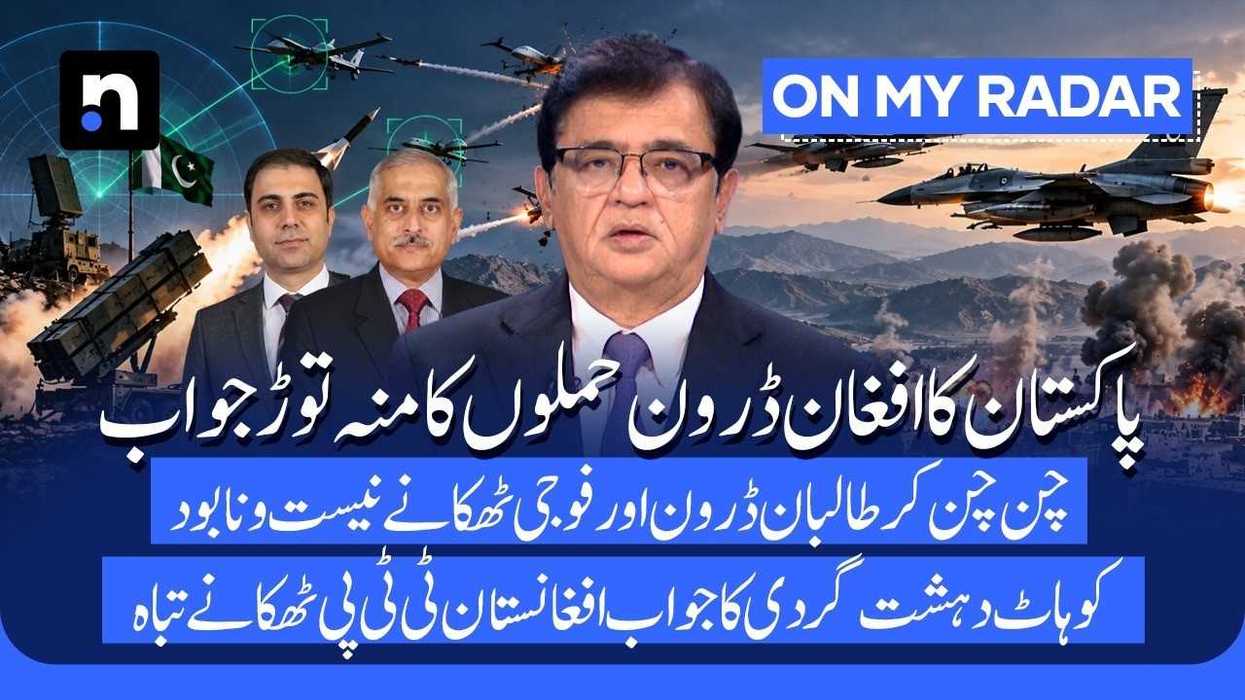
Pakistan carried out air and drone strikes on 10 locations in Afghanistan on Thursday, saying the targets were sites used to launch and store drones after a series of drones entered Pakistani airspace from Afghanistan a day earlier.
The strikes marked Pakistan’s second reported military action inside Afghanistan in four days, as tensions between the two neighbors intensify over cross-border terrorism and attacks. Pakistan said its air defense systems detected, tracked and neutralized the drones before they reached their intended targets. It then targeted the facilities it said were linked to the attacks.
In his latest episode of “On My Radar,” Kamran Khan said the strikes came after what he described as an increasingly severe wave of terrorism and attacks originating from Afghanistan.
According to Pakistan’s Ministry of Information, the strikes targeted 10 locations where drones were allegedly being launched and stored. The ministry described the operation as “deliberate, precise, calibrated and proportionate” and said it was limited to specific military targets allegedly linked to attacks against Pakistan.
The Afghan Taliban government has denied that it launched the drones that entered Pakistan on Wednesday. Taliban spokesman Zabihullah Mujahid condemned Thursday’s Pakistani strikes and indicated that Afghanistan would respond. Afghan officials said the strikes killed four people.
The latest escalation followed reports of firing near Kurram a night earlier. Pakistani security forces also said they had prevented an attempt by terrorists to enter the country.
Pakistan’s second strike in four days
The latest operation came three days after Pakistan conducted airstrikes in Afghanistan’s Kunar and Paktika provinces on Sept. 21. Pakistan said those strikes killed 28 terrorists. Afghan officials and the United Nations, however, reported civilian casualties from the strikes.
The Sept. 21 operation followed a suicide attack on a police compound mosque in Kohat, where Pakistani authorities reported that 24 people were killed and about 100 were wounded. An overnight clearance operation followed the attack and resulted in eight attackers being killed.
Pakistan has repeatedly accused terrorist groups based in Afghanistan of carrying out attacks inside the country. Afghan Taliban authorities deny harboring groups responsible for attacks in Pakistan and have described the violence as Pakistan’s internal security problem.
Pakistan raises issue at OIC
Islamabad has also taken the issue to international and diplomatic forums.
Deputy Prime Minister and Foreign Minister Ishaq Dar told an Organization of Islamic Cooperation meeting that more than two dozen Pakistan-opposed terrorist groups were present in Afghanistan and warned that their activities posed a security concern for the region.
Dar called for effective and concrete measures to prevent Afghan territory from being used for terrorism against Pakistan.
The remarks came as Pakistan stepped up diplomatic pressure on the Taliban government over militant groups operating from Afghan soil.
UN report highlights militant links
A United Nations Security Council monitoring report covering developments from December 2025 to June 2026 also provides broader context for Pakistan’s concerns.
The report said continued support from the Afghan Taliban for Tehreek-e-Taliban Pakistan had contributed to an increase in the frequency and lethality of terrorist attacks in Pakistan. It also identified increasingly blurred operational and facilitation links among the TTP, Al-Qaeda, Islamic State Khorasan Province and the Balochistan Liberation Army.
The report said cross-border violence between Pakistan and Afghanistan increased during the reporting period, with a significant portion of the escalation attributed to attacks by the TTP. It also described the militant landscape in and around Afghanistan as increasingly interconnected, with groups sharing training, logistics and facilitation networks.
The findings have added to Pakistan’s concerns about the ability of terrorist groups to operate from Afghan territory.
Diplomatic efforts face new pressure
Pakistan and Afghanistan have previously been the focus of diplomatic efforts aimed at reducing tensions.
China, Saudi Arabia, Qatar, Turkey and other Muslim countries have attempted to facilitate dialogue between the two sides, but those efforts have so far failed to produce a lasting resolution.
Last week, Taliban spokesman Zabihullah Mujahid said Afghanistan wanted dialogue and cooperation with Pakistan and welcomed a broader Saudi role in resolving disputes between the two countries.
That position now faces a new test following Thursday’s Pakistani strikes. Mujahid condemned the attacks and warned of an “appropriate response.”
A senior Turkish intelligence official also visited Afghanistan last week and subsequently traveled to Pakistan, offering to help reduce tensions between Islamabad and the Taliban through dialogue.
Those diplomatic efforts have so far failed to prevent a new escalation.
For Pakistan, the dispute centers on its accusation that Afghan territory is being used by terrorist groups to plan and launch attacks. The Taliban government rejects that accusation. The latest strikes, following the reported drone incursions and the Sept. 21 airstrikes, have further raised the risk of confrontation between the two neighbors.





Comments
See what people are discussing