

Pakistan, Qatar mediation helps shape 60-day Iran-US deal roadmap
Kamran Khan calls it a key diplomatic breakthrough, noting Pakistan’s facilitation in narrowing Washington-Tehran differences

News Desk
The News Desk provides timely and factual coverage of national and international events, with an emphasis on accuracy and clarity.
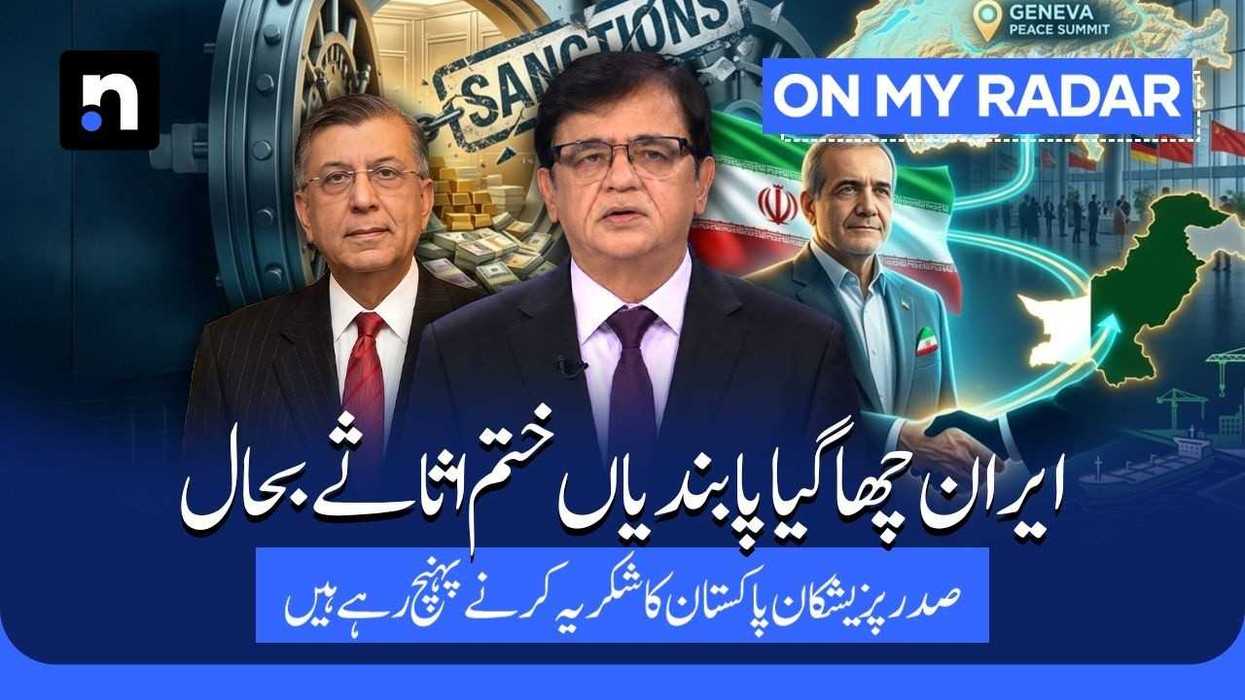
A major diplomatic breakthrough emerged on Monday as Iran and the United States agreed to draft a roadmap for a final agreement within the next 60 days, marking significant progress in a negotiation process facilitated by Pakistan and Qatar.
The development was announced in a joint statement issued by Pakistan and Qatar, which confirmed that technical-level talks will continue throughout the week in the Swiss resort town of Bürgenstock to finalize the framework and details of the proposed deal.
Speaking in the latest episode of On My Radar, Kamran Khan said the agreement represents one of the most important diplomatic developments in recent months, with Pakistan playing a central role in helping bridge differences between Washington and Tehran.
The joint communiqué further revealed that both sides have agreed to establish a high-level committee under the Islamabad Memorandum of Understanding (MoU) to supervise and monitor the negotiation process as it moves forward.
In a parallel move aimed at reducing tensions in the region, Iran and the United States have also agreed on a direct mechanism to safeguard the Strait of Hormuz and prevent misunderstandings during the ongoing talks.
Another key development surfaced on the Lebanon front, where Washington and Tehran, with support from Pakistan and Qatar, agreed to create a de-confliction cell to ensure the implementation of an MoU focused on ending military operations there.
In another notable breakthrough, Pakistan’s Foreign Office announced that following the Islamabad peace agreement and the successful negotiations in Switzerland, Iranian President Masoud Pezeshkian will arrive in Pakistan on Tuesday on a goodwill visit.
Meanwhile, U.S. Vice President JD Vance described the latest round of negotiations as “a very good day,” saying meaningful progress had been achieved and that the groundwork for a possible final agreement had now been laid.
Vance also said Washington could consider unfreezing some of Iran’s assets in the future, provided the funds are directed toward the welfare of the Iranian people rather than militant financing.
Iranian Foreign Minister Abbas Araghchi said in a social media post that progress had also been made on concessions related to Iran’s oil and petrochemical exports, the release of certain frozen assets, and the launch of reconstruction and development initiatives.
Separately, another recent statement by Vance has attracted attention after he revealed that over the past three months, he may have spoken more with Pakistan’s Field Marshal Asim Munir than with anyone else.
Referring to the Iran-U.S. talks, Vance credited Field Marshal Asim Munir’s efforts as instrumental, saying it was because of his engagement that “we are here today.”



Comments
See what people are discussing