


News Desk
The News Desk provides timely and factual coverage of national and international events, with an emphasis on accuracy and clarity.
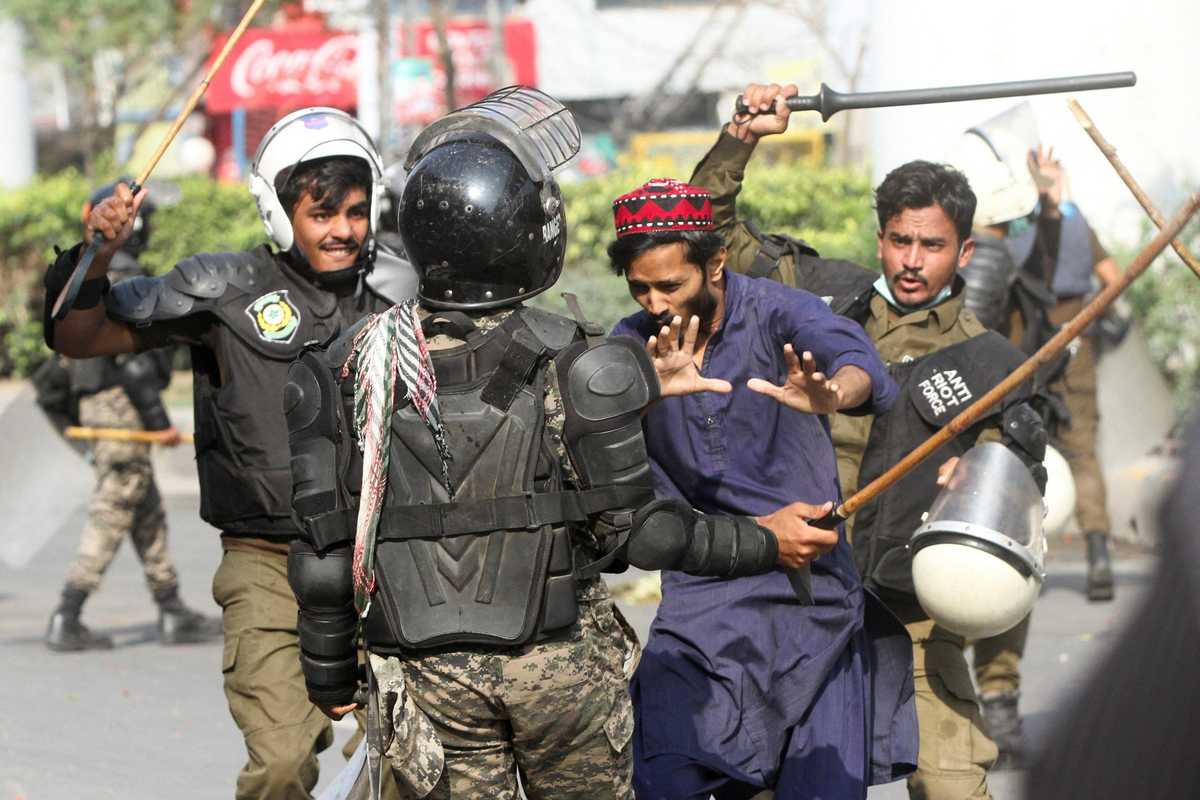
A supporter of Tehreek-e-Labbaik Pakistan (TLP) clashes with police officers during a solidarity march for Gaza in Lahore, Pakistan, October 10, 2025.
Reuters
Pakistan has intensified its crackdown on the hardline religious group Tehreek-e-Labbaik Pakistan (TLP), sealing its Islamabad offices and imposing a ban on public gatherings amid plans to designate the party as extremist following violent demonstrations last week.
Authorities in the federal capital and Punjab province on Thursday sealed TLP offices, madrasas and mosques, while signaling plans to designate the group as an “extremist organization”.
In Islamabad, federal officials carried out administrative actions across Bara Kahu, Murree Road, and surrounding areas. Among the properties closed were the TLP central office at Roller Area, the Madina Town office on Simli Dam Road, and key religious sites including the central Jamia Mosque and Madrasa Anwar-e-Madina in New Abadi.
Local offices and mosques, such as the UC-level office in Shahpur, Masjid Mumtaz Qadri in Village Uthal, and the Jamia Mosque at 17-Mile, were also sealed. Authorities described these measures as part of ongoing efforts to maintain law and order and enforce compliance with national regulations.
Punjab on radar
In Punjab, the government has introduced additional measures to curb unrest, including the imposition of restrictions on public gatherings under Section 144 until Saturday, October 18.
The order bans protests, rallies, processions, sit-ins, and similar activities, prohibiting the assembly of four or more people in public spaces. Public displays of weapons are also banned, and loudspeakers may only be used for calls to prayer and Friday sermons.
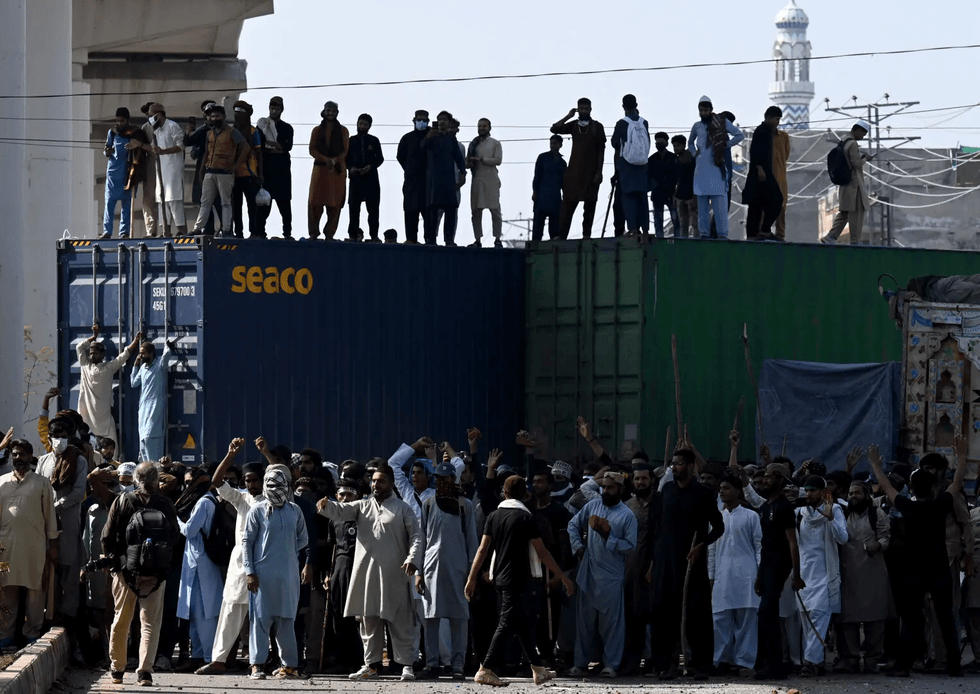 TLP activists protest in Lahore on October 10, 2025, after authorities blocked roads ahead of their pro-Palestinian march to Islamabad. Reuters
Authorities have further prohibited the publication or distribution of provocative, hateful, or sectarian material.
Officials said the restrictions were prompted by security concerns and threats to public safety, noting that large gatherings could become soft targets for terrorists or be exploited by malicious actors for anti-state activities. The order does not apply to weddings, funerals, or burials, and government officials performing official duties are exempt.
The Punjab Home Department has issued a formal notification and directed extensive public awareness campaigns to ensure citizens are informed of the restrictions.
The crackdown follows deadly protests in Lahore last week, in which at least five people were killed. During the unrest, TLP claimed that its leader, Saad Hussain Rizvi, was wounded, though authorities have not confirmed the report.
Founded in 2015, TLP has built its following through mass demonstrations defending Pakistan’s blasphemy laws, which carry the death penalty for insulting Prophet Muhammad (PBUH). The group has repeatedly confronted authorities, disrupting urban centers and provoking violence during demonstrations.
In a broader effort to restore order, Punjab officials have also approved measures targeting hate speech, illegal arms, and undocumented Afghan migrants. Individuals involved in incitement or violence face immediate arrest, while those responsible for attacking police or damaging public property will be tried in anti-terrorism courts.
TLP leadership has been placed under the Fourth Schedule of Pakistan’s Anti-Terrorism Act, restricting movement, finances, and communications. Bank accounts, social media accounts, and other assets linked to the group have been frozen, while its posters, banners, and advertisements have been banned. Seized properties will be handed over to the Auqaf Department, which manages religious endowments.
Authorities have also issued a one-month deadline for the surrender of illegal firearms, increased penalties for violations, and suspended the issuance of new arms licenses. On migration, officials said they will regularize undocumented Afghan nationals, monitor their presence in real time, and conduct targeted operations to identify irregular residents and businesses.



Comments
See what people are discussing