

Pakistan asks Afghan Taliban to act against militants after deadly Kohat attack
After the Kohat attack killed 31 people, Pakistan called on the Afghan Taliban to act against militants
Aamir Abbasi
Editor, Islamabad
Aamir; a journalist with 15 years of experience, working in Newspaper, TV and Digital Media. Worked in Field, covered Big Legal Constitutional and Political Events in Pakistan since 2009 with Pakistan’s Top Media Organizations. Graduate of Quaid I Azam University Islamabad.

News Desk
The News Desk provides timely and factual coverage of national and international events, with an emphasis on accuracy and clarity.
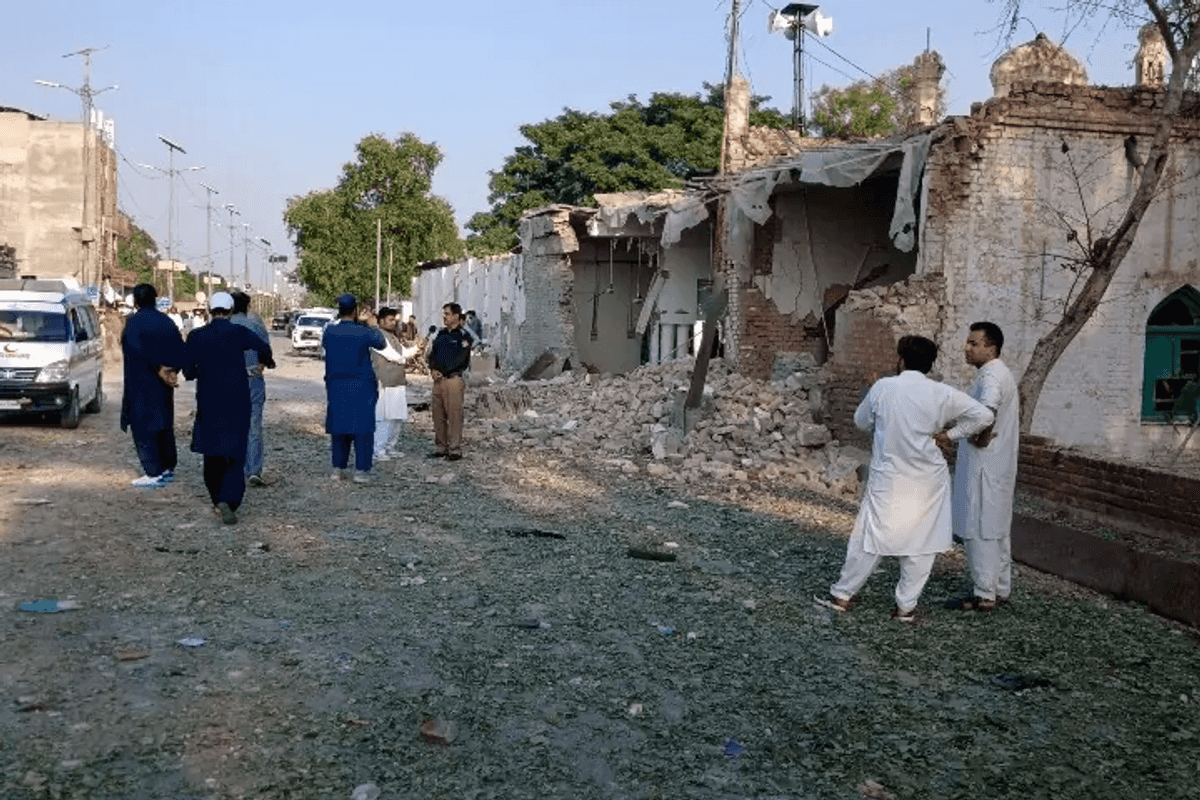
People gather near an ambulance and a damaged police facility after the suicide attack in Kohat on Sept. 18.
Reuters
Pakistan on Saturday called on Afghanistan's Taliban authorities to act against militant groups it says use Afghan territory, after the Kohat attack killed 31 people at a police compound in the northwestern city.
The suicide bombing and gun assault began during Friday prayers, and the government blames the Tehreek-e-Taliban Pakistan (TTP) and associated groups.
What happened in the Kohat attack?
An explosives-laden vehicle struck the mosque at the Kohat Police Lines compound, after which gunmen entered the complex and fought security personnel. Security forces ended a 22-hour operation on Saturday, killing all eight attackers. Officials said more than 100 people were wounded, and 16 of the dead were police personnel.
The compound houses the Counter Terrorism Department, Special Branch and other police units.
Prime Minister Shehbaz Sharif condemned the attack on Friday. He directed authorities to provide the injured with the best available medical treatment and submit a report on the incident.
President Asif Ali Zardari also condemned the attack. He said eliminating what he called "Fitna-al-Khawarij" and militants operating with foreign backing was necessary for Pakistan's national security.
What has Pakistan asked the Afghan Taliban to do after the Kohat attack?
Pakistan's information minister said the assault was carried out by militants the government refers to as "Fitna al-Khawarij". Islamabad uses the term for the TTP and associated groups.
The minister said Islamabad had repeatedly raised concerns with Afghanistan's Taliban authorities over what it describes as militant sanctuaries, recruitment and support networks operating from Afghan territory. Pakistan has blamed such networks for a rise in attacks in Khyber Pakhtunkhwa and Balochistan.
"The Afghan Taliban must dismantle these networks rather than deflect responsibility," the minister said. He called on the Taliban authorities to take what he described as "credible, verifiable and sustained measures" against sanctuaries and networks involved in recruitment and training.
Islamabad has repeatedly said it prefers dialogue and engagement with Kabul to resolve security concerns. The minister said, however, that negotiations could not be used to protect groups that threaten Pakistan.
Pakistan also said it would take measures to protect its citizens and territory in accordance with international law. It has urged other countries to press the Afghan Taliban to act, warning that continued activity by such groups could pose wider risks to regional stability and security.
How has the Afghan Taliban responded?
The minister's comments came after Taliban spokesman Zabihullah Mujahid warned that Afghanistan would give a "crushing response" to any Pakistani military action on Afghan territory. Mujahid has rejected Islamabad's allegations that militant groups are supported or sheltered in Afghanistan.
Afghanistan's Foreign Ministry condemned the Kohat attack and expressed sympathy for the victims' families. Pakistan said it had taken note of the statement, but the minister said Kabul's response needed to be followed by concrete measures.
The Afghan Taliban denies allowing its territory to be used for attacks against Pakistan.
Why are relations between Pakistan and Afghanistan strained?
The two neighbors have traded accusations over cross-border militancy. Islamabad alleges that TTP fighters operate from Afghanistan, while Kabul rejects the charge.
The dispute has contributed to a deterioration in relations and has previously led to Pakistani military strikes inside Afghanistan. The Taliban authorities have condemned those strikes and accused Pakistan of violating Afghan sovereignty.
The Kohat attack adds to a broader pattern of militant violence in Pakistan's northwest, where security forces have been battling the TTP and other armed groups. It has also strained the security relationship between Islamabad and Kabul further.




Comments
See what people are discussing