

Pakistan calls for international unity against terrorism after deadly attacks
Deputy PM Ishaq Dar says attacks ‘will never shake or weaken’ country’s resolve to fight terrorism

News Desk
The News Desk provides timely and factual coverage of national and international events, with an emphasis on accuracy and clarity.
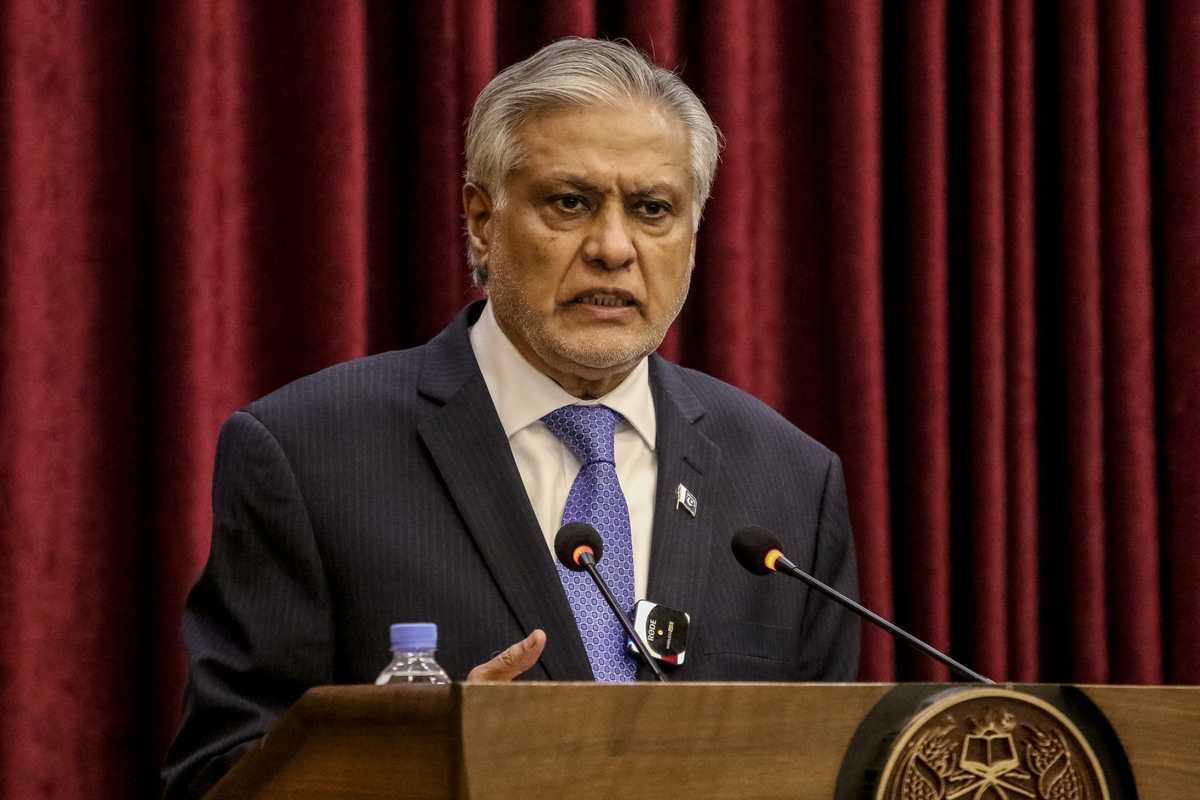
Pakistan’s Deputy Prime Minister and Foreign Minister Ishaq Dar condemned on Wednesday two recent militant attacks, saying they “will never shake or weaken” the country’s resolve to fight terrorism and urging renewed global cooperation, according to state news agency APP.
At least 12 people were killed and 36 injured in a suicide bombing outside a district court in Islamabad on Tuesday. The attack followed an attempted assault on a cadet college in Wana, in northwestern Pakistan, a day earlier.
Earlier in the day, security forces ended a 33-hour standoff at the college after killing all four attackers who had been holed up inside the campus.
“Pakistan categorically rejects acts of terrorism in all forms, whether they take place in Islamabad or anywhere else in the world,” Dar said during the Inter-Parliamentary Speakers’ Conference in Islamabad.
“These cowardly acts will never weaken our national resolve,” he said. “They reaffirm our conviction that dialogue, understanding, and partnership are the only sustainable path to peace and security.”
Pakistan has seen a rise in militant attacks since the Afghan Taliban returned to power in Kabul in 2021. Islamabad accuses TTP fighters of taking refuge across the border. Afghan officials maintain that Pakistan’s security challenges are domestic.
Dar warned the world faces “profound global transformation,” including terrorism, climate crises, geopolitical rivalries, and economic divides, all of which threaten international cooperation.
“Multilateralism must not only be preserved, it must be revitalized through openness, inclusion, and active participation,” he said. “We must rebuild trust in international cooperation based on dialogue, diplomacy, mutual respect, and shared responsibility.”
He emphasized that terrorism “recognizes no boundary, religion, gender, ethnicity, or race,” and called for a united international response. He said forums like the Speakers’ Conference are crucial for restoring faith in global institutions.
Dar also highlighted the role of parliamentary diplomacy, saying it complements traditional diplomacy by giving citizens’ representatives a voice in global discussions.
He underlined the theme of the conference, “Peace, Security, and Development,” noting that peace enables growth, development sustains peace, and security supports progress.
Reiterating Pakistan’s commitment to international law and principles of the U.N. Charter, Dar said the country advocates dialogue, conflict prevention, and equitable development. During its July 2025 presidency of the U.N. Security Council, Pakistan sponsored a resolution to strengthen mechanisms for peaceful dispute resolution.
“Pakistan stands ready to continue serving as a bridge-builder, uniting regions, amplifying the voices of the developing world, and promoting peace through justice and dialogue,” he said.
The two-day conference, chaired by Pakistan’s Senate Chairman Yusuf Raza Gilani, drew parliamentary delegations from over 40 countries across Africa, Asia, Latin America, and the Middle East, including Saudi Arabia, Malaysia, Palestine, Algeria, Barbados, Azerbaijan, Uzbekistan, Kenya, Tajikistan, Morocco, and the Maldives.


Comments
See what people are discussing