

Pakistan court declares judge ineligible in contested 'fake degree case'
Islamabad High Court rules Justice Tariq Mehmood Jahangiri not qualified to be appointed as a judge, orders immediate de-notification

Aamir Abbasi
Editor, Islamabad
Aamir; a journalist with 15 years of experience, working in Newspaper, TV and Digital Media. Worked in Field, covered Big Legal Constitutional and Political Events in Pakistan since 2009 with Pakistan’s Top Media Organizations. Graduate of Quaid I Azam University Islamabad.
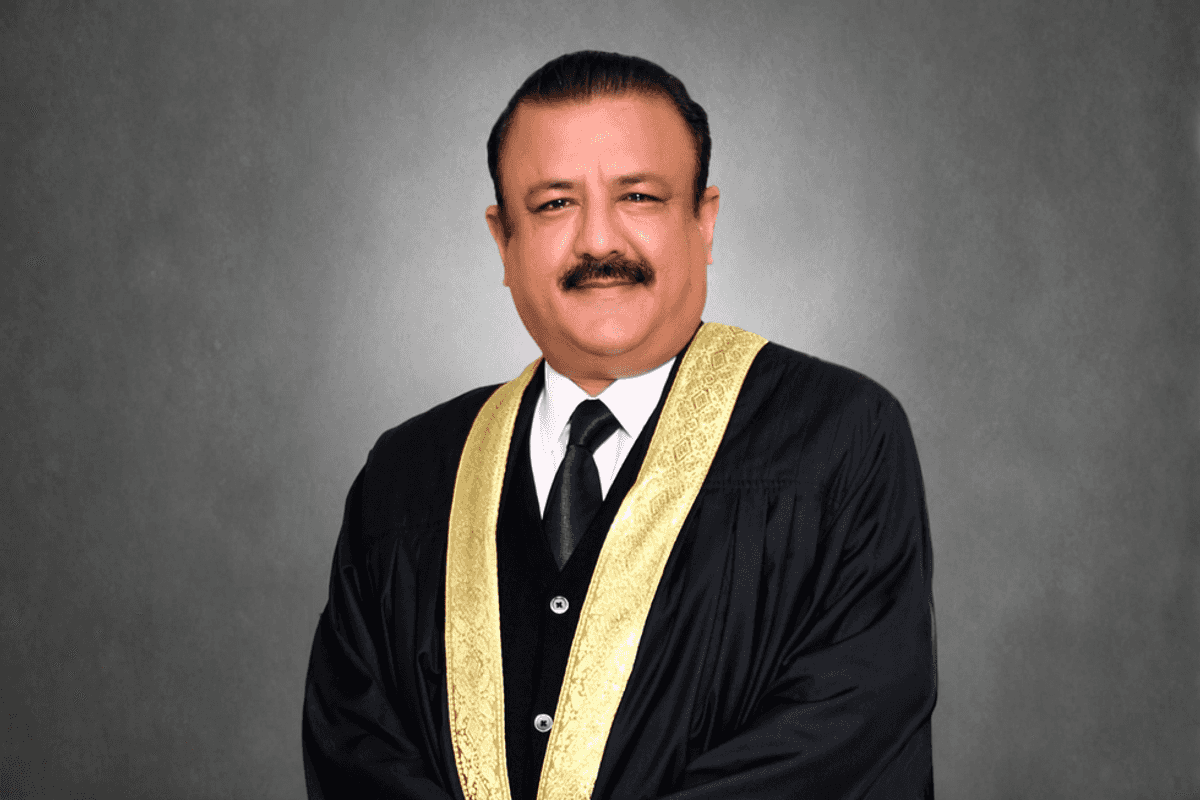
Justice Tariq Mehmood Jahangiri.
Courtesy: Islamabad High Court website
Pakistan’s Islamabad High Court declared on Thursday Justice Tariq Mehmood Jahangiri ineligible to hold office in an alleged fake degree case and ordered the Ministry of Law to immediately de-notify him.
The verdict was announced by a two-judge bench comprising Chief Justice Sardar Sarfraz Dogar and Justice Muhammad Azam Khan.
The bench accepted a petition challenging Jahangiri’s appointment and ruled that he was not qualified to be appointed as a judge of the Islamabad High Court.
Earlier in the day, the court concluded arguments in the case and reserved its judgment.
Proceedings were held in Court Room No. 1, where a complete ban was imposed on carrying mobile phones inside the courtroom.
During the hearing, Karachi University Registrar Imran Ahmed Siddiqui appeared before the court and produced the original record related to Jahangiri’s LL.B degree.
Advocate General Islamabad Ayaz Shaukat read out a previous court order during the proceedings.
Justice Jahangiri did not appear in person. He was represented by his counsel Akram Sheikh and Barrister Salahuddin.
The Karachi University registrar told the court the university had canceled Jahangiri’s LL.B degree after completing its internal process.
He said Islamia Law College had confirmed that Tariq Mehmood Jahangiri was never enrolled as a student.
According to the registrar, Tariq Mehmood was allegedly caught cheating, after which the university’s Unfair Means Committee imposed a three-year ban.
Despite the ban, the registrar alleged, he appeared in examinations using a fake enrollment form, used different names and parentage details in LL.B Part-I and Part-II, and appeared with a fake enrollment number.
The registrar added that no enrollment record was available with Islamia Law College and that the university syndicate later issued a declaration canceling the degree after confirming these findings.
Jahangiri’s counsel pointed out that the Sindh High Court had suspended Karachi University’s declaration canceling the degree.
During arguments, Akram Sheikh objected to the proceedings, alleging bias and violation of his client’s right to a fair trial under Article 10-A of Pakistan’s Constitution.
He also questioned the bench’s jurisdiction and referred to petitions pending before constitutional forums and the Supreme Judicial Council.
Petitioner’s counsel Mian Dawood argued that in a writ of quo warranto, courts are empowered by Supreme Court precedents to scrutinize every document.
He maintained that the enrollment forms and academic record were bogus and challenged Jahangiri to produce original LL.B Part-I and Part-II mark sheets.
After hearing arguments from all sides, the court accepted the petition, declared Justice Tariq Mehmood Jahangiri ineligible to serve as a judge, and ordered his immediate de-notification.




Comments
See what people are discussing