


Business Desk
The Business Desk tracks economic trends, market movements, and business developments, offering analysis of both local and global financial news.
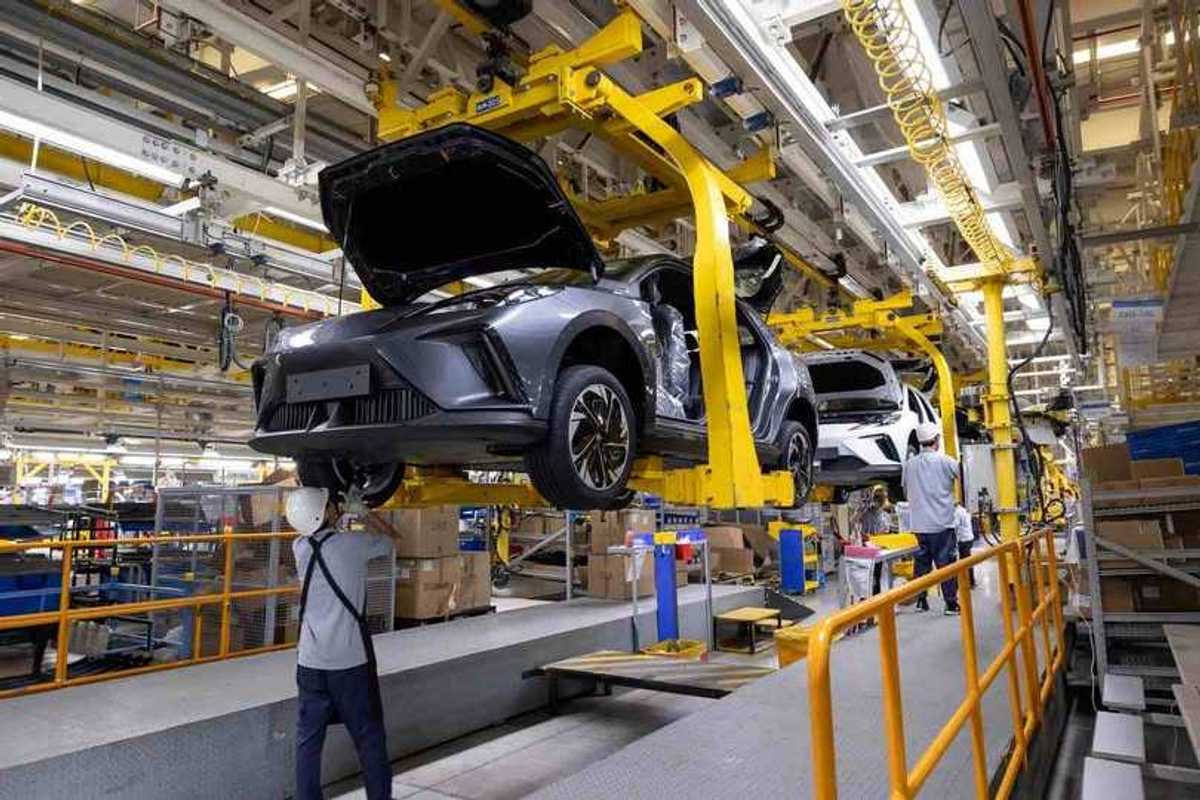
Latest tax change provides additional relief to qualifying locally manufactured hybrids
Pakistan has effectively reduced sales tax to 18% on locally manufactured hybrid electric vehicles with engine capacities of up to 2,000cc that were subject to the 25% Table-II rate.
The change took effect on September 13 under S.R.O. 1525(I)/2026, issued by the federal government through the Finance Division. The notification amends S.R.O. 297(I)/2023, dated March 8, 2023, which was subsequently amended through S.R.O. 370(I)/2024.
How does the new hybrid sales tax rule work?
The amendment adds a proviso after Table-II of S.R.O. 297(I)/2023 stating that its provisions will not apply to locally manufactured hybrid electric vehicles with engine capacities of up to 2,000cc.
Table-II imposes a 25% sales tax on specified locally manufactured goods, including locally manufactured or assembled SUVs and CUVs, as well as vehicles with engine capacities of 1,400cc and above.
By excluding qualifying hybrids from that table, the amendment removes affected vehicles from the 25% regime. Pakistan’s standard sales tax rate is 18%, meaning those vehicles return to the standard rate unless another special treatment applies.
The notification was issued under powers granted by section 3 of the Sales Tax Act, 1990, and came into force immediately.
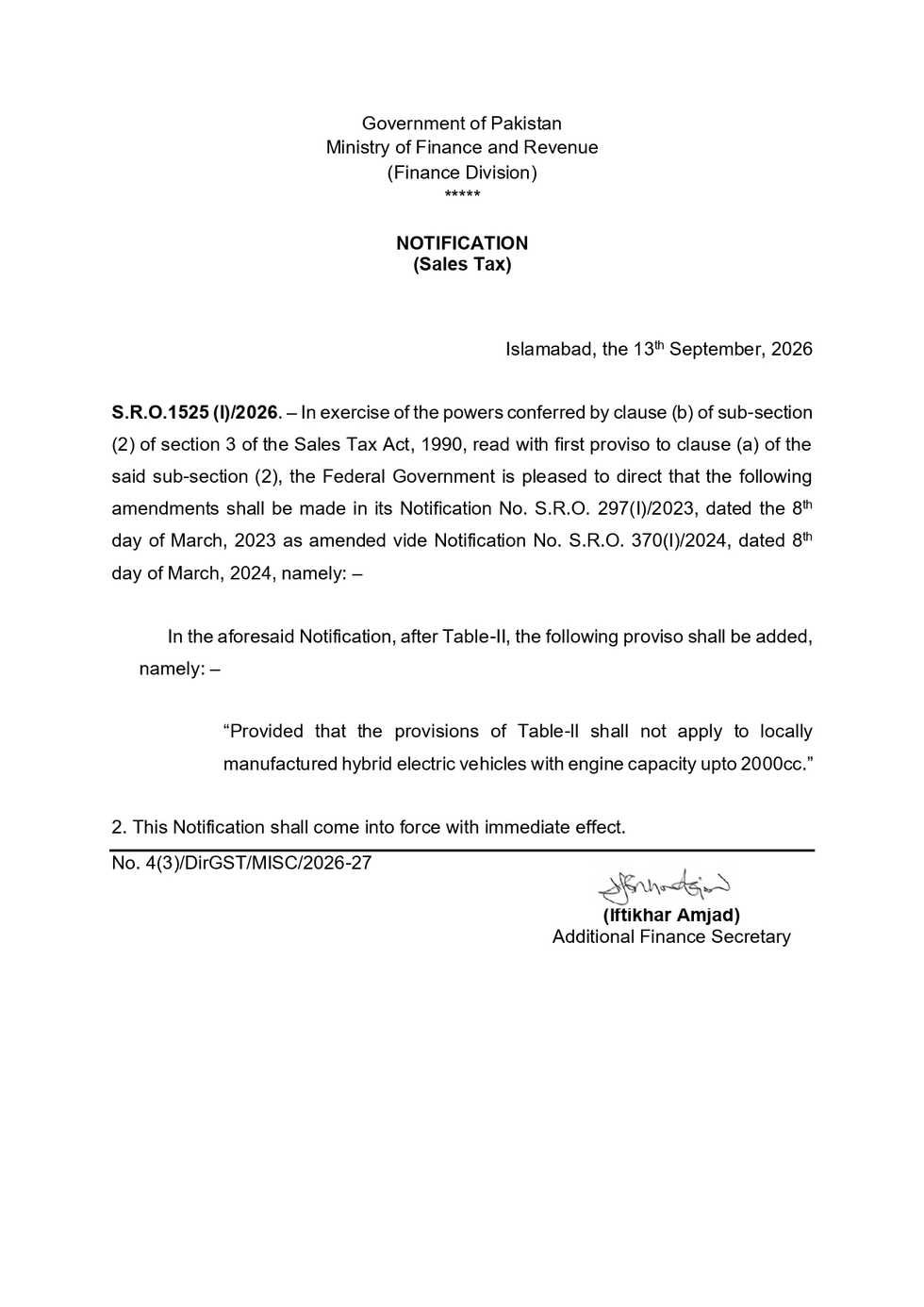 Finance Division notification informing of the change in sales tax. nukta.com
How has the tax regime for hybrids changed?
Locally manufactured hybrid electric vehicles had previously benefited from concessional sales tax rates under the Eighth Schedule.
Hybrids with engine capacities of up to 1,800cc were taxed at 8.5%, while those from 1,801cc to 2,500cc were taxed at 12.75%. Those concessions applied through June 30, 2026.
After those concessions expired, locally manufactured hybrids falling within vehicle categories covered by Table-II became subject to the 25% rate.
The latest amendment therefore partially reverses that increase by removing locally manufactured hybrids up to 2,000cc from the higher-rate table and returning affected vehicles to the standard 18% rate.
The lower tax burden could reduce prices of locally assembled hybrid models, although the eventual impact on consumers will depend on how much of the tax saving automakers pass through.
How does the change fit into Pakistan’s new auto policy?
The tax change comes as Pakistan works to finalize its five-year Auto Policy for 2026-31 amid consultations with the International Monetary Fund.
A draft approved by Prime Minister Shehbaz Sharif proposed equal treatment of hybrid electric vehicles and conventional internal combustion engine vehicles in terms of duties and taxes.
The draft, however, envisages substantially greater tax incentives for battery electric vehicles as part of the government’s broader push toward new energy vehicles.
The latest tax change provides additional relief to qualifying locally manufactured hybrids while Pakistan continues work on the wider policy framework for conventional, hybrid and electric vehicles.




Comments
See what people are discussing