

Pakistan's diesel crack spread falls to USD 34.60 per barrel
Ex-depot diesel price eases to PKR 346 per liter as narrowing diesel and gasoline spreads put pressure on refiners

Business Desk
The Business Desk tracks economic trends, market movements, and business developments, offering analysis of both local and global financial news.
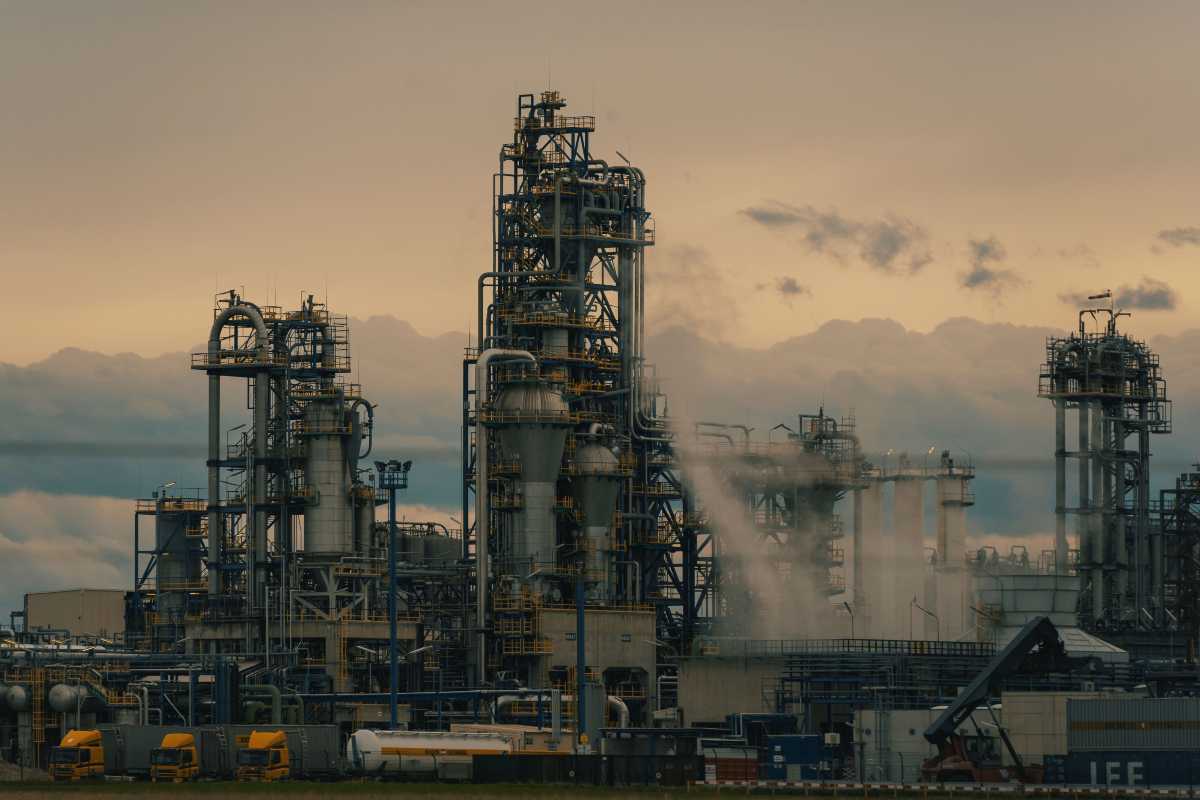
An oil refinery. Pakistan's diesel crack spread fell to USD 34.60 per barrel on November 27 amid weakening international diesel prices.
Pexels
Pakistan's high-speed diesel (HSD) crack spread fell further to USD 34.60 per barrel on Friday, moving USD 3.40 below the government's pricing ceiling of USD 38 per barrel amid weakening international diesel prices, according to research by Arif Habib Limited (AHL).
Why is Pakistan's diesel crack spread falling?
The diesel crack spread, which measures the difference between international diesel and Dubai crude oil prices, has narrowed as diesel prices have fallen faster than crude prices. The average gasoil price used in the November 27 pricing calculation fell to USD 121.01 per barrel from USD 122.16 a day earlier.
The corresponding seven-working-day rolling average for Dubai crude eased to USD 86.41 per barrel from USD 86.60 over the same period.
The HSD crack spread used in Pakistan's domestic pricing mechanism stood at USD 41.89 per barrel during August 20-October 17, before the government lowered the ceiling to USD 38 per barrel effective October 20.
The spread remained at USD 38 per barrel through November 24 before falling to USD 37.56 on November 25, USD 35.56 on November 26 and USD 34.60 on November 27.
How much have diesel prices fallen in Pakistan?
The ex-depot price of HSD declined to PKR 346 per liter on November 27 from PKR 348 a day earlier and PKR 353 on November 25.
The latest price represents a reduction of PKR 11 per liter from PKR 357 recorded on November 21 and November 24.
Similarly, the ex-refinery price declined to PKR 232.54 per liter from PKR 234.56 on November 26 and PKR 240.10 on November 25.
According to the Oil and Gas Regulatory Authority (OGRA), the cost-and-freight component of HSD pricing stood at USD 124.51 per barrel on November 27.
The calculation included Dubai crude at USD 86.41 per barrel, freight and insurance costs of USD 8 and an HSD crack spread of USD 34.60, minus an Aramco crude oil premium adjustment of USD 4.50 per barrel.
What do narrowing diesel spreads mean for refineries?
Abdul Azeem, head of research at Al-Habib Capital Markets, said the refining sector was experiencing a gradual narrowing of product spreads, particularly in the high-margin diesel segment.
According to the brokerage's daily international oil price data, the diesel spread declined to USD 31.30 per barrel on November 26, compared with USD 49.70 at the end of September and an average of USD 43.80 during October.
The latest figure represents a significant contraction from the peak of USD 81.30 per barrel recorded on July 23, 2026.
Unlike the spread used in Pakistan's domestic pricing mechanism, these figures reflect the brokerage's international market data.
Azeem attributed the narrowing spread to a faster decline in international diesel prices relative to crude oil prices.
International diesel prices stood at USD 118.30 per barrel on November 26, while Dubai crude was priced at USD 87 per barrel.
The diesel spread also narrowed by approximately USD 3.40 per barrel over the preceding five trading sessions, indicating continued pressure on refining margins.
Why are gasoline spreads also under pressure?
The gasoline spread has deteriorated more sharply, turning negative during October and reaching negative USD 10.80 per barrel on November 26, according to Al-Habib Capital Markets.
The spread, which measures the difference between the international RON 92 gasoline benchmark and Dubai crude prices, has weakened considerably from its positive levels during July and August.
The simultaneous narrowing of diesel and gasoline spreads indicates that refiners are facing pressure across their key product categories.
However, actual refinery profitability will depend on individual product yields, processing costs, inventory valuation and the applicable domestic pricing mechanism, Azeem said.




Comments
See what people are discussing