

Pakistan says it has not shut door on diplomacy, seeks no war with Afghanistan
FO spokesperson says UN report backs Pakistan on TTP and cross-border attacks

News Desk
The News Desk provides timely and factual coverage of national and international events, with an emphasis on accuracy and clarity.
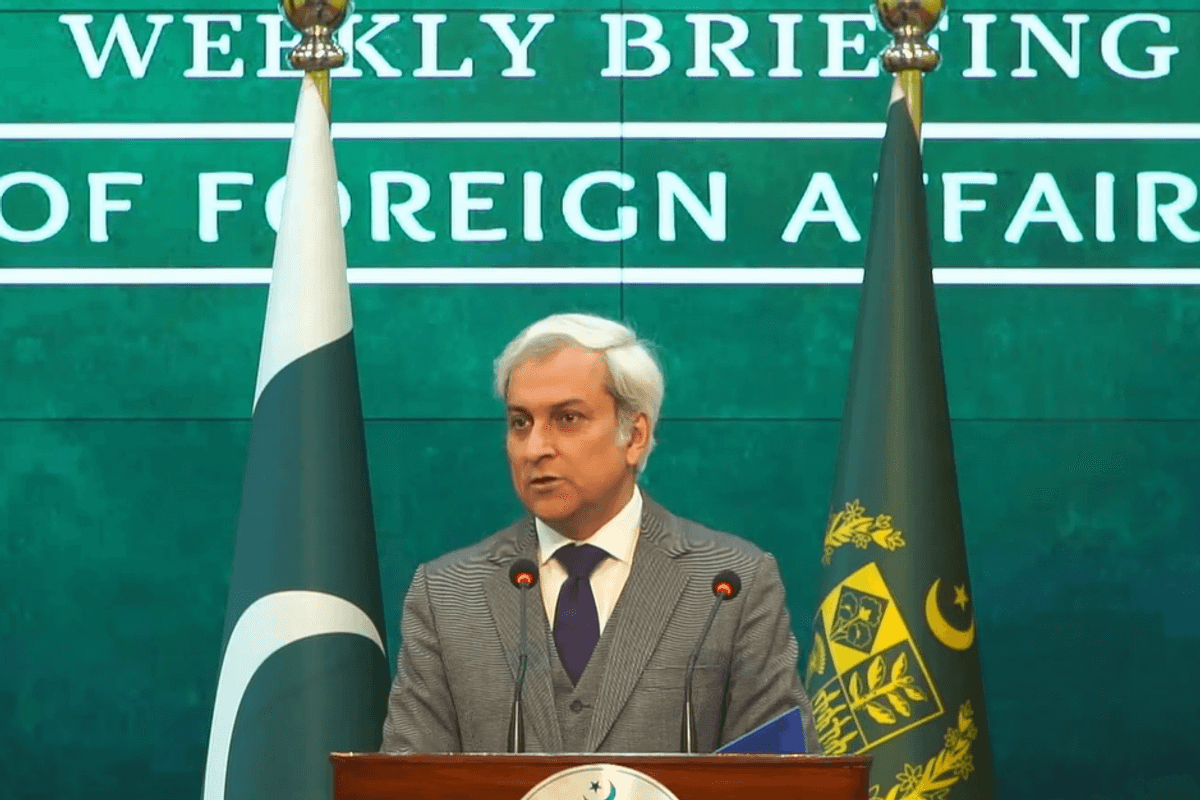
Pakistan on Thursday reiterated its call for the Afghan Taliban authorities to take concrete measures against terrorist groups operating from Afghan soil, while stressing that it seeks diplomacy, not conflict, with its neighbor.
“Diplomacy continues even in wars. Diplomacy continues even during skirmishes. So we would not shut the door of diplomacy, but we also do not want to open the door to wars between two brotherly countries. We wish peace and prosperity to our Afghan brothers and sisters,” Foreign Office spokesperson Tahir Andrabi said at his weekly press briefing, according to the state-run APP.
Referring to a recent United Nations Security Council report, Andrabi said the findings largely supported Pakistan’s position on the resurgence of Tehrik-i-Taliban Pakistan (TTP) and the permissive environment provided by Afghanistan’s interim government. The report also noted Al-Qaeda’s role as a multiplier and service provider to other terrorist groups, while highlighting TTP’s increased operational freedom and attacks inside Pakistan.
“The report corroborates Pakistan’s position that TTP resurgence is linked to post-2021 interim government takeover. So this is an important report, and we follow it up with the relevant UN secretariat and departments and also with the members of the international community, particularly the members of the Security Council and other relevant stakeholders,” he added.
On Pakistan’s international engagements, Andrabi confirmed that Prime Minister Shehbaz Sharif would attend the inaugural meeting of the Board of Peace on February 19, alongside Deputy Prime Minister and Foreign Minister Ishaq Dar.
“We have joined the Board of Peace in good faith… We are in it, not in isolation, not as one voice, but as a collective voice of eight Islamic Arab countries…So our collective voice is resonating in the Board of Peace and we will continue to strive for the right and progress and prosperity of the people of Palestine,” he said.
Addressing India’s reaction to a recent Islamabad blast, Andrabi accused New Delhi of justifying terrorism selectively. “It goes against India’s stated position that they oppose terrorism in all forms. We conclude from these statements that India may oppose terrorism in all its forms, but it supports when it takes place against Pakistan,” he said.
He also drew attention to the ongoing lynching of Muslims in India, noting that at least 55 Muslims were killed last year in what he described as targeted, hate-motivated violence. “Many of these incidents occurred on the basis of explicit complicity of local authorities and local political leaders,” he said, highlighting a pattern of impunity.
Calling on the Indian government to investigate these incidents and urging the international community to monitor the situation, Andrabi said the attacks reflected a broader social and political climate marked by hostility, where Hindutva-driven narratives increasingly portray Muslims as outsiders and legitimize their exclusion.





Comments
See what people are discussing