

Pakistan Supreme Court downgrades rape conviction, cuts prison term
Court says prosecutors fail to prove force, a legal requirement for rape and instead upholds conviction for consensual fornication

Aamir Abbasi
Editor, Islamabad
Aamir; a journalist with 15 years of experience, working in Newspaper, TV and Digital Media. Worked in Field, covered Big Legal Constitutional and Political Events in Pakistan since 2009 with Pakistan’s Top Media Organizations. Graduate of Quaid I Azam University Islamabad.

Ali Hamza
Correspondent
Ali; a journalist with 3 years of experience, working in Newspaper. Worked in Field, covered Big Legal Constitutional and Political Events in Pakistan since 2022. Graduate of DePaul University, Chicago.
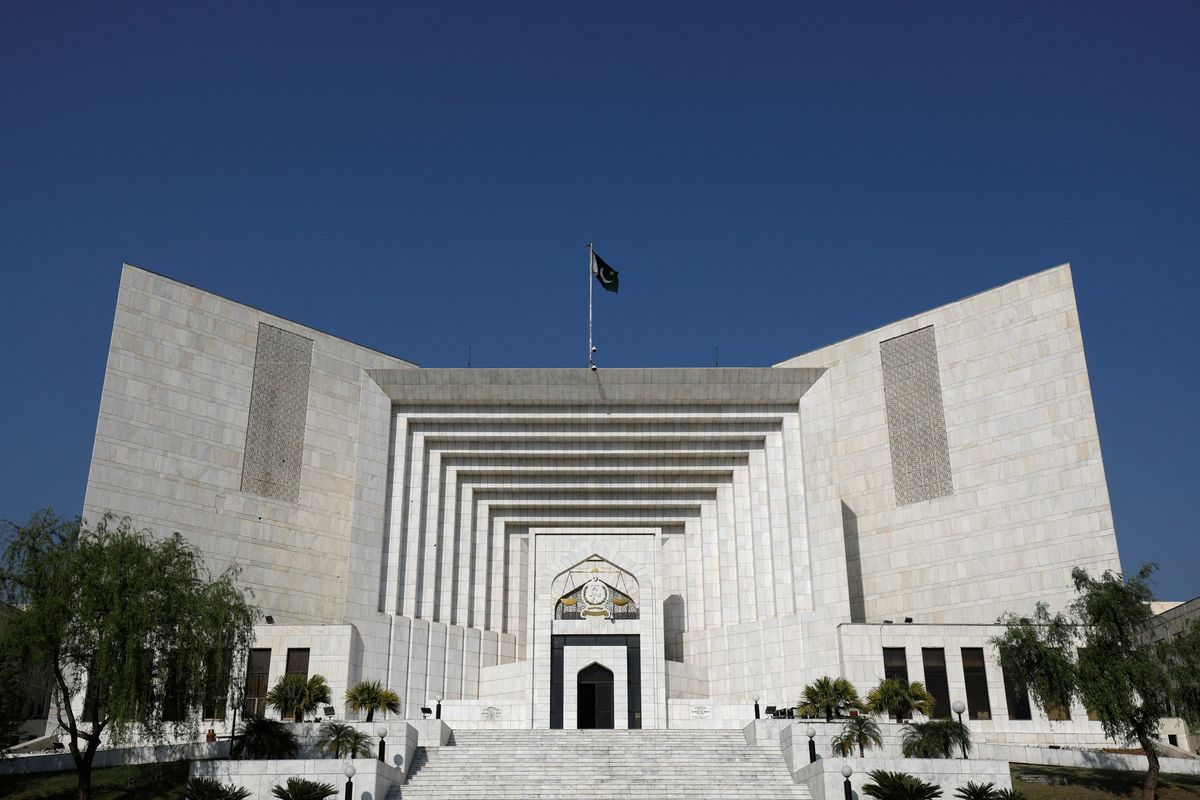
Pakistan’s Supreme Court has overturned a rape conviction and reclassified the offence as consensual fornication, reducing the prison sentence and fine imposed on the accused, according to a written judgment released by the court.
In a ruling, the court reduced the man’s sentence from 20 years’ imprisonment to five years of rigorous imprisonment. The fine was cut from 500,000 Pakistani rupees to 10,000 rupees, with an additional two months in jail to be served if the reduced fine is not paid.
The six-page judgment was authored by Justice Malik Shahzad Khan, while Justice Salahuddin Panhwar dissented.
The court said the prosecution had failed to establish the use of force, a key legal requirement for a rape conviction under Pakistani law and ruled that the facts supported a conviction for the lesser offence of consensual fornication instead.
The court noted that in cases of consensual fornication, both parties are legally liable to punishment. However, it held that no penalty could be imposed on the complainant at the appellate stage because she had not been charged during the trial or given an opportunity to defend herself before the lower court.
The judgment reviewed the contents of the first information report (FIR), in which the woman stated that she had gone to a forested area at around 5:30 a.m. to relieve herself, where she alleged the accused raped her at gunpoint. The court questioned how the accused could have anticipated her presence at that specific location and time, noting that prosecutors did not address this point.
Judges also highlighted a delay of about seven months in the registration of the FIR, describing it as unexplained. The court said the complainant did not report the incident to her family or pursue legal action during that period.
The ruling further stated that the complainant did not resist during the alleged incident and that medical examinations did not show signs of physical injury or violence. It added that her clothes were neither produced as evidence nor shown to have been torn.
According to the judgment, the alleged incident took place near a residential area, yet the complainant neither raised an alarm nor sought assistance from nearby residents.
On forensic evidence, the Supreme Court declined to give a final ruling on the DNA report, saying the issue of its authenticity and evidentiary value would be examined in a separate case.
The court noted that DNA samples were collected about 18 months after the alleged incident, while medical literature generally indicates that reliable DNA results are obtained within weeks of sample collection.
The top court concluded that while sexual intercourse had been established through the complainant’s statement and medical evidence, the prosecution failed to prove coercion beyond reasonable doubt, making the rape charge unsustainable.
Dissenting view
In a dissenting note, Justice Salahuddin Panhwar argued that delays in reporting sexual assault should not automatically undermine a complainant’s credibility, citing social stigma and personal vulnerability as common deterrents.
He maintained that the absence of physical injuries did not negate rape, particularly where fear was allegedly induced by the presence of a weapon, and questioned the majority’s decision to rely on disputed evidence to support a lesser charge of consensual fornication.
Justice Panhwar upheld the validity of the DNA report and said the conviction should not have been altered, concluding that the petition for leave to appeal should be dismissed.
Earlier Supreme Court rulings
Justice Malik Shahzad Khan has previously authored or contributed to judgments involving reappraisal of evidence and sentencing in serious criminal cases.
In Muhammad Imran v. The State (Criminal Petition No. 725 of 2023), decided in June 2024, a Supreme Court bench led by Justice Khan partly allowed an appeal against a rape conviction upheld by the Lahore High Court. While a DNA report confirmed sexual intercourse, the majority cited a delay in lodging the police complaint, absence of physical injuries, and surrounding circumstances to conclude that coercion had not been established beyond reasonable doubt. The conviction was converted from rape to consensual fornication, and the sentence was reduced accordingly. Justice Ayesha A. Malik dissented, maintaining that the evidence supported the rape conviction.
In a separate case, Maaf Ali v. The State (Criminal Petition No. 734-L of 2017), Justice Khan dissented on the question of sentencing after a man was convicted of murdering his wife inside a courtroom. While agreeing with the conviction and acquittal on terrorism charges, he argued that the death sentence was excessive and should be commuted to life imprisonment, citing mitigating factors and legal precedents. The majority ultimately commuted the death sentence to life imprisonment.
Pakistan has long faced criticism from rights groups over low conviction rates in sexual violence cases, with advocates pointing to reporting delays, evidentiary challenges and social stigma faced by survivors.





Comments
See what people are discussing