

Pakistan avoids crisis but struggles to achieve sustainable growth
Kamran Khan says Pakistan has gained stability, but weak growth and exports remain major concerns

News Desk
The News Desk provides timely and factual coverage of national and international events, with an emphasis on accuracy and clarity.

Pakistan has achieved greater macroeconomic stability and moved away from the risk of default, but the country's growth, exports, investment and agricultural performance remain too weak to deliver sustainable economic progress, journalist Kamran Khan said Thursday while reviewing the Pakistan Economic Survey 2025-26.
Speaking on his program "On My Radar," Khan said Finance Minister Muhammad Aurangzeb had presented what he described as Pakistan's economic "report card" to the nation, arguing that the economy was stabilizing. However, Khan said the survey also revealed multiple warning signs across key economic indicators.
According to Khan, a closer examination of the survey suggests Pakistan passed its annual economic assessment only narrowly, with several major targets missed during the fiscal year.
Pakistan's gross domestic product growth reached 3.7% against a government target of 4.2%, according to figures cited by Khan. While higher than last year's 3.2% growth rate, he said the pace remains insufficient for a country where hundreds of thousands of young people enter the labor market every year.
He argued that growth of 3.7% is not enough to generate the jobs needed to reduce poverty and improve living standards.
Khan also noted that average GDP growth during Prime Minister Shehbaz Sharif's four years in office has remained around 2%, suggesting that Pakistan has yet to escape a long-standing growth trap that has constrained investment, employment and productivity.
Exports were another area of concern, Khan said.
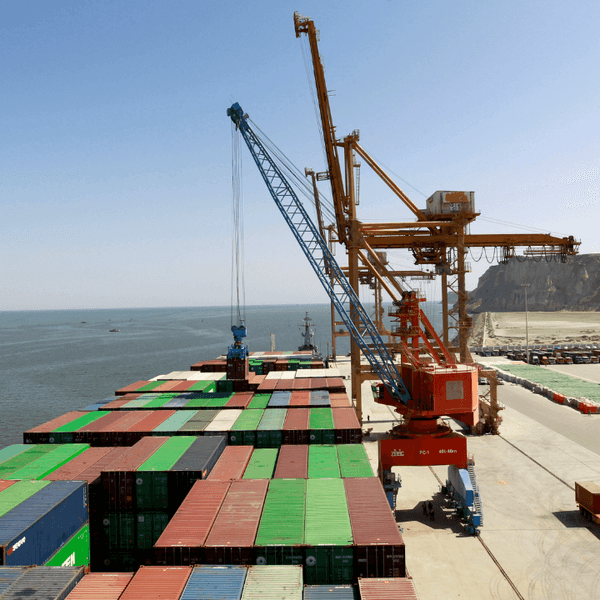
Despite government claims of progress, Pakistan's exports reached only $27.91 billion during the first 11 months of the current fiscal year, well below the annual target of $32.8 billion. The shortfall amounted to nearly $4.8 billion.
Khan said Pakistan's exports have remained largely stuck between $25 billion and $30 billion for nearly two decades, raising questions about the government's ambitions under its Uraan Pakistan program.
The government has set a target of increasing exports to $60 billion by fiscal year 2029. Khan questioned how exports could double within three years when they have struggled to move beyond the $30 billion mark over the past 20 years.
Investment performance also remained weak, according to figures cited during the program.
Foreign direct investment between July and April fell by about 31% to $1.41 billion, compared with $2.04 billion during the same period a year earlier.
Tax collection figures also raised concerns. Khan noted that the Federal Board of Revenue collected PKR 11.23 trillion in taxes between July and May, falling PKR 864 billion short of its target.
Inflation, meanwhile, appeared to be re-emerging as a challenge. According to the survey figures discussed on the program, inflation rose to 11.7% in May of fiscal year 2026.
Agriculture also underperformed.
Agricultural growth reached 2.9% compared with a target of 4.5%, while production of major crops increased by only 0.65%, far below the official target of 6.7%, Khan said.
Despite those weaknesses, Khan said the government is highlighting a different side of the economic picture.
Officials argue that stabilizing the economy was the first priority after Pakistan faced severe external financing pressures in recent years.
As a result, the government points to improvements in the current account balance, fiscal deficit, remittances and foreign exchange reserves as major achievements.
According to figures cited on the program, the current account deficit stood at only $252 million between July and April. The fiscal deficit declined to 0.7% of GDP, which Khan said was a historic low.
Worker remittances reached a record $4.3 billion in May and are expected to exceed $41 billion for the full fiscal year.
Foreign exchange reserves also climbed to $17.2 billion, compared with just $2.9 billion in February 2023.
Khan said these indicators demonstrate that Pakistan has made significant progress in restoring macroeconomic stability.
However, he argued that improvements in financial stability have not yet translated into stronger performance in the productive sectors of the economy.
Growth, exports, investment and agriculture continue to signal that the economy's productive engine has not fully recovered, he said.
The central question facing policymakers, Khan added, is whether economic stabilization will automatically lead to higher growth in the coming years.
Summing up the findings of the Economic Survey 2025-26, Khan said Pakistan has succeeded in moving away from default risks and restoring stability, but has not yet achieved sustainable growth.
He said the ability to bridge that gap will determine whether Pakistan succeeds or fails economically in the years ahead.



Comments
See what people are discussing