

Pakistan’s economy seen growing 3.84% in FY27 despite inflation, oil risks
Pakistan’s economy sees modest FY27 growth, led by agriculture, manufacturing and tech

Haris Zamir
Business Editor
Experience of almost 33 years where started the journey of financial journalism from Business Recorder in 1992. From 2006 onwards attached with Television Media worked at Sun Tv, Dawn Tv, Geo Tv and Dunya Tv. During the period also worked as a stringer for Bloomberg for seven years and Dow Jones for five years. Also wrote articles for several highly acclaimed periodicals like the Newsline, Pakistan Gulf Economist and Money Matters (The News publications)
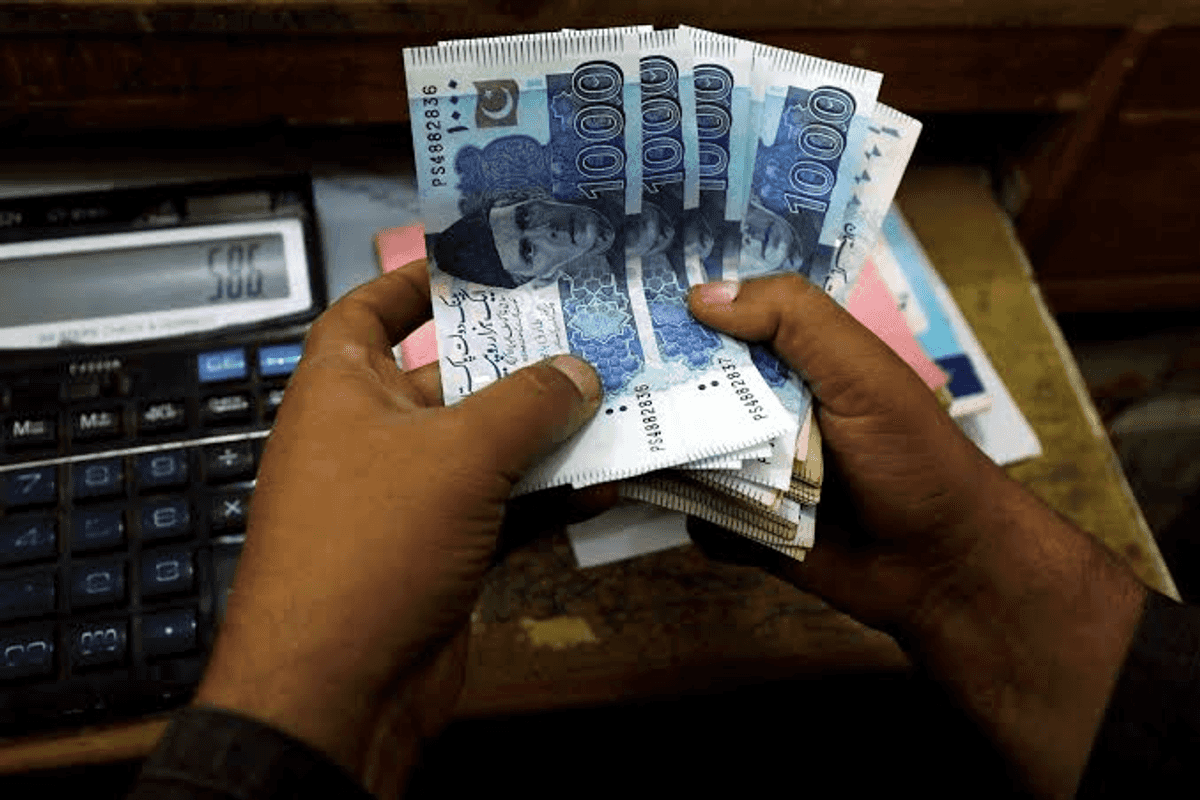
Pakistan’s macroeconomic position has also strengthened, according to Arif Habib.
Reuters/File
Pakistan’s economic growth is expected to accelerate modestly in fiscal year 2027 as agriculture recovers, manufacturing maintains momentum and services benefit from a growing technology sector, although higher inflation, rising imports and global oil prices could pose risks, according to a report by Arif Habib Ltd.
The brokerage projected gross domestic product growth at 3.84% in FY27, up from an estimated 3.70% in FY26, with growth expected to accelerate further to 4.3% in FY28.
“The economy has moved from managing a recovery to now growth, a far more comfortable, if still delicate, place to be,” Arif Habib Ltd. said in its economic outlook report.
The report said growth was increasingly being supported by multiple sectors rather than a single engine, with agriculture recovering from flood-related disruptions, large-scale manufacturing recording its strongest performance in four years and services benefiting from rising information technology exports.
Agriculture is projected to grow 3.3% in FY27, up from 2.9% in FY26, as the impact of flooding fades.
Crop output is expected to increase 2.6%, while livestock is projected to grow 3.8%. Forestry and fishing are forecast to expand 2% and 1.5%, respectively.
Wheat remains a concern, however. The government’s Rabi 2025-26 wheat production target of 29.68 million tons compares with an initial estimate of 27.48 million tons, suggesting a potential shortfall of about 2.2 million tons, the report said.
Lower procurement in major producing regions has also tightened supplies and pushed up wholesale and retail prices, it added.
Pakistan’s industrial sector is expected to lead the expansion, with output projected to grow 5% in FY27. Large-scale manufacturing is forecast to expand 5.7%, following estimated growth of 6.1% in FY26, its strongest performance in four years.
Easing monetary conditions and lower borrowing costs could support investment, construction and industrial activity, Arif Habib said.
Services, which account for about 58% of Pakistan’s GDP, are expected to grow 3.7% in FY27, led by information and communication, which is projected to expand 7%.
Pakistan’s technology exports reached a record $4.6 billion in FY26, up 21% from a year earlier, and could rise to $4.8 billion-$4.9 billion in FY27, the report said.
Wholesale and retail trade is projected to grow 4.1%, supported by stronger domestic activity and a gradual recovery in imports.
Improving external and fiscal indicators
Pakistan’s macroeconomic position has also strengthened, according to Arif Habib.
The current account closed FY26 with a deficit equivalent to 0.07% of GDP, while the rupee remained broadly stable. State Bank of Pakistan foreign exchange reserves stood at $17 billion as of August 2026.
The brokerage expects SBP reserves to rise to $20.5 billion by the end of FY27.
Fiscal indicators have also improved, with the report estimating the fiscal deficit at 3.9% of GDP in FY27 and forecasting a primary surplus of 2% of GDP.
Public debt has fallen to a multi-year low of 68.3% of GDP, while the Ministry of Finance retired a record PKR 2.9 trillion in debt ahead of maturity during FY26, the report said.
Pakistan has also received a more favorable reception from international markets, with Moody’s, S&P and Fitch maintaining stable or improving views on the country, Arif Habib said.
The country’s return to international bond markets during FY26 was another sign of improving investor confidence and efforts to restore access to global capital markets, according to the report.
Inflation expected to rise before easing
The inflation outlook is more challenging.
Arif Habib expects consumer price inflation to average 8.22% in FY27, compared with 7.05% in FY26, as food and transportation costs come under renewed pressure.
International oil prices remain a major risk, with the brokerage assuming crude prices of around $80 per barrel amid elevated geopolitical tensions and Middle East-related supply concerns.
The report expects these inflationary pressures to be temporary, forecasting CPI inflation to ease to 5.54% in FY28.
Imports to widen current account deficit
Stronger economic growth could also increase pressure on Pakistan’s external accounts.
“With stronger domestic demand and oil prices around USD 80 per barrel, we expect the current account deficit to widen to around 0.8% of GDP in FY27,” Arif Habib said.
While the projected deficit remains manageable, it highlights the challenge of maintaining external stability as domestic activity and imports accelerate, the report said.
Arif Habib said FY27 would be a critical year for Pakistan as policymakers seek to sustain growth while preserving fiscal discipline and reform momentum.
The upcoming IMF review in September will keep Pakistan’s policy credibility and commitment to economic reforms under close scrutiny, the brokerage said.
Pakistan now has greater room for economic expansion, the report said, but warned that the durability and quality of growth would be as important as the headline GDP figure.





Comments
See what people are discussing