

Pakistan faces strategic challenges amid potential Iran conflict
Kamran Khan says Pakistan must stay vigilant as a potential Iran strike could disrupt regional stability

News Desk
The News Desk provides timely and factual coverage of national and international events, with an emphasis on accuracy and clarity.
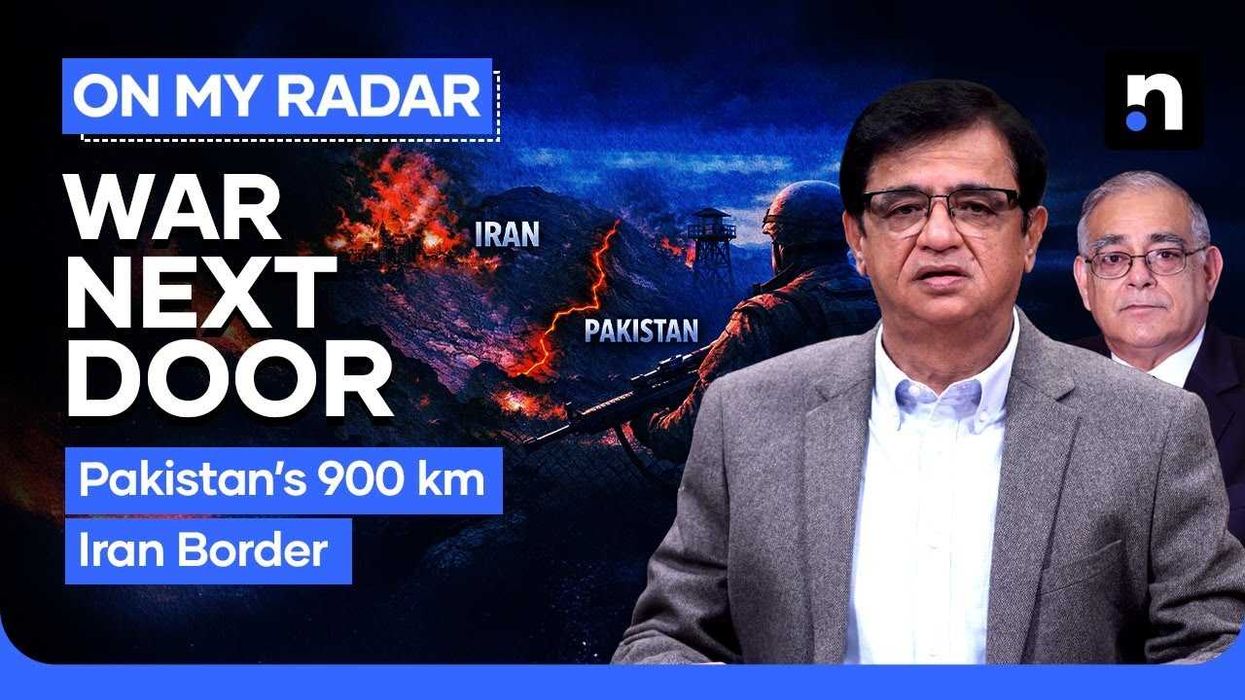
Amid rising tensions in the Middle East, Pakistan faces growing strategic and security challenges due to the possibility of a U.S. or Israeli military strike on Iran.
Any conflict in the region could have direct and far-reaching consequences for Pakistan, given its long border with Iran and its geostrategic position in South Asia.
Kamran Khan, in the latest episode of On My Radar, highlighted that Pakistan must carefully prepare for the fallout of such a scenario. He noted that a sudden military action in Iran could disrupt regional stability and force Islamabad to adopt heightened vigilance, even if it remains officially neutral.
Experts caution that the United States and Israel could target Iran’s nuclear facilities, such as Natanz, Fordo, and Isfahan, using long-range missiles or stealth fighter jets. On a limited scale, the U.S. could further weaken Iran’s economy through additional sanctions, while cyberattacks could target the country’s military command, banking networks, and energy infrastructure.
Regardless of scale, the repercussions would extend across the Middle East, directly affecting Pakistan’s security and economy.
Pakistan shares a 900-kilometre border with Iran, and its political, social, and strategic realities mean the country cannot remain insulated from the conflict. The state may need to rearrange security along the western border, while intelligence and security agencies would see their responsibilities significantly increase. Operational vigilance in Balochistan would become critical, while refugee flows from Iran could add humanitarian and security pressures.
Although Pakistani society has maintained relative sectarian harmony in recent years, analysts warn that adversaries may attempt to exploit tensions by spreading disinformation or inciting internal unrest during such a crisis. Maintaining stability at home while preparing for external threats would therefore require careful planning and coordination.
While the U.S. has established military bases surrounding Iran, strategic pressure on Pakistan could also rise, including demands for intelligence sharing or access to Pakistani airspace. Navigating this delicate balance, Islamabad would need to maintain strong diplomatic engagement with both Tehran and Washington to avoid miscalculations.
China is expected to play a balancing role, potentially opposing any regime-change efforts in Iran. However, following the Israeli and U.S. attacks on Iran in June 2025, Beijing largely avoided direct involvement, relying instead on diplomatic statements.
In this context, analysts recommend that Pakistan adopt a policy of strategic neutrality while remaining alert and prepared. Border management, intelligence coordination, and diplomatic engagement will be crucial to navigating the crisis, protecting national interests, and avoiding escalation.





Comments
See what people are discussing