

Pakistan finance minister discusses reforms, financing with IMF, World Bank officials
Aurangzeb flags Middle East conflict as major supply shock amid push for IMF board approval

Business Desk
The Business Desk tracks economic trends, market movements, and business developments, offering analysis of both local and global financial news.
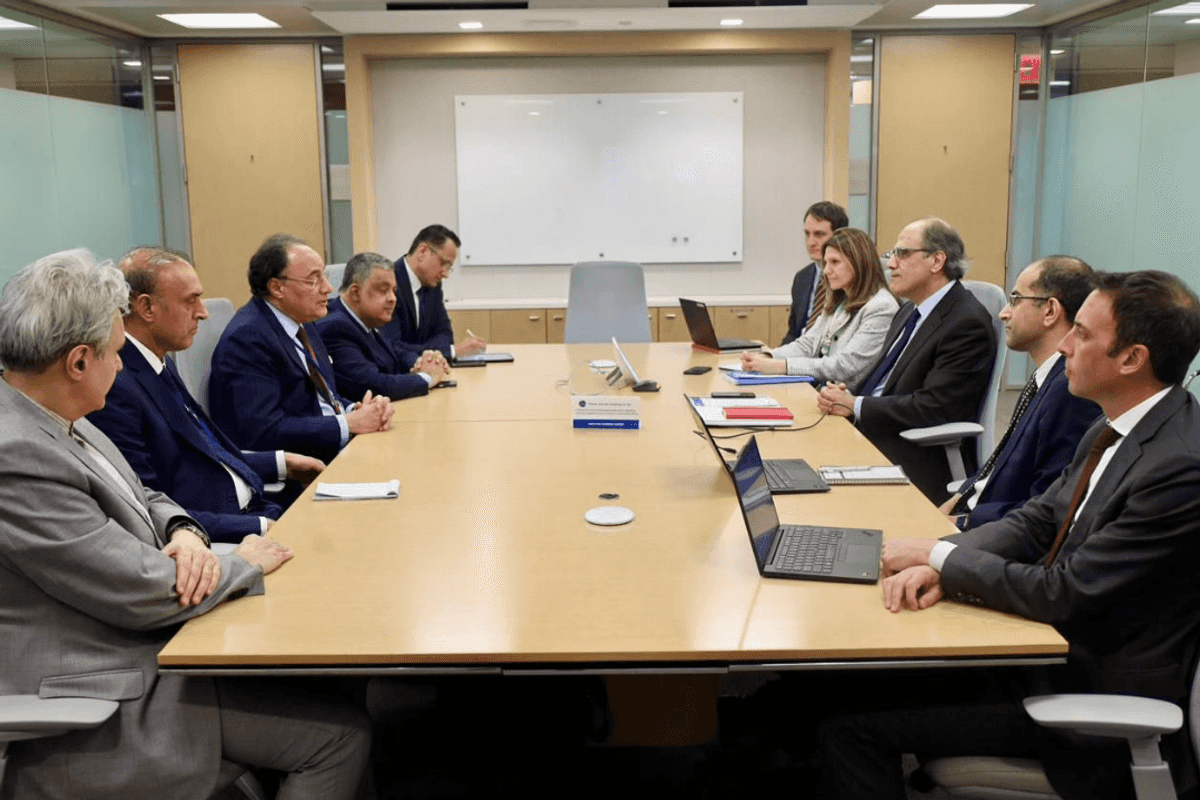
Pakistan Finance Minister Muhammad Aurangzeb (3L) meets with Director of the IMF’s Middle East and Central Asia Department Jihad Azour (3R) in Washington
Finance Division
Pakistan’s finance minister met senior officials from the International Monetary Fund, the World Bank Group and Saudi development institutions on Monday to discuss economic reforms, external financing and the global impact of Middle East tensions, officials said.
Finance Minister Muhammad Aurangzeb held talks with Jihad Azour, director of the IMF’s Middle East and Central Asia Department, along with the Fund’s mission team to Pakistan, on the sidelines of the World Bank-IMF Spring Meetings 2026.
Aurangzeb expressed appreciation for the recent staff-level agreement with the IMF and said he expects early approval by the Fund’s executive board to maintain momentum in Pakistan’s reform program.
He also briefed IMF officials on the economic fallout from the ongoing Middle East conflict, describing it as “one of the most significant supply shocks in recent times.”
The government is managing the second- and third-order effects of the crisis, particularly on economic growth and inflation, he said.
Financing and reforms
Aurangzeb reaffirmed Pakistan’s commitment to meeting its external obligations, highlighting the country’s successful Eurobond repayment.
Both sides reviewed progress on fiscal and structural reforms and efforts to boost revenue collection, stressing the importance of maintaining macroeconomic stability to support sustainable and inclusive growth.
In a separate meeting, Aurangzeb met Tsutomu Yamamoto of the Multilateral Investment Guarantee Agency and welcomed a proposed trade finance facility of up to $500 million.
The facility is expected to support financing for critical imports, including food, energy and machinery. Aurangzeb called for faster progress on the initiative and discussed ongoing arbitration cases, expressing confidence that MIGA’s involvement could help resolve disputes while maintaining investor confidence.
Saudi engagement
The finance minister also held talks with Sultan bin Abdulrahman Al-Marshad, head of the Saudi Fund for Development, thanking Saudi Arabia for its continued financial support and underscoring strong bilateral ties.
Discussions focused on the economic impact of Middle East instability, particularly on global energy markets. Aurangzeb expressed hope for a swift resolution to the conflict and emphasized the importance of continued cooperation.
The meetings highlighted Pakistan’s efforts to stabilize its economy, secure external financing and strengthen partnerships with international financial institutions and key allies.

Comments
See what people are discussing