

Pakistan anticipates progress on Iran gas pipeline project amid sanctions, arbitration
Petroleum Minister Ali Pervaiz Malik says positive developments on the gas pipeline dispute in Paris are expected soon

Ali Hamza
Correspondent
Ali; a journalist with 3 years of experience, working in Newspaper. Worked in Field, covered Big Legal Constitutional and Political Events in Pakistan since 2022. Graduate of DePaul University, Chicago.
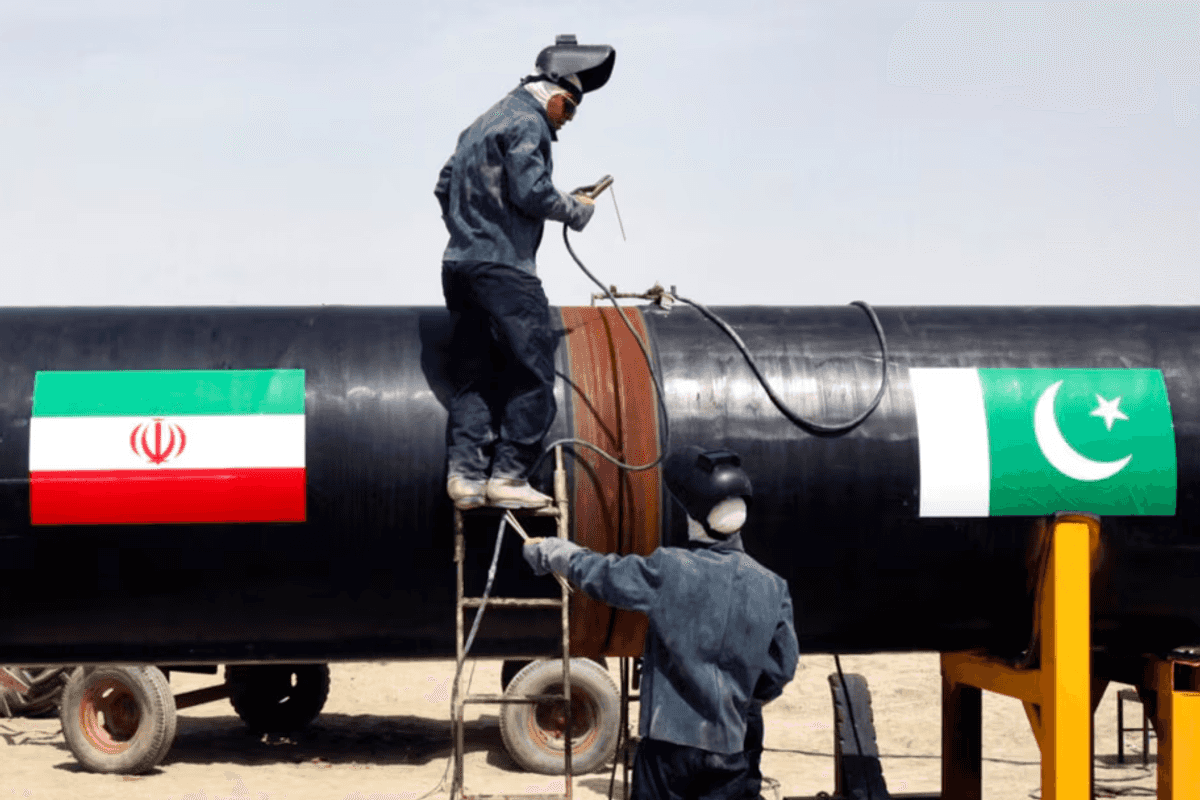
The Iran-Pakistan pipeline is key to Pakistan’s energy strategy, but U.S. sanctions have stalled its 485-mile segment.
File
Pakistan expects “good news soon” on the long-delayed Iran-Pakistan (IP) gas pipeline project, Petroleum Minister Ali Pervaiz Malik said, as Islamabad navigates U.S. sanctions and an ongoing arbitration case with Tehran.
Speaking to reporters at Parliament House on Monday, Malik described Pakistan and Iran as “brotherly countries” and said efforts were underway to resolve the dispute, currently under arbitration in Paris. “You will hear positive developments soon,” he said, signaling potential momentum on a project stalled for over a decade.
The project faces significant hurdles from U.S. sanctions targeting Iran’s energy sector, administered by the Treasury Department’s Office of Foreign Assets Control (OFAC). These measures restrict cross-border investment and financing, complicating Pakistan’s ability to build its segment of the pipeline. Malik said Islamabad was seeking to leverage all available exemptions under the sanctions regime while remaining fully compliant with international law.
The IP pipeline has long been a cornerstone of Pakistan’s energy strategy. Iran completed its 684-mile portion in 2012, but Pakistan has yet to construct its 485-mile segment, citing the constraints imposed by U.S. sanctions.
Iran initiated arbitration proceedings at the International Court of Arbitration in Paris in September 2024, claiming up to $18 billion in damages over delays. Tehran has issued multiple notices since 2019, including a final warning in August 2024, signaling the potential for severe financial penalties.
The arbitration, conducted under French law, is independent of U.S. sanctions enforcement. Pakistan has retained international legal counsel to defend its position, arguing that sanctions-related constraints have prevented it from fulfilling contractual obligations. The proceedings are expected to continue until 2027–28, with Pakistan seeking a 10-year extension to mitigate potential penalties.
On the floor of the National Assembly, Malik also addressed Pakistan’s response to global energy market shocks, underscoring the country’s vulnerability as it imports 80 to 90 percent of its energy needs.
He highlighted how regional tensions affecting supply routes through the Strait of Hormuz - through which roughly 20–25 percent of global energy supplies transit - led to sharp increases in crude, diesel, freight, and insurance costs. Oil prices surged from around $70 per barrel to as high as $170 during the crisis.
To mitigate shortages, Malik said Pakistan secured alternative fuel sources, including oil imports from Saudi Arabia via the port of Yanbu, from the United Arab Emirates through Fujairah, and from Oman.
Emergency arrangements were also made for liquefied natural gas (LNG) imports after Qatar declared force majeure on cargoes. Domestic gas production was ramped up to stabilize supplies.
The minister emphasized that the government successfully ensured nationwide fuel availability, maintained fertilizer production by guaranteeing gas to local plants, and avoided major disruptions despite the volatile regional environment.



Comments
See what people are discussing