

Pakistan's fixed investment declines over two decades: SBP
Average gross fixed capital formation falls to 12.6% of GDP as manufacturing, ICT and logistics lose ground

Business Desk
The Business Desk tracks economic trends, market movements, and business developments, offering analysis of both local and global financial news.
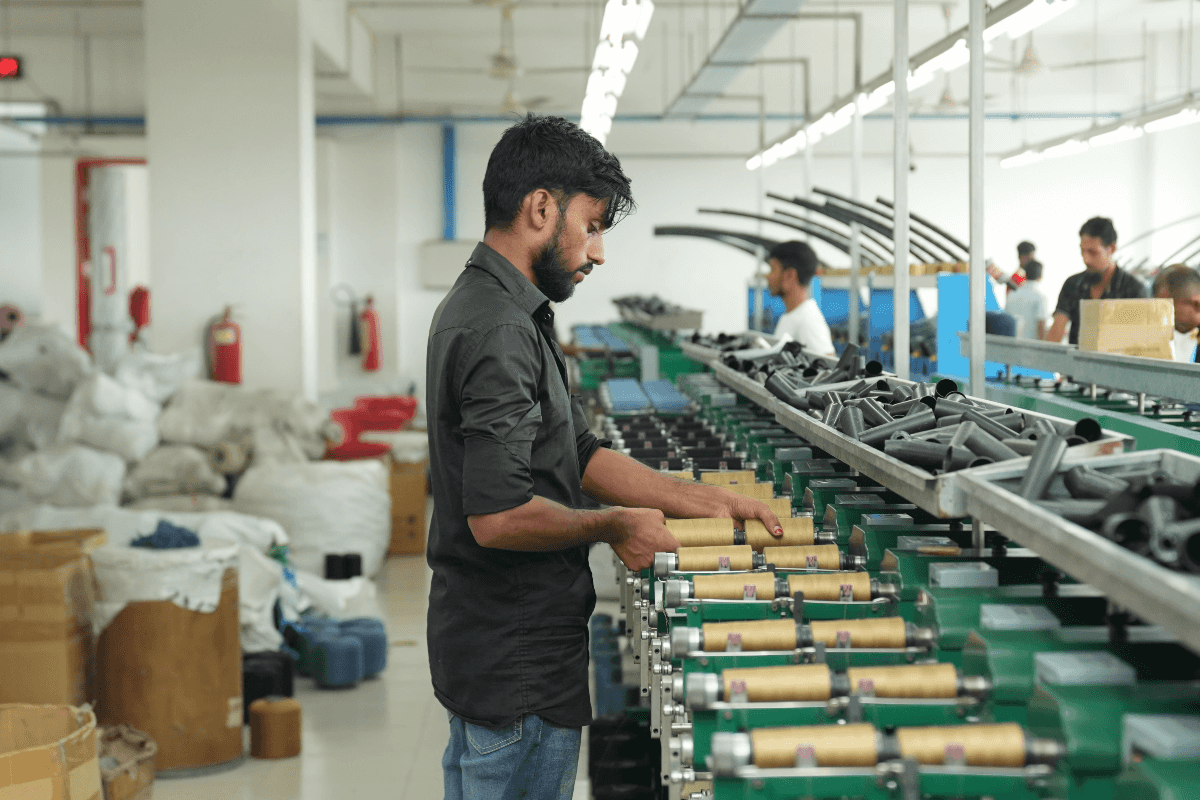
Pakistan's gross fixed capital formation averaged 12.6% of GDP during FY22-26, down from 15% during FY06-11, primarily reflecting a decline in private investment, the State Bank of Pakistan (SBP) said in its annual report released Monday.
Why is Pakistan's investment decline a concern?
The decline has been particularly pronounced in large-scale manufacturing and information and communications technology, while investment in transport and storage has also weakened. The shift away from productive sectors is undermining productivity growth, export diversification and demand for skilled workers, limiting Pakistan's ability to generate employment and compete internationally, the SBP said.
In its Annual Report on the State of Pakistan's Economy for FY26, the central bank said investment in manufacturing, modern tradable services and logistics helps businesses expand production, improve product quality, develop skills and access international markets.
The SBP identified high tariffs on imported raw materials, intermediate goods and capital equipment as major obstacles to investment, saying higher input protection raises production costs and reduces the competitiveness of downstream industries.
A 1% increase in upstream protection is associated with a 0.63% decline in revenue-based productivity and a 0.51% fall in sales of downstream firms, according to a World Bank study cited in the report.
Protection of finished goods also creates an anti-export bias by making domestic markets more attractive than international markets, discouraging companies from investing in export capacity, efficiency and product quality.
Pakistan's exports accounted for just 10.4% of GDP in 2024, significantly below regional peers such as India and Bangladesh and roughly half of the country's potential, the report said, citing a World Bank study.
What is discouraging private investment in Pakistan?
Limited access to long-term financing, government borrowing that crowds out private-sector credit and repeated episodes of macroeconomic instability have raised financing costs and discouraged investment in machinery, digital systems and new production lines.
The SBP said complex regulations, inconsistent enforcement, unreliable energy supplies, inefficient logistics and inadequate worker training further increased the costs and risks of expanding formal businesses.
Tax incentives that favor real estate over manufacturing and tradable services have also diverted capital away from productive sectors, the report said.
What reforms does the SBP recommend?
To reverse the declining investment trend, the central bank called for rationalizing tariffs, improving access to imported industrial inputs and reforming property taxation to make investment in productive sectors more attractive.
It said public spending should prioritize reliable infrastructure, workforce skills and other shared facilities that reduce business costs rather than relying primarily on broad tax concessions.
The report also recommended supporting technology upgrades, machinery modernization, worker training and local supplier development through targeted assistance linked to actual investment and technological improvements.
Simplifying tax administration through a single-window system for business registration, tax returns and payments could reduce compliance costs and encourage companies to operate in the formal economy, it added.
The report also called for coordination among government authorities on tax collection and revenue sharing to reduce the need for businesses to deal with multiple agencies.
The SBP emphasized that any government incentives should be temporary and tied to measurable results, including additional investment, higher export capacity and improved productivity.
Pakistan's prospects for sustained economic growth depend not only on reversing the decline in investment but also on improving its composition by directing more capital toward export-oriented and employment-generating industries, the central bank said.




Comments
See what people are discussing