

Pakistan governance debate heats up as PPP opposes new provinces
Kamran Khan says political interests and provincial autonomy are complicating governance reform

News Desk
The News Desk provides timely and factual coverage of national and international events, with an emphasis on accuracy and clarity.
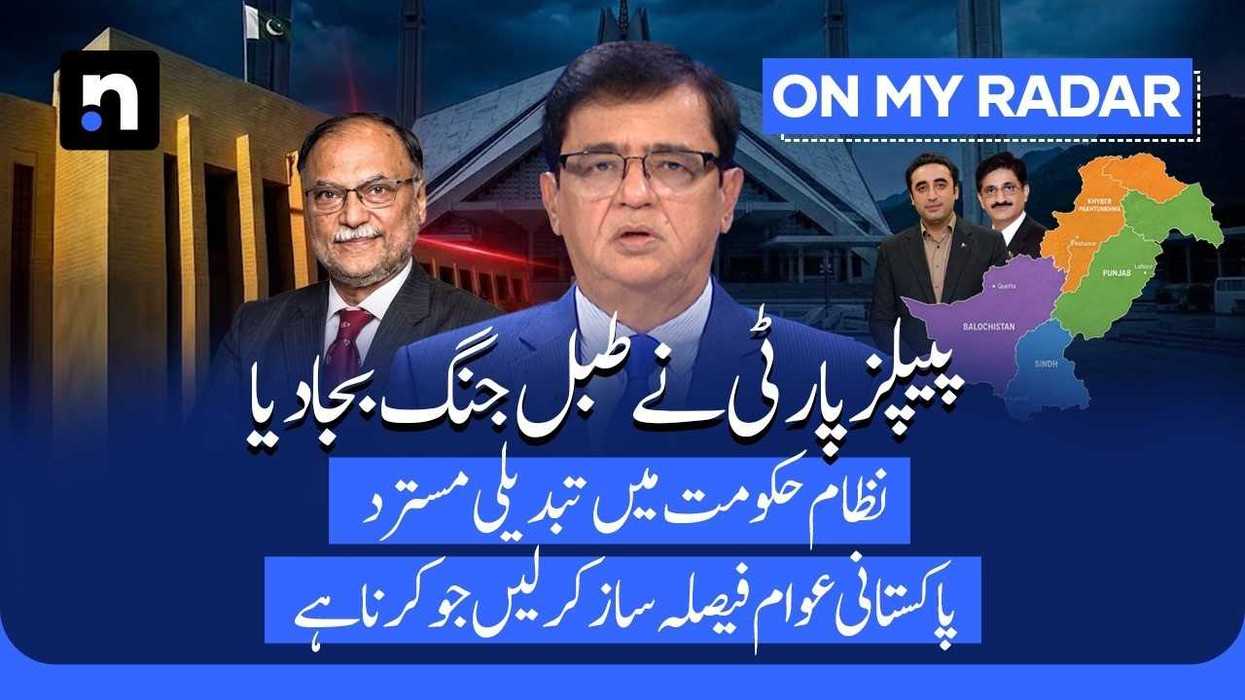
Pakistan’s debate over restructuring its system of governance is increasingly turning into a political fault line, with proposals for new provinces, smaller administrative units and stronger local governments drawing a sharp response from the Pakistan Peoples Party (PPP), particularly in Sindh.
The PPP has made clear that it will resist any attempt to alter Sindh’s existing territorial or administrative structure. In the Sindh Assembly, party lawmakers delivered strongly worded speeches against the creation of new provinces or administrative units, while Chief Minister Murad Ali Shah took the lead in opposing any such move, declaring that Sindh is one and will remain one.
The growing confrontation comes as questions intensify over whether a country of more than 250 million people can be effectively governed through just four large provinces.
Kamran Khan said in the latest episode of On My Radar that the debate is increasingly centered on taking power and resources beyond the provincial capitals and devolving them to smaller cities, districts and local communities.
Among the proposals being discussed are new provinces, smaller and more empowered administrative units, as well as stronger local governments with financial and administrative authority under Article 140-A of the Constitution. Talk of possible constitutional changes, including a proposed 28th Amendment, has also entered political discourse.
At the heart of the debate is a question of governance: whether authority should remain concentrated in Lahore, Karachi, Peshawar and Quetta or be transferred closer to the people. Supporters of administrative restructuring argue that the existing system has struggled to deliver effective governance and equitable access to resources, particularly in rapidly growing urban centers such as Karachi.
The PPP, however, has drawn a firm red line over the division of Sindh. While the party rejects the creation of new provinces or the breakup of the province, Murad Ali Shah has not completely ruled out giving local governments greater powers. That position has prompted criticism from some political observers, who argue that the provincial government appears more comfortable with limited devolution while retaining overall control over key powers and resources.
The dispute is unfolding against a broader strain in relations between the PPP and Pakistan Muslim League-Nawaz (PML-N), the two major partners in the federal coalition. The political landscape in Azad Jammu and Kashmir, where the PML-N has formed the government following elections, and Gilgit-Baltistan, where the PPP is in power, has brought the two parties into direct competition in both regions.
The governance debate could therefore become more than a question of administrative reform. With political interests, provincial autonomy and the distribution of power and resources all at stake, any attempt to redraw Pakistan’s administrative map is likely to face significant political resistance.



Comments
See what people are discussing